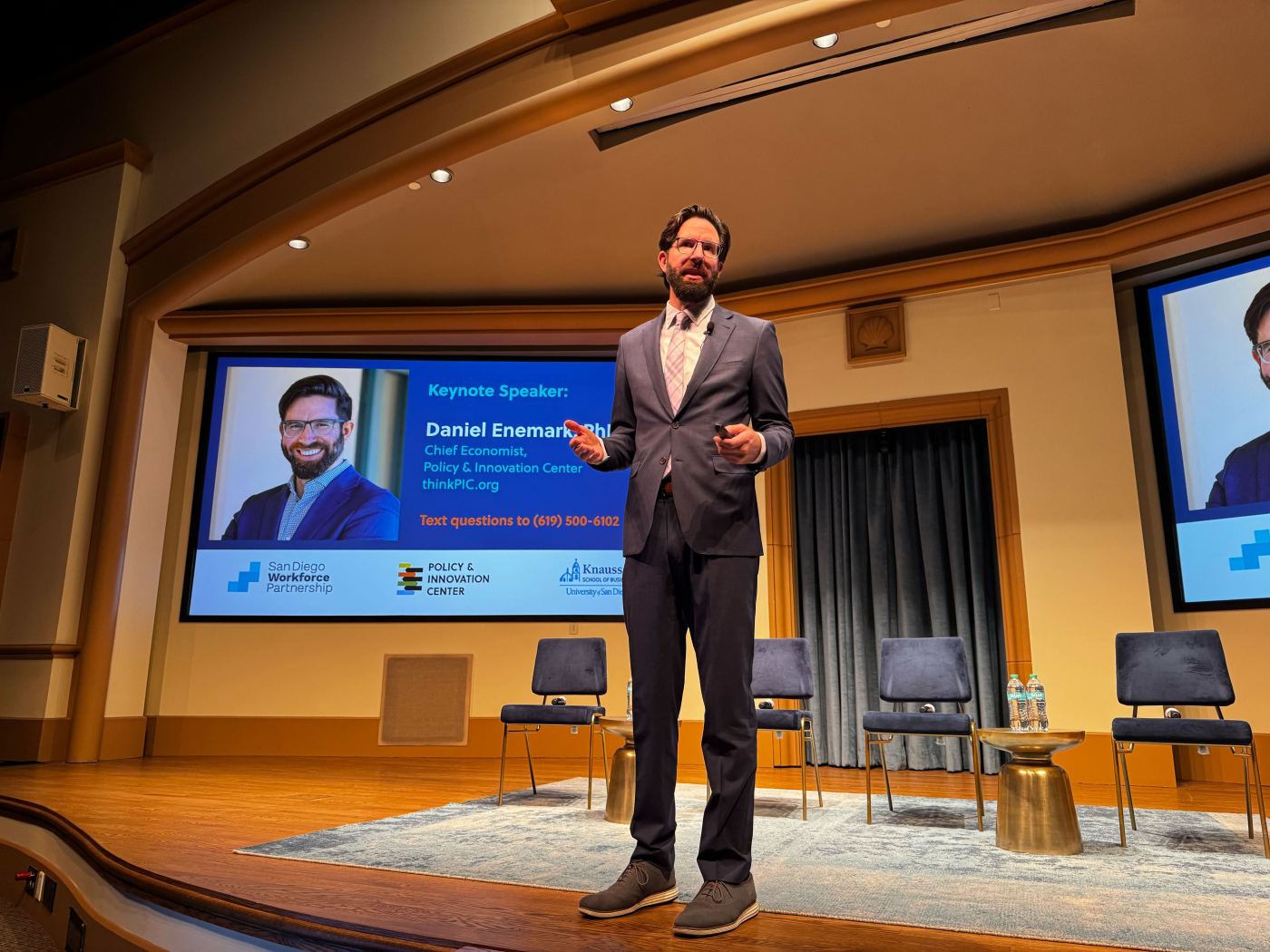
San Diego faces significant economic challenges in 2024, but experts like Daniel Enemark remain cautiously optimistic about the region’s future. During the 42nd annual San Diego Economic Roundtable at the University of San Diego, Enemark, chief economist of the San Diego Regional Policy and Innovation Center, addressed issues such as housing affordability, federal funding cuts, and economic segregation while highlighting the potential benefits of artificial intelligence (AI).
Enemark’s presentation to approximately 200 attendees illustrated both the strengths and weaknesses of San Diego County. He pointed out the region’s robust gross domestic product, which surpasses that of over half of U.S. states, and its ranking as third in hotel occupancy nationwide, following only Manhattan and Oahu, Hawaii. Additionally, San Diego boasts the largest concentration of military assets in the country.
While acknowledging positive initiatives, such as the Casa Familiar program, which converts low-income rentals into for-sale properties, and the Black InGenius Initiative, which supports academic growth for Black youth, Enemark emphasized the economic struggles facing many residents. He posed a critical question: “When people ask me how the economy is doing, I ask, ‘for whom?’”
Affordability and Segregation Challenges
Enemark highlighted the median area income in San Diego County, which stands at $130,800, according to the U.S. Department of Housing and Urban Development. Although this figure might seem substantial, high inflation has significantly diminished its purchasing power, especially in the housing market. He pointed to Santa Barbara, labeled last year as the least affordable city in the U.S. by WalletHub, as a cautionary example of what San Diego could become.
“My worry is we become Santa Barbara,” Enemark stated. He noted that many people who work in Santa Barbara cannot afford to live there, a situation that mirrors challenges in San Diego. The economist warned that if current trends continue, San Diego could see a similar decline in population, particularly among lower-income residents.
Furthermore, Enemark addressed the historical context of racial segregation in San Diego County. Data from the Brookings Institute ranks the area 50th out of 56 major metro regions in terms of racial inclusion, particularly regarding income and employment disparities. He criticized restrictive zoning laws and a lack of new home construction as barriers preventing people of color from accessing more affluent neighborhoods.
The Impact of Federal Policy and AI Growth
In addition to local challenges, Enemark expressed concerns about the region’s vulnerability to federal budget cuts, particularly those enacted during the Trump administration. The U.S. Navy remains the largest employer in the area, followed by institutions such as UC San Diego, Qualcomm, and Sharp Healthcare. Enemark emphasized that San Diego’s economy is closely tied to public sector employment and research funding.
According to data from the Bureau of Economic Analysis, San Diego ranks fifth in the country for federal investment, primarily linked to defense spending. “We have been tied to federal investment,” he noted, suggesting that the region must innovate to ensure economic stability in the face of potential declines in such funding.
Enemark also discussed local companies engaged in AI, such as Iambic Therapeutics and General Atomics, highlighting their potential to boost the economy. However, he cautioned that while AI offers opportunities, it also poses risks to job security. He cited occupations most susceptible to automation, including clerical roles and administrative positions.
“AI is accessible to companies that have the resources to invest in it,” Enemark explained. He stressed the importance of ensuring that small businesses, which play a crucial role in the local economy, have access to AI tools as well.
Enemark concluded with a broader concern regarding the social implications of increased reliance on technology. He pointed to trends like self-checkout systems and remote work that could diminish community interaction and social cohesion. By addressing economic challenges and embracing new technologies, San Diego has the potential to grow while maintaining its diverse and vibrant community.
Overall, the San Diego Economic Roundtable provided a platform for discussing these pressing issues, emphasizing both the challenges ahead and the opportunities for innovation and growth in the region.