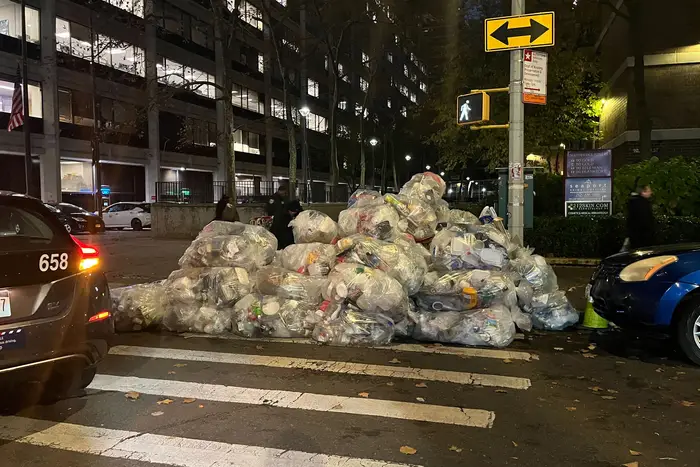
UPDATE: A new report released today sharply criticizes New York City’s trash containerization plan, urging that recycling must be included to prevent clutter on sidewalks. The report, issued by the Center for Building in North America and the Center for Zero Waste Design, highlights that under Mayor Eric Adams, the current sanitation efforts do not adequately address the significant volumes of recycling still piling up in public spaces.
The report was published on October 20, 2023, and it underscores the urgent need for the city to expand its containerization initiative to encompass recyclables and compost. Currently, only garbage is mandated to be stored in secured bins, while paper, plastic, and glass continue to obstruct walkways, contributing to an unsightly urban environment.
Clare Miflin, executive director of the Center for Zero Waste Design, expressed concern, stating, “When you’re going to do something this big and expensive, I think you need to think bigger.” Miflin envisions a future where all waste types are stored together in the city’s new Empire Bins, which are gradually being installed in parking spaces across the city.
The sanitation department’s plan includes placing these bins in front of every residential building with more than 30 units within the next seven years. For buildings with 10 to 30 units, owners can request a bin installation or use wheelie bins for collection. Meanwhile, landlords with fewer than 10 units are already required to utilize smaller containers.
Sanitation department spokesperson Joshua Goodman emphasized that the city’s strategy seeks to balance the practicalities of narrow streets with the broader goal of clearing trash from sidewalks. He noted, “Once-weekly mountains of recycling don’t attract rats in the same way as garbage bags, which get collected more frequently.”
This criticism aligns with ongoing tensions between waste management advocates and city officials. The Center for Zero Waste Design has been vocal about the need for a more ambitious approach, arguing that the current measures are insufficient. The call for including compost and recycling in the Empire Bins isn’t unprecedented; pilot programs outside schools in Brooklyn and Upper Manhattan have successfully incorporated separate receptacles for organic waste and recyclables.
Looking ahead, the report’s recommendations may gain traction as Zohran Mamdani, the mayor-elect, prepares to take office. Miflin is part of Mamdani’s transition team, hinting that his administration may prioritize an expanded containerization plan that includes recycling.
This developing story underscores the pressing need for a comprehensive waste management strategy in New York City, as officials and advocates grapple with urban cleanliness and public health. As this situation unfolds, residents are encouraged to stay informed about potential changes that could significantly impact sanitation practices throughout the city.
For now, the call remains clear: New York City must act swiftly to ensure that its recycling efforts keep pace with its ambitious trash containerization goals.