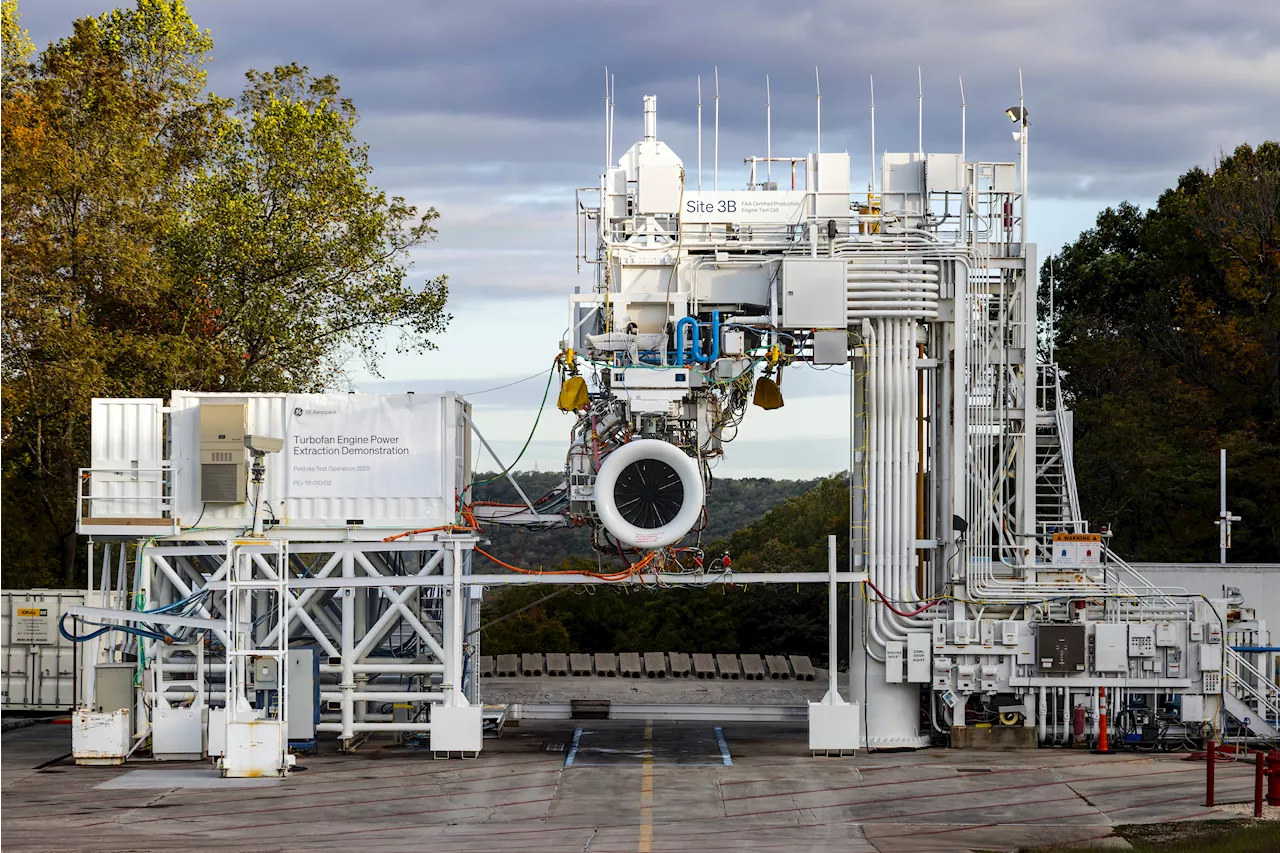
NASA and GE Aerospace have successfully demonstrated a hybrid engine capable of powering an airliner, marking a significant milestone in aviation technology. The test took place in December 2023 at the Peebles Test Operation site in Ohio, where researchers showcased a modified version of the GE Aerospace Passport engine.
The hybrid engine integrates both traditional jet fuel and electric motors, representing a bold step towards more efficient and sustainable aviation systems. According to Anthony Nerone, manager of NASA’s Glenn Research Center, “Turbines already exist. Compressors already exist. But there is no hybrid-electric engine flying today. And that’s what we were able to see.”
This demonstration is particularly noteworthy as it involved the first comprehensive test of an integrated hybrid system. Previous tests had focused on individual components such as power system controls and electric motors, but this event showcased how these elements could work in tandem. The engine is designed to extract energy from its operations and redistribute that power to enhance performance across different functions, making it a complex but crucial advancement.
Laura Evans, acting HyTEC project manager at Glenn, highlighted the intricate nature of the test, stating, “They had to integrate equipment they’ve never needed for previous tests like this.” Unlike preliminary exercises, this test involved an engine mounted and performing many functions essential for a real aircraft, illustrating its readiness for practical application.
The push for hybrid engine technology aligns with growing demands within the U.S. aviation sector for power systems that offer improved efficiency and reduced fuel costs. The HyTEC initiative, a collaborative effort between NASA and GE Aerospace, aims to develop technology that could reduce fuel consumption by up to 10% compared to current best-in-class engines.
NASA’s commitment to accelerating this technology stems from its long-standing vision for sustainable aviation. The groundwork for hybrid aircraft engines began around 20 years ago, and the recent test provides valuable data to advance these concepts towards market readiness.
Looking ahead, both NASA and GE Aerospace are analyzing the data gathered from this demonstration and previous research to pave the way for a compact engine test within this decade. While significant progress has been made, further development is necessary before this technology can be fully realized in commercial aviation.
The successful demonstration not only showcases the potential of hybrid propulsion but also represents a collaborative effort between two leading organizations in aerospace innovation, indicating a promising future for greener and more efficient air travel.