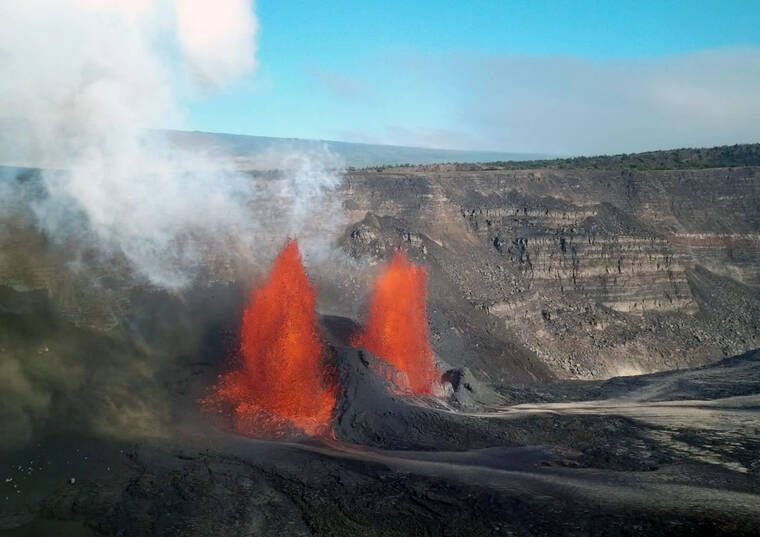
UPDATE: Kilauea Volcano is erupting spectacularly, with new records set as lava fountains surge to a staggering height of 1,574 feet (480 m). This explosive activity, which began on December 23, 2024, is captivating observers across the Island of Hawaii, marking a thrilling New Year for volcano enthusiasts.
Since the eruption’s onset, Kilauea’s Halemaʻumaʻu crater has seen a remarkable 39 lava fountaining episodes. Episode 39, which occurred on December 23–24, produced fountains reaching approximately 1,400 feet (425 m). The United States Geological Survey (USGS) confirms that this ongoing eruption showcases both intensity and unpredictability, keeping scientists and spectators alike on high alert.
What makes these developments urgent? The volcano’s activity is not only visually striking but also poses potential risks to nearby communities. The lava flow has already erupted nearly 200 million cubic meters (300 million cubic yards) of lava since the eruption began, more than double the average annual output from Puʻuʻōʻo between 1983 and 2018. As lava continues to pour forth, the crater floor has been raised significantly—by an average of 225 feet (69 m), with vent bases rising by nearly 450 feet (137 m).
As the New Year unfolds, the USGS maintains that the current alert level for Kilauea is set at WATCH. Their monitoring efforts indicate that another fountaining episode is likely to occur between January 8 and 14, keeping the anticipation high for both locals and tourists. While there are no signs of imminent changes to the eruption pattern, the USGS warns that volcanic activity can shift rapidly, urging people to stay informed.
The beauty and power of Kilauea’s eruptions are further enhanced by the increase in tephra—a mix of lava particles—being carried over the caldera rim by winds. Larger fragments typically land within the confines of Hawaii Volcanoes National Park, contributing to the formation of new hills, while smaller ash particles drift across the island, affecting air quality and visibility.
With a year marked by record-breaking heights and volumes, Kilauea continues to amaze. The current record for the most lava erupted during a single episode is held by episode 3, from December 26, 2024, to January 3, 2025, which released 13 million cubic meters (17 million cubic yards) of lava over eight days. Episode 38, occurring on December 6, 2025, closely followed with 12.1 million cubic meters (15.8 million cubic yards) in just 12 hours.
As the spectacle continues, observers are reminded of the awe-inspiring yet unpredictable nature of volcanic activity. Each episode offers a glimpse into Kilauea’s dynamic forces, drawing visitors from around the globe. As we step into the New Year, the hope remains that everyone can safely enjoy this natural wonder.
For ongoing updates, including photos, maps, and recent earthquake information, visit the USGS Hawaiian Volcano Observatory website. Questions can be directed to [email protected].
Ingrid Johanson, an HVO research geophysicist, emphasizes the importance of vigilance: “While the fountaining episodes can be forecasted, the nature of volcanic activity means changes can happen without warning.” As such, monitoring will continue closely, ensuring safety while allowing everyone to appreciate the mesmerizing display Kilauea has to offer.