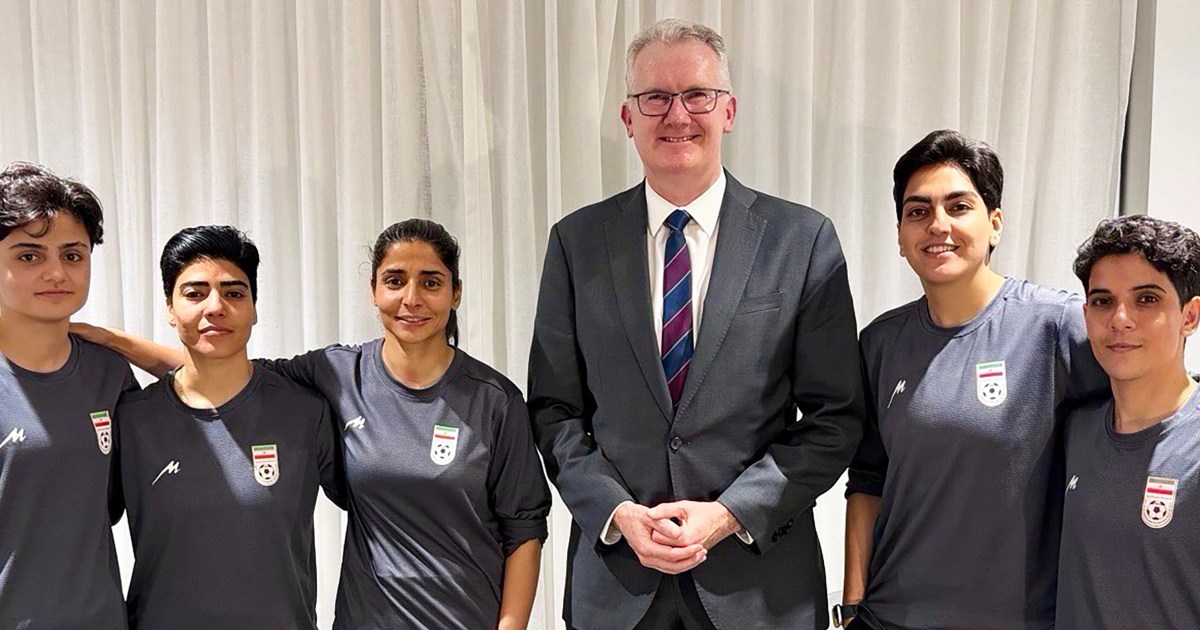
In a surprising turn of events, only two members of the Iranian women’s soccer team remain in Australia after five players withdrew their asylum claims. This decision came shortly after the players had initially accepted humanitarian visas to stay in the country. The Australian government, represented by Home Affairs Minister Tony Burke, emphasized the challenging nature of the players’ decisions, stating, “We cannot remove the context in which the players are making these incredibly difficult decisions.”
Initially, six players and a support staff member from a squad of 26 accepted offers to stay in Australia. They were part of a larger contingent that had flown from Sydney to Kuala Lumpur last week. Concerns for their safety arose following their refusal to sing the Iranian national anthem before a match against South Korea, just days after the outbreak of conflict involving the United States and Israel against Iran, which resulted in the death of Supreme Leader Ayatollah Ali Khamenei. The women faced backlash, being labeled “traitors” on Iranian state television, but later performed the anthem in their subsequent games without commenting on the unfolding conflict.
The five players who withdrew their asylum claims are now expected to reunite with the rest of their team in Malaysia, where they have been staying as strikes continue to affect their homeland. Burke remarked that the Australian government had aimed to provide “genuine choices” to all players, and that the offer of asylum was presented during “emotional” meetings at the airport prior to their departure.
Despite the support offered by the Australian government, some Iranians in Australia have accused officials of pressuring the players, particularly as their relatives remain in Iran. However, Australian authorities have dismissed these claims. Shahram Akbarzadeh, a professor at Deakin University, expressed that the players were “being used as a pawn in a political game.” He assessed the risks for those who initially sought asylum, stating it was unlikely they would face life-threatening repercussions, suggesting that any consequences would likely be limited to bans from playing.
In recent days, Iranian state media have softened their stance, indicating that the players would be welcomed back home. The semi-official Tasnim News Agency framed the players’ return as a “disgraceful failure of the American-Australian project,” while the Iranian Football Association announced that the team would soon depart Malaysia for Tehran, eager to be reunited with their families.
Australia’s Assistant Immigration Minister Matt Thistlethwaite characterized the situation as “very complex,” emphasizing the deeply personal nature of the decisions made by the players. He reiterated the government’s commitment to support the two remaining players while respecting the choices of those who opted to return to Iran.