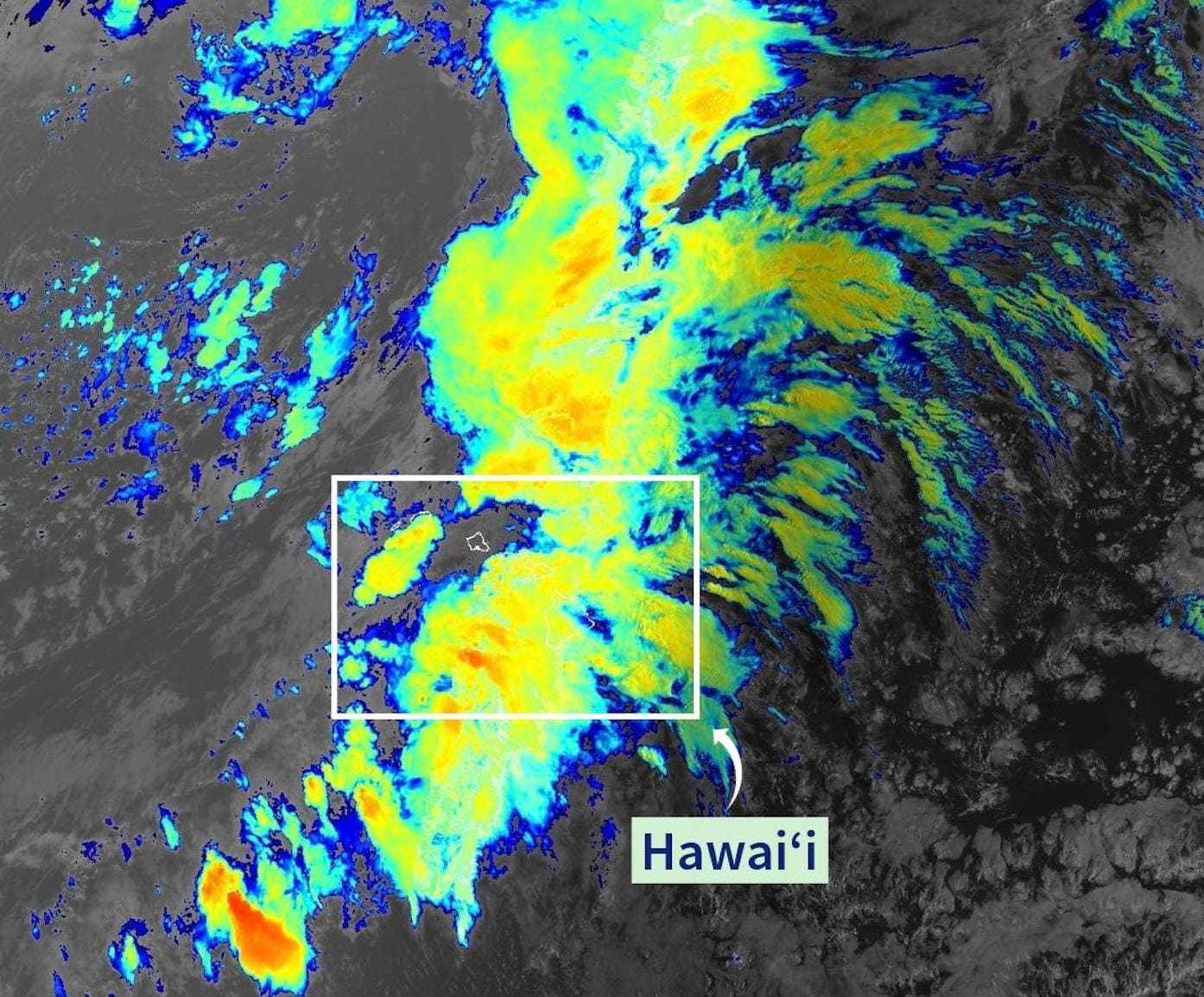
A severe kona storm has wreaked havoc across Hawaii, leading to significant flooding and extensive infrastructure damage. In response to the ongoing crisis, Governor Josh Green declared a state of emergency, as the torrential rainfall, landslides, and other related impacts continued through the weekend. The National Weather Service (NWS) in Honolulu reported that while the kona low has moved north, the islands are still affected by a wide-scale cyclonic flow that is dominating the central North Pacific.
A kona storm, identified as a type of seasonal subtropical cyclone, typically forms during Hawaii’s winter months. According to the National Oceanic and Atmospheric Administration (NOAA), the term “kona” translates to “leeward” in Hawaiian, referring to the side of the island that is sheltered from prevailing winds. In this case, moisture-rich winds from the south and southwest have inundated the region, resulting in unprecedented rainfall and snow at higher elevations.
The leeward locations of the islands are particularly vulnerable to landslides and flooding due to shallower soil and reduced vegetation cover. The NWS highlighted the severity of the situation, stating that the combination of tropical moisture, strong winds, and atmospheric instability could result in heavy rainfall, flash flooding, and severe thunderstorms expected to persist through the week.
This winter has already been notably wet for Hawaii, but the convergence of a stalled subtropical low and a moisture-laden atmospheric river intensified the rainfall event. Reports indicate that areas have experienced rainfall rates of 2 to 3 inches per hour, with total accumulations reaching several feet.
The impact on Maui has been particularly severe. Local residents describe the entire island as feeling submerged under water. Chris Dodds, a contributor to Surfer, reported that the steep slopes around Haleakalā have turned into torrents of mud and debris, prompting some to label this storm as potentially the worst rainstorm in the island’s modern history.
Despite the scale of the disaster, awareness on the U.S. mainland appears limited. Tom Gill, a professor at the University of Texas – El Paso, raised an important question regarding the visibility of the storm: “Is this a case where if the storm had a name there would be more awareness?” While kona storms are familiar to locals, the broader public may not fully grasp the extent of the ongoing crisis.
In light of the disaster, the American Red Cross has issued an urgent appeal for volunteers to assist with recovery efforts. The organization aims to address the widespread damage, including flooding, high winds, and power outages that have affected many communities across the islands. Emergency shelters are currently operational to provide necessary support to those impacted by the storm.
As Hawaii continues to navigate the aftermath of this destructive kona storm, the focus remains on recovery and rebuilding, highlighting both the immediate needs of those affected and the ongoing challenges posed by such extreme weather events.