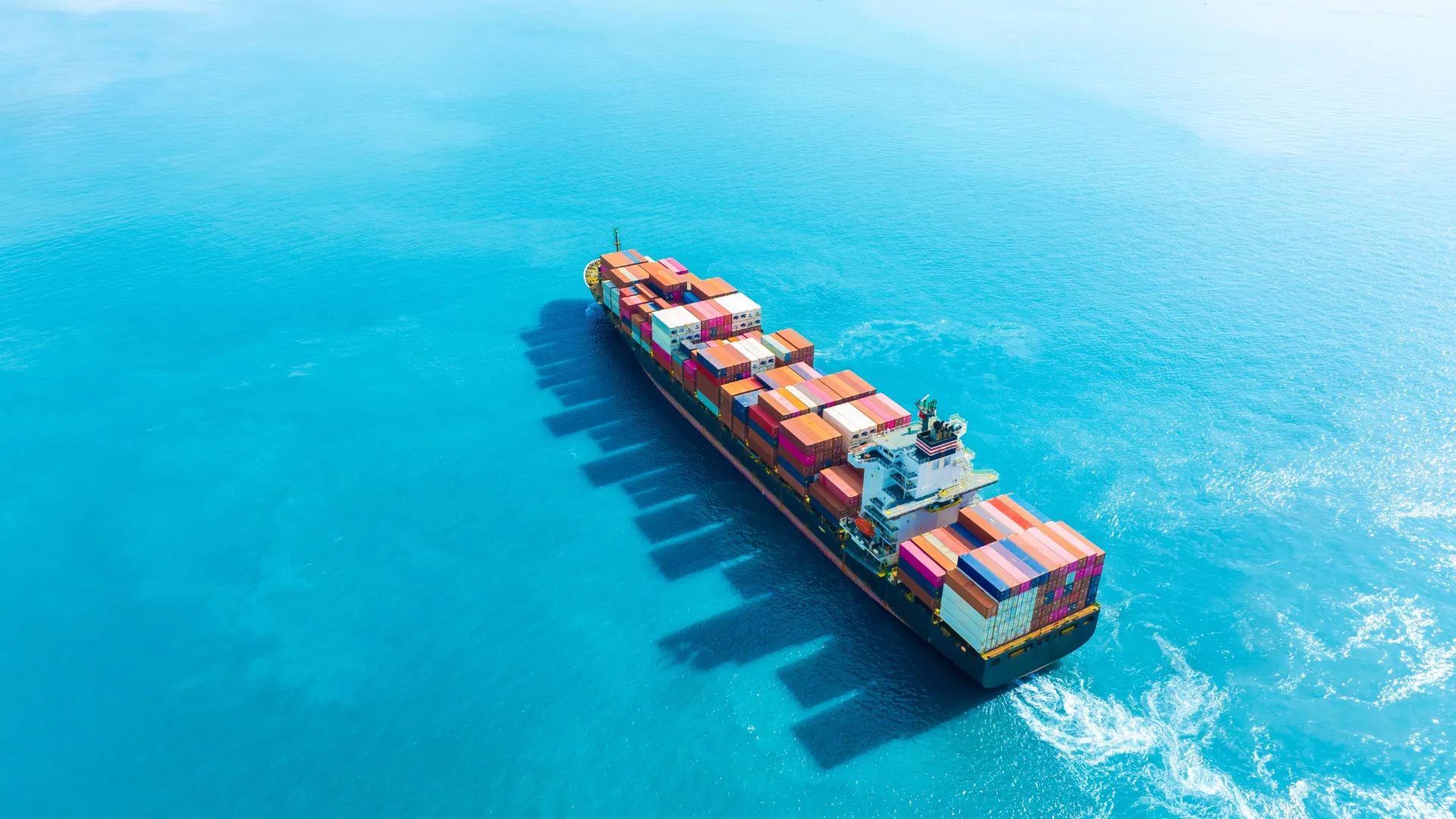
UPDATE: New research reveals that a significant shift in global shipping routes has triggered an unexpected climate breakthrough. Rerouted vessels, due to conflicts in the Red Sea, have provided scientists with a unique opportunity to study how low-sulfur marine fuels impact cloud formation—an urgent finding with major implications for climate science.
Starting in November 2023, militia attacks in the Bab al-Mandab Strait forced ships to divert around the Cape of Good Hope. This change resulted in a sharp rise in shipping activity in the South Atlantic, allowing researchers from Florida State University to investigate how these new practices affect atmospheric conditions.
In a groundbreaking study published in Atmospheric Chemistry and Physics, atmospheric scientist Michael Diamond and graduate student Lilli Boss found that the new regulations, which reduced sulfur content in marine fuels by approximately 80%, decreased cloud droplet formation by about 67%. This dramatic finding indicates that cleaner fuels significantly weaken the ability of ship emissions to influence cloud properties.
Diamond stated,
“The unexpected rerouting of global shipping gave us a unique opportunity to quantify aerosol-cloud interactions, reducing the largest source of uncertainty in global climate projections.”
His research highlights the critical relationship between shipping emissions and cloud formation, which has long been a debated topic in climate science.
The International Maritime Organization (IMO) implemented the sulfur regulations in January 2020 to combat air pollution. Aerosols from ship exhaust, particularly sulfate particles, play a vital role in cloud formation. Cleaner fuels produce fewer of these particles, which means clouds are less reflective and, consequently, less effective at cooling the Earth’s surface.
The implications of these findings are profound. With cleaner fuels reducing the overall cooling effect of clouds, the study provides crucial insights for policymakers seeking to balance public health and environmental regulations. The research suggests that while improving air quality is essential—potentially saving tens of thousands of lives—it also carries significant climate consequences.
As more ships shifted routes, satellite data revealed increased levels of nitrogen dioxide (NO2) in the southeastern Atlantic, a reliable indicator of shipping activity unaffected by the new regulations. This allowed the researchers to compare cloud conditions before and after the IMO 2020 regulations under similar shipping volumes.
Despite nearly doubling ship traffic in the region in 2024, researchers discovered that cloud droplet formation was significantly less impactful than it had been prior to the implementation of the low-sulfur regulations. The study identified a 67% reduction in the influence of shipping on cloud properties, strengthening the case that cleaner fuels substantially alter how clouds interact with atmospheric conditions.
This urgent research addresses one of the most challenging areas in climate science: understanding the dynamics of aerosol-cloud interactions. As scientists work to refine climate models, these findings provide clearer data that can inform future environmental regulations and public health policies.
The broader implications of this research underscore the complex trade-offs inherent in environmental regulation. As we strive to improve air quality, understanding how these changes affect climate patterns becomes increasingly important.
In conclusion, the unexpected rerouting of shipping vessels has not only created a natural laboratory for climate research but has also raised critical questions about our approach to air quality and climate change. As this story continues to develop, the scientific community will closely monitor how these findings influence both climate models and regulatory frameworks globally.