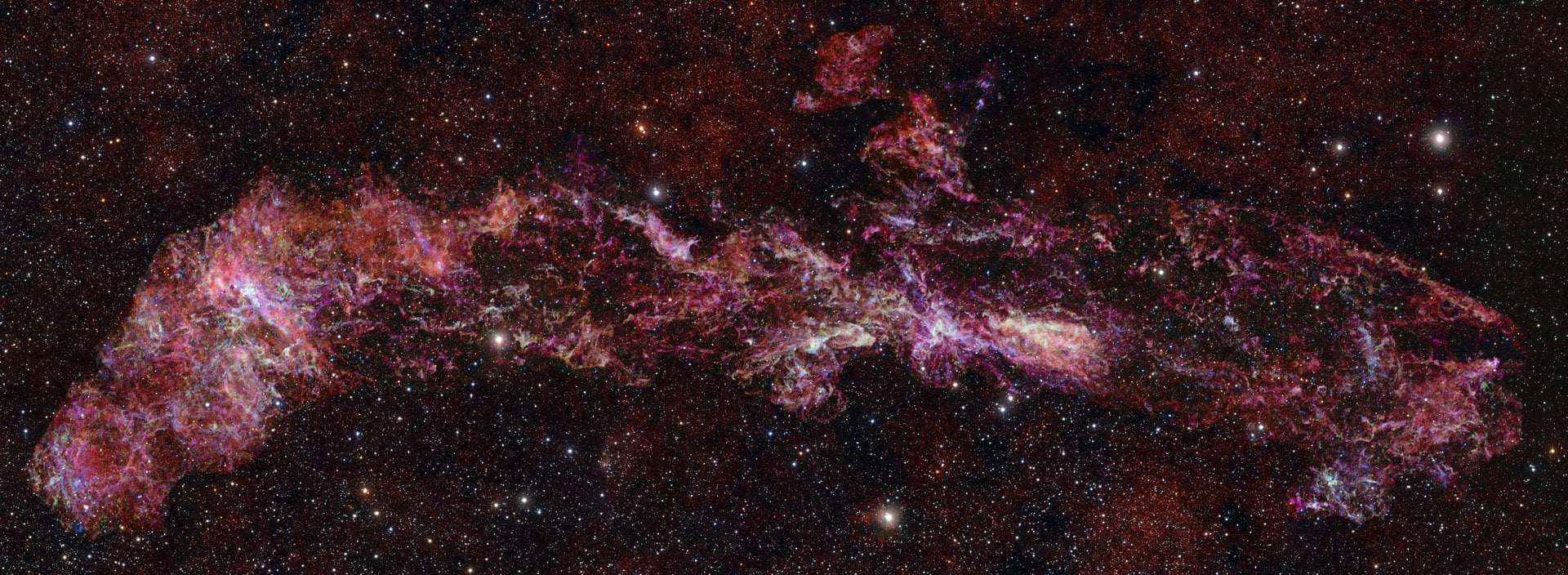
Astronomers have unveiled the largest image ever captured of the Milky Way’s central region, commonly referred to as the “Bulge.” Utilizing advanced radio astronomy techniques, researchers from the Atacama Large Millimeter/submillimeter Array (ALMA) have successfully imaged a section of the galaxy’s heart that measures approximately 650 light-years in diameter. This unprecedented achievement sheds light on the complex dynamics and chemistry occurring in this densely populated area.
The new image showcases a network of intricate filaments comprised of dense clouds of cosmic gas, known as the Central Molecular Zone (CMZ). This region is home to the well-known supermassive black hole, Sagittarius A*, among other fascinating celestial phenomena. The detailed dataset will enhance our understanding of star formation and the chemical processes that could illuminate the origins of life within our galaxy.
A team of over 160 scientists from more than 70 institutions across Europe, North and South America, Asia, and Australia collaborated on this groundbreaking research under the umbrella of the ALMA CMZ Exploration Survey (ACES). Their work focuses on studying cold gas and identifying various chemical signatures in the CMZ, ranging from simple compounds, like silicon monoxide, to complex organic molecules, such as hydrocarbons.
Unprecedented Insights into Star Formation
The findings of the ACES project, detailed in a series of papers published in the Monthly Notices of the Royal Astronomical Society, represent the largest ALMA survey conducted to date focused on the Galactic Center. The resulting mosaic of radio images spans an area of the night sky comparable to three full Moons positioned side by side.
Principal Investigator Steven Longmore led the project, supported by co-principal investigators from each participating institution. One of these collaborators, Ashley Barnes, an astronomer at the European Southern Observatory (ESO), which oversees the ALMA array, noted the significance of their observations. She explained that the image illustrates how cold molecular gas flows along filaments that feed into clumps from which new stars are born.
Astronomers have established a good understanding of star formation processes in the outer disk of the Milky Way. However, the extreme conditions present in the center pose unique challenges. The newly acquired dataset allows researchers to explore whether existing theories of star formation apply in these harsh environments.
Longmore expressed enthusiasm about the results, stating, “The observations also provided a few surprises. Whereas the team anticipated that their observations would yield a high level of detail, they were still awestruck by the complexity and richness revealed in the final mosaic.”
Future Prospects for Exploration
This comprehensive survey is expected to pave the way for even more detailed observations in the future. The upcoming ALMA Wideband Sensitivity Upgrade, along with the ESO’s Extremely Large Telescope, will enable astronomers to delve deeper into the Milky Way’s heart. Barnes emphasized the potential of these advancements, stating, “We will soon be able to push even deeper into this region — resolving finer structures, tracing more complex chemistry, and exploring the interplay between stars, gas, and black holes with unprecedented clarity.”
As this exciting chapter in astronomical research unfolds, it is clear that the exploration of the Milky Way’s central region is just beginning. The newly captured insights will undoubtedly lead to further revelations about the formation and evolution of stars and the intricate chemistry that plays a crucial role in the universe.