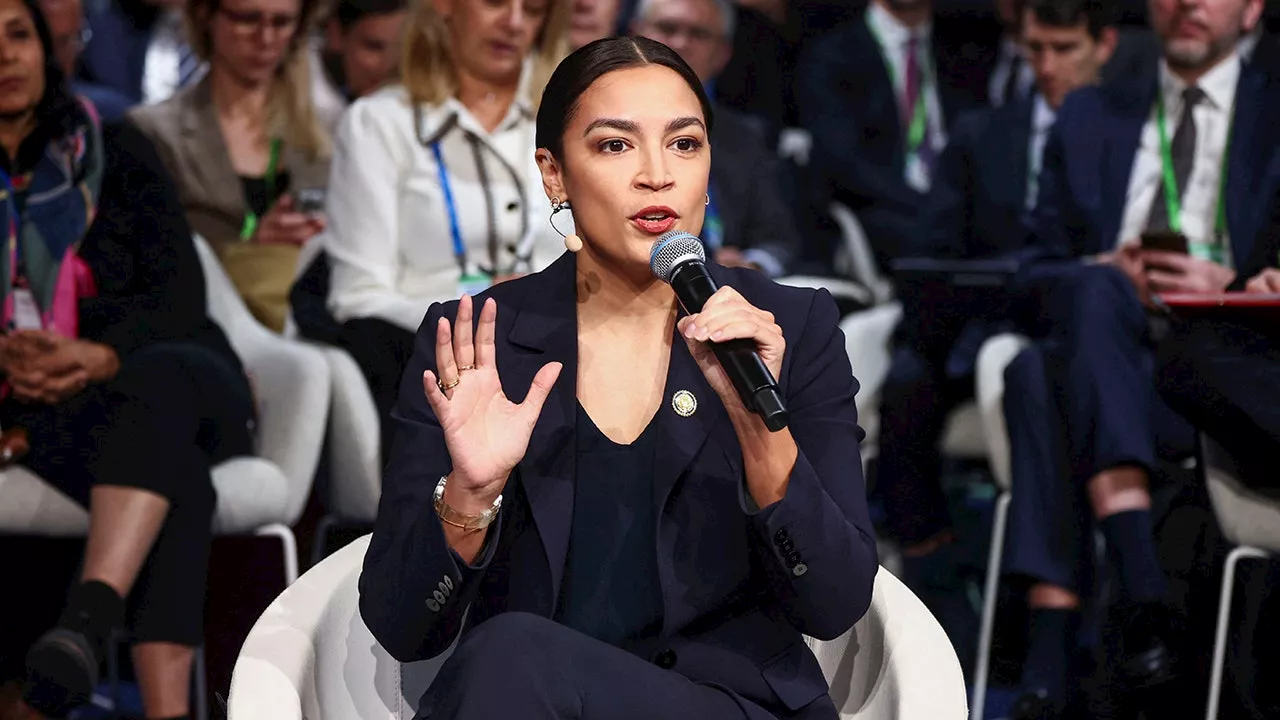
URGENT UPDATE: At the Munich Security Conference on October 13, 2023, Rep. Alexandria Ocasio-Cortez (D-N.Y.) made explosive allegations, asserting that U.S. aid to Israel facilitates what she termed a genocide in Gaza. Her remarks have ignited fierce backlash from experts and officials alike.
In a highly charged speech, Ocasio-Cortez emphasized, “The idea of completely unconditional aid, no matter what one does, does not make sense. I think it enabled a genocide in Gaza.” She invoked the Leahy Laws, which prohibit U.S. assistance to foreign military units involved in human rights violations. Her comments come amid escalating tensions following a recent conflict that began when Hamas launched an attack on Israeli communities on October 7, 2023, resulting in the deaths of over 1,200 individuals and the abduction of 251 hostages.
Ocasio-Cortez’s claims have drawn sharp criticism from various military and international affairs experts. Tom Gross, an international affairs analyst, stated, “AOC has flown all the way to Munich — infamous as the city in which Hitler staged his Nazi Beer Hall Putsch — in order to smear the Jewish people with a phony genocide allegation.” He condemned her statements as a harmful perpetuation of antisemitism.
Military historians also refuted Ocasio-Cortez’s claims. Danny Orbach, a military historian from the Hebrew University of Jerusalem, argued that her accusations lack factual and legal basis. According to Orbach, the Genocide Convention requires proof of intent to destroy a group and notes that Israel has taken unprecedented measures to avoid civilian casualties, including establishing humanitarian safe zones and facilitating significant humanitarian aid.
The international community is closely watching the implications of Ocasio-Cortez’s statements. With ongoing debates about U.S. foreign policy and military aid, her remarks could influence future discussions on humanitarian conditions tied to aid.
As the situation in Gaza remains critical, this controversy raises urgent questions about the responsibilities of nations in conflict zones and the implications of foreign aid. Observers are urged to remain alert for further developments in this unfolding story.
The ramifications of this discourse will likely resonate beyond the conference, shaping public opinion and policy regarding U.S. involvement in international conflicts.