UPDATE: Adidas is facing a significant challenge as Bank of America (BofA) just announced a rare double-downgrade of its stock, now rated as a “sell.” This urgent update comes as the two-decade trend of casual fashion appears to have reached its peak, with major implications for the iconic brand.
According to BofA’s latest research, the evolution of fashion towards casual wear—a trend that has pushed sneakers from 20% to 50% of the footwear market—is now in decline. This shift has resulted in a dramatic change in consumer behavior, with many opting for sweatpants priced similarly to traditional slacks.
As society grows increasingly casual, BofA’s analysts argue that Adidas will suffer a downturn, forecasting that organic sales growth will shrink into single digits. The firm’s decision to lower its rating from “buy” to “underperform” signifies a stark contrast to the generally positive outlook from other analysts on Wall Street.
In a critical note, BofA highlighted that shares of Adidas plummeted by as much as 7% on Tuesday, reflecting market apprehension following the downgrade. While the stock has already dropped 29% throughout 2025, BofA believes Adidas must prepare for intensified competition from brands like Nike, Asics, and On, all of whom are positioned to capitalize on the potential shift away from casual attire towards sporting goods.
This situation is further complicated by Nike’s recent resurgence, driven by strong North American growth and backed by viral marketing initiatives. Despite a 14% drop since the start of 2025, Nike’s performance remains significantly better than Adidas, suggesting that the iconic brand could face a challenging road ahead.
Amid these developments, many are wondering about the potential impact of the upcoming World Cup, especially given Adidas’s association with star player Lionel Messi. However, BofA warns that any short-term boosts from the tournament could quickly fade, leaving the brand to grapple with ongoing challenges as the year progresses.
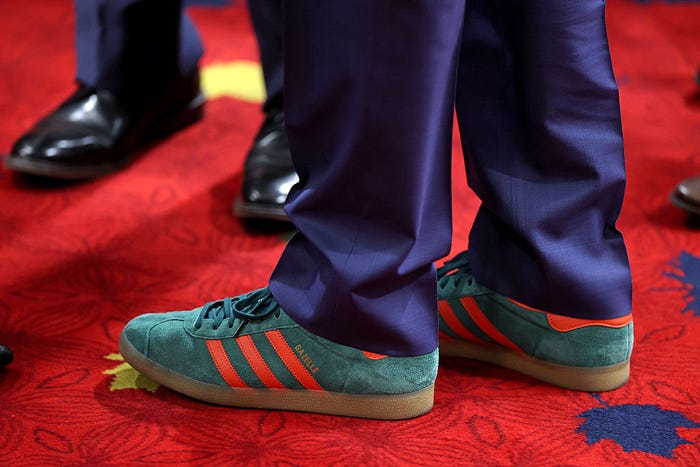
In a somewhat ironic twist, the end of this casualization trend might signal the demise of the sneakers-with-suits phenomenon, a shift that could resonate positively with traditional fashion sensibilities.
As Adidas navigates these turbulent waters, the implications for consumers, investors, and the fashion industry at large are profound. With an urgent need to adapt, all eyes will be on how the brand responds in the coming months.
Stay tuned for further updates as this situation develops.