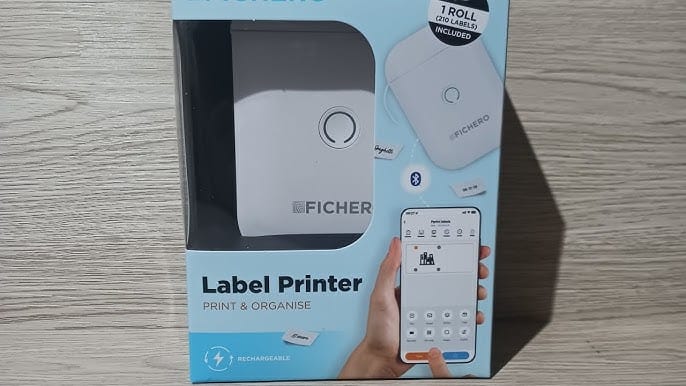
The reverse-engineering of the Bluetooth protocol used by the Fichero thermal label printer has opened new avenues for users seeking greater control over their devices. Acquired for just €10 in a store in the Netherlands, this label printer is emblematic of a growing trend in affordable printing technology that often relies on proprietary smartphone applications.
Users of the Fichero printer quickly discover that its associated app demands an extensive list of permissions—specifically, 26 permissions. This limitation sparked a significant effort to decode the Bluetooth Low Energy (BLE) protocol. The results of this reverse-engineering project are now available in a GitHub repository, providing valuable insights into the printer’s functionality.
Understanding the Fichero and Its Generic Counterparts
The most intriguing finding from this effort is that the Fichero printer is not unique; it is essentially a relabeled version of a generic model known as the AiYin D11, produced by Xiamen Printer Future Technology. As a result, any iterations of the D11 will function similarly, relying on the same underlying software development kit (SDK) known as “LuckPrinter.” This shared architecture means that users can leverage the same reverse-engineering insights across different brands and models.
In practical terms, users can now communicate with their D11 printers through a web-based graphical user interface (GUI) developed by 0xMH. This interface allows users to operate the label printer directly from a local network. Additionally, Python scripts are available for those who prefer a more hands-on programming approach. Users can also implement the protocol using various programming languages and frameworks, enhancing accessibility and control over these affordable devices.
Broader Implications for Low-Cost Technology
The implications of this reverse-engineering project extend beyond just the Fichero printer. As more consumers opt for budget-friendly printing solutions, the ability to unlock full functionality through software represents a significant shift in how users interact with technology. The project showcases the potential for broader accessibility in the printing market, enabling greater customization and usability.
This initiative underscores the importance of community-driven efforts in technology. With contributions from individuals like T-ice, the reverse-engineering of the Fichero printer exemplifies how collaborative projects can lead to enhanced user experiences. As this trend continues, it is likely that more consumers will seek out similar solutions, redefining their relationship with technology and the products they use.
In conclusion, the reverse-engineering of the Fichero thermal label printer not only sheds light on the inner workings of this device but also highlights the potential for users to gain greater autonomy over their technology. With the growing availability of resources and tools, the future of low-cost printing appears more promising than ever.