At the recent Consumer Electronics Show (CES) in Las Vegas, Realbotix showcased its evolution from a company known for adult dolls to one focused on developing advanced customer-service robots. The shift marks a significant transformation for the company, which was originally established as RealDoll. Now, under the leadership of Andrew Kiguel, Realbotix is positioning itself as a next-generation provider of humanoid robots designed for various business applications.
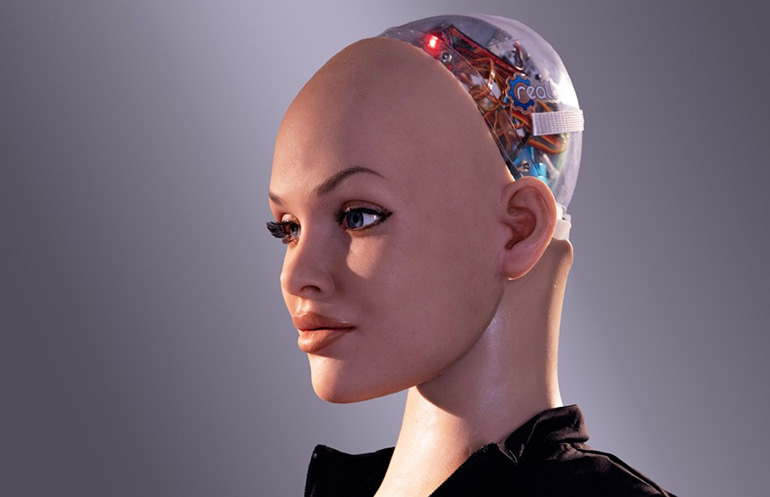
Realbotix’s booth featured lifelike robots distinguished by their attractive facial features and realistic skin, attracting considerable attention among the many exhibitors, particularly those from China and Europe. This pivot from novelty to practical utility highlights a broader trend in the robotics industry, as companies explore ethical considerations and new applications for AI companions.
In an interview, Kiguel discussed the origins of Realbotix and its partnership with Matt McMullen, the creator of RealDoll. He explained, “When I met Matt, he started adding mechanics and AI into the dolls. RealDoll has been around for about 25 years, and when I saw this, Matt needed capital. I had capital.” This collaboration led to the acquisition of Abyss Creations, the parent company of RealDoll, in July 2024, which facilitated the formation of the publicly traded Realbotix (OTC: XBOTF).
Kiguel’s strategy involves bifurcating the company into two distinct entities. The first is Abyss Creations, which continues to market intimacy devices including the original RealDoll product line. The second, Realbotix, focuses on business-to-business applications, providing robots for sectors like hospitality, casinos, and retail.
Kiguel emphasized that the Realbotix robots are designed for service rather than physical intimacy. “Realbotix robots are not capable of physical intimacy. That’s not what they’re made for,” he stated. He elaborated that the robots can integrate various AI systems, including the popular ChatGPT, enabling them to assist with activities such as room service requests or booking reservations.
As the conversation shifted to the ethical implications of AI companions, Kiguel acknowledged the need for thoughtful consideration. Rabbi Daniel Nivens, an expert on AI ethics, raised concerns about the potential impact of romantic robots on human relationships. He suggested that while these robots might assist individuals who are socially isolated, they could also hinder genuine human interactions.
Kiguel confirmed that Realbotix is exploring educational applications for its robots, particularly in tutoring environments. “We would never market our stuff as a babysitter or caregiver for anyone under 18,” he insisted, reflecting a cautious approach to the expansion of their technology into sensitive areas.
The company also sees potential for its robots in therapeutic settings. Kiguel mentioned that the U.S. military has inquired about using Realbotix products for therapy related to combat trauma. Furthermore, trucking companies have expressed interest in the robots as companions for drivers during long hauls, highlighting the emotional support aspect of their service.
Despite the substantial potential for AI in improving social interaction, concerns regarding safety and ethics remain paramount. As of February 2026, numerous lawsuits have been filed against OpenAI, alleging that their technology encourages harmful behaviors. Kiguel stated that Realbotix follows best practices from established AI companies, including OpenAI and Google, to ensure safety protocols are in place for their products.
Realbotix’s technology features innovative designs, including a modular interchangeable face and a robotic vision system capable of interpreting social cues. Kiguel proudly claimed, “We believe we’ve developed the first robotic vision system that connects to AI, so it’s more than observational.”
The pricing of Realbotix products starts at $20,000 for a robotic torso, escalating to $125,000 for fully featured models like the F-Series robot named Aria. This pricing strategy illustrates the company’s commitment to moving beyond its adult entertainment roots and focusing on practical applications for businesses.
Kiguel highlighted the return on investment for businesses that adopt Realbotix robots. For example, employing a robot as a concierge could significantly reduce labor costs compared to hiring a full-time staff member, who might earn around $75,000 annually.
In drawing parallels to historical trends in technology adoption, some experts suggest that sectors like adult entertainment often drive innovation. Professor Jonathan Coopersmith‘s research indicated that such markets are frequently the first to embrace new technologies, paving the way for broader acceptance in mainstream markets.
As Realbotix continues to navigate this complex landscape, the company is poised to make humanoid robots a common presence in various service sectors, potentially redefining the role of AI in everyday life.