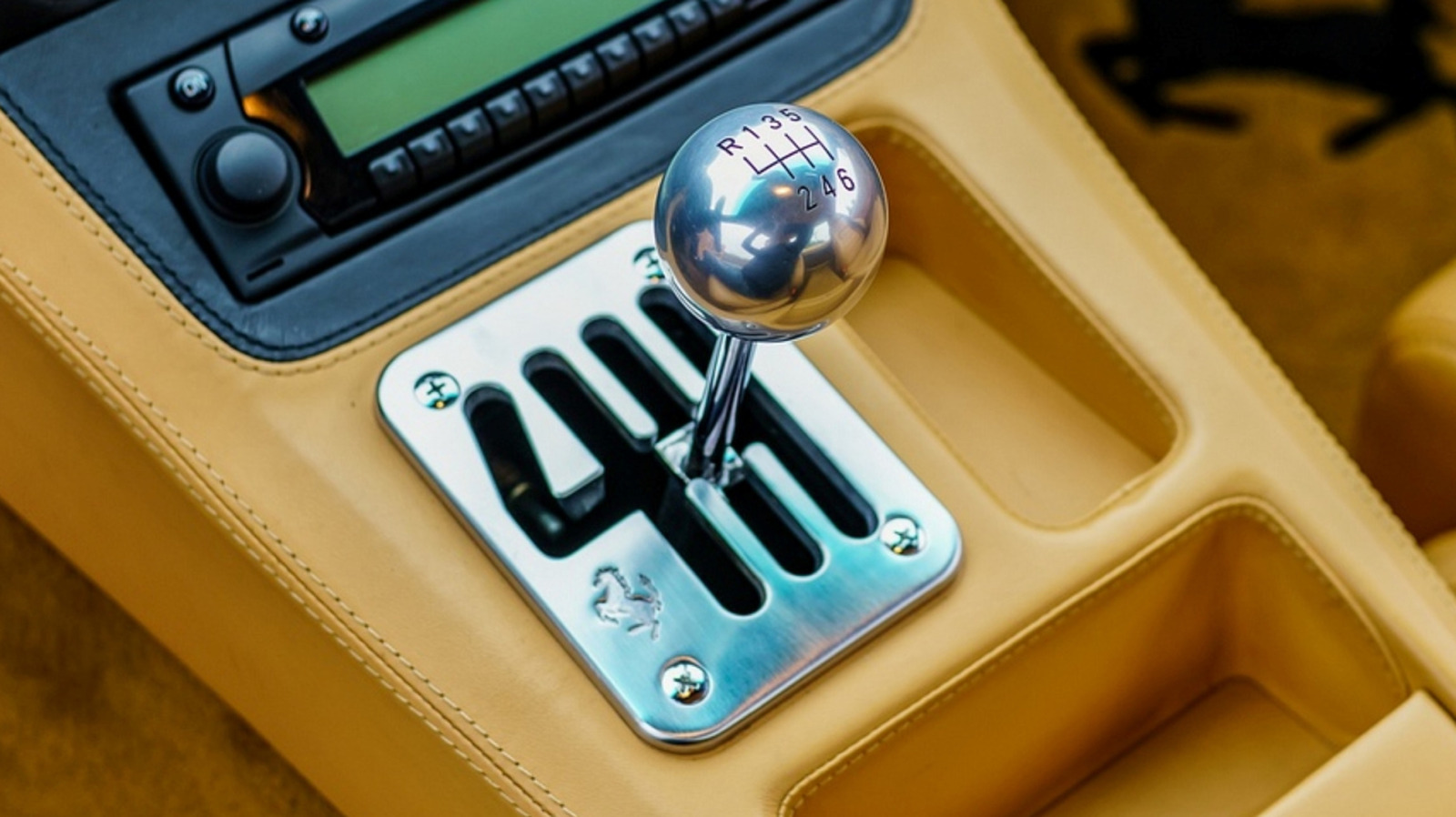
In a surprising turn, the luxury carmaker Ferrari has made it clear that it has no intention of reviving manual transmissions in its new vehicles, despite a growing market for converted manual versions of its classic models. During the Amalfi reveal in July 2025, Ferrari’s chief marketing and commercial officer, Enrico Galliera, stated, “You missed it! The manual gearbox, we already have it, in many of our classic cars.” He suggested that enthusiasts seeking a manual experience should restore older models instead of looking to the current lineup.
This announcement contrasts with earlier discussions in 2025 regarding the possibility of limited-edition models featuring gated manual transmissions. Ferrari’s reluctance to embrace manual gearboxes may be influenced by the company’s focus on high-speed performance and the popularity of dual-clutch systems. However, the rising value of converted manual Ferraris raises questions about whether Ferrari should reconsider its position.
Recent data indicates a significant disparity in market values between manual and automatic versions of popular Ferrari models. According to a Hagerty analysis from May 2023, the average value difference for converted Ferraris was approximately 9.4% less than their stock counterparts. Notably, among the vehicles analyzed were a 430 Scuderia, two 599 GTBs, and seven F430s. The findings showed that while some converted models sold for above market value, many did not.
However, a shift appears to be occurring. By January 2026, data from Bring A Trailer showed that converted models were increasingly commanding higher prices. The average sale price for the last ten F1 F430s was recorded at $122,102, while the average for the last ten converted F430s reached $151,969. Similarly, converted 599 GTBs and 575Ms outperformed their automatic counterparts, with averages of $209,700 and $149,833, respectively.
This trend suggests that early adopters of manual conversions are redefining the market landscape. Enthusiasts are even becoming discerning about the types of manual conversions, often inquiring whether the conversion employs cables or rods, with rods being considered superior.
While some may argue that these trends could just be statistical anomalies, the growing demand for engagement and driving experience over pure speed cannot be overlooked. The sentiment is echoed by notable figures such as Formula One champion Lewis Hamilton, who publicly expressed a desire for Ferrari to produce a new F40 with a gated manual transmission.
Ferrari has a rich history of crafting iconic manual vehicles, and the current market dynamics echo the success of manufacturers like Porsche. Customers have shown a willingness to invest significantly in manual versions of the 911, particularly limited models such as the GT3 Touring. This indicates a strong market potential that Ferrari may be missing out on by not adapting to consumer preferences.
The brand’s dual-clutch gearbox is renowned for its efficiency and speed, capable of handling the power of models like the 812 Superfast. There is potential for Ferrari to innovate by engineering a manual gearbox that retains the performance characteristics of their existing systems.
The stakes are high for Ferrari, especially as it navigates the balance between tradition and modern performance demands. If customer interest continues to shift toward manual conversions, the company may be compelled to reevaluate its strategy. Ferrari operates as a publicly traded company, and shareholder interests will play a crucial role in shaping the future direction of its offerings.
As the market for converted Ferraris thrives, it remains to be seen whether Ferrari will ultimately embrace this trend or continue to focus solely on its automated systems. Enthusiasts and collectors alike will be watching closely as the values of these vehicles continue to evolve in a rapidly changing automotive landscape.