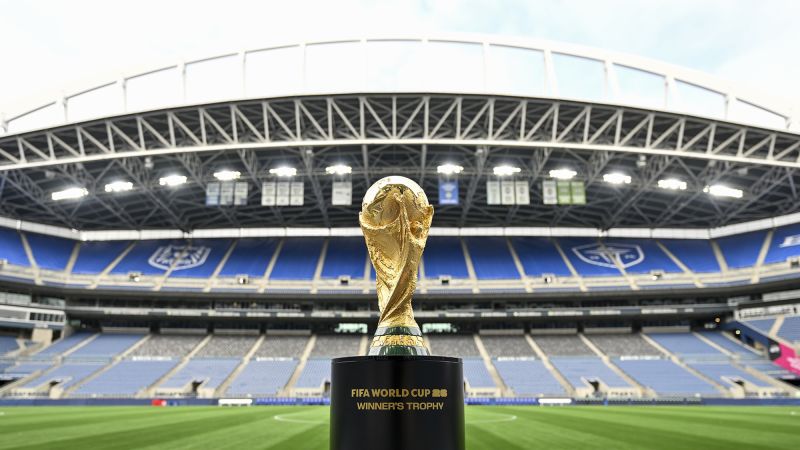
A FIFA World Cup match set for June 26, 2026, in Seattle has ignited outrage from the football federations of Egypt and Iran due to planned Pride celebrations surrounding the event. Local organizers in Seattle had earmarked the match as an opportunity to honor the LGBTQ+ community, coinciding with the start of Seattle’s Pride Weekend. However, the response from both countries has raised questions about cultural sensitivities and FIFA’s handling of such issues.
Details of the Planned Celebrations
Seattle is one of the 16 cities chosen to host matches during the upcoming World Cup. The local organizing committee, known as Seattle World Cup 26 (SeattleFWC26), envisioned the event at Lumen Field as a chance to celebrate diversity and inclusion. Activities planned for outside the stadium include an art competition focused on the “creativity, inclusion, and vibrant spirit” of Seattle’s LGBTQ+ community. While no Pride events are slated for inside the stadium—where FIFA has jurisdiction—the committee believes the celebrations will reflect the city’s welcoming nature.
The match between Egypt and Iran follows a recent draw that determined the tournament schedule. Simultaneously, Belgium and New Zealand will compete in Vancouver.
Responses from Egypt and Iran
Both Egypt and Iran have expressed strong opposition to the proposed Pride festivities. In Egypt, homosexuality is not explicitly illegal, but LGBTQ+ individuals can face prosecution under public decency laws. In contrast, Iran enforces severe penalties for homosexuality, including the death penalty. The Egyptian Football Association publicly articulated its concerns, stating that the planned celebrations “directly contradict the cultural, religious, and social values in the region, especially in Arab and Islamic societies.”
The statement emphasized the need to avoid activities that could escalate tensions among fans from both countries. Meanwhile, Mehdi Taj, president of Iran’s Football Federation, labeled the event’s scheduling as “unreasonable and illogical,” asserting that it signals support for a specific group.
Organizers Maintain Commitment to Celebrations
Despite the backlash, Seattle organizers remain steadfast in their plans. A spokesperson for SeattleFWC26 stated that the activities would proceed as intended, highlighting the city’s commitment to unity. “Football has a unique power to unite people across borders, cultures, and beliefs,” said Hana Tadesse, the committee’s vice president of communications. She noted that Seattle is home to significant Iranian and Egyptian communities, reinforcing the need for a respectful environment.
Local organizations, including Seattle PrideFest, are collaborating with the organizing committee to ensure safety during the celebrations. They aim to showcase Seattle as a welcoming city while addressing safety concerns raised by some community members.
FIFA’s Historical Context and Current Position
As organizers navigate this situation, FIFA’s previous handling of cultural issues during the 2022 World Cup in Qatar comes to mind. The governing body had urged fans to respect local customs, with reports of rainbow flags being confiscated at the stadium. FIFA also threatened sanctions against players who wore “OneLove” armbands, designed to promote inclusion and oppose discrimination.
FIFA has not yet publicly addressed the current controversy regarding the Seattle match. The upcoming FIFA Council meeting may provide a platform for further discussion on this matter. Notably, Qatar is scheduled to play in Seattle just two days prior to the Egypt-Iran fixture.
The situation continues to develop, highlighting the complexities of hosting an international event amid diverse cultural perspectives. As Seattle prepares for the World Cup, the balance between celebration and respect for various values remains a critical challenge.