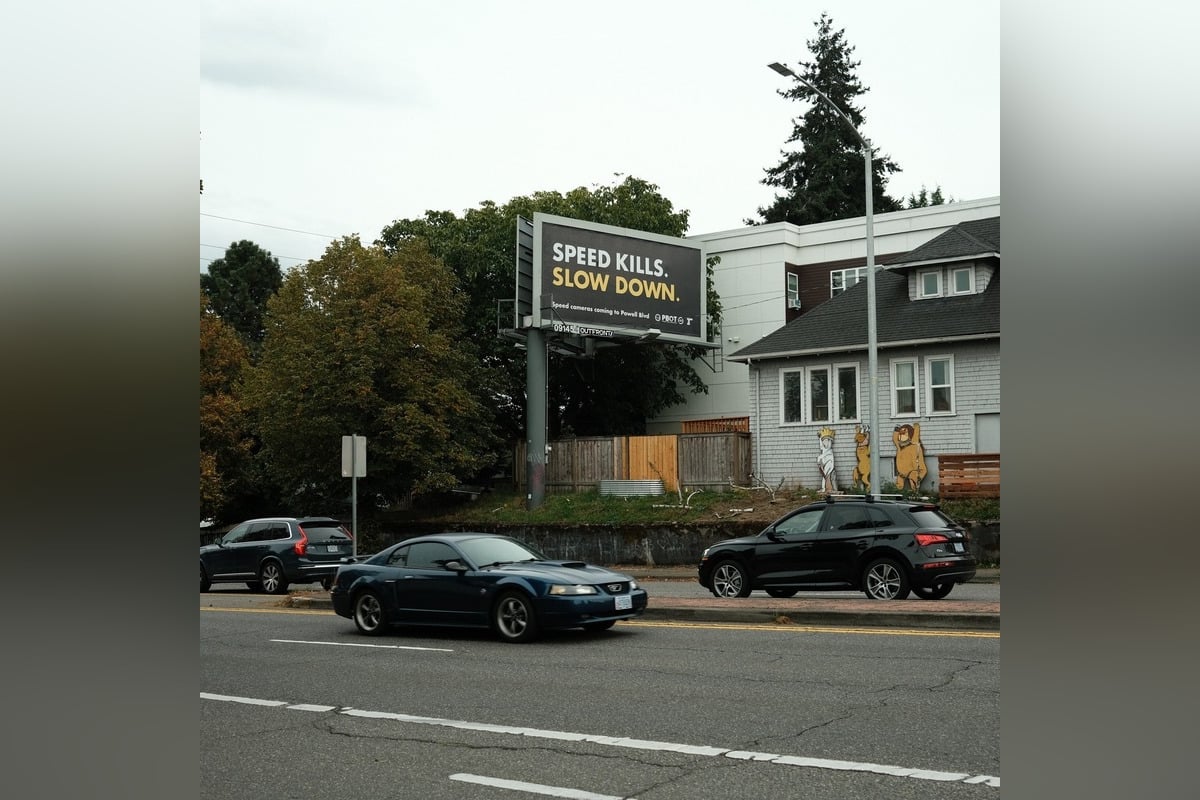
Portland recorded a notable decrease in traffic-related fatalities, with 39 deaths in 2025, marking the second consecutive year of decline. While this figure represents the lowest annual total since 2018 and a significant drop from the 69 deaths reported in 2023, the city remains distant from achieving its Vision Zero goal of eliminating traffic deaths entirely. Local planners assert that bridging this gap is feasible, but it will require targeted interventions, consistent funding, and a commitment from political leaders.
According to the City of Portland’s 2025 Deadly Traffic Crash Report, the drop in fatalities is encouraging, yet the report emphasizes that the risks are not evenly distributed across the city’s streets. Focused measures are deemed essential to ensure that the downward trend continues. Metro transportation planner Lake McTighe highlighted that Portland could learn from smaller cities that have successfully reduced traffic fatalities to zero. He noted the importance of adopting comprehensive strategies. “Cities are focusing on safe speeds, so they have a 20-mile-per-hour speed limit in the entire city, which is a survivable speed,” McTighe explained.
Hoboken’s Successful Speed Management Strategies
The city of Hoboken has implemented a citywide speed limit of 20 mph, complemented by various safety measures such as intersection daylighting, curb extensions, protected bike lanes, and leading pedestrian intervals. This combination of reduced speeds and design enhancements has contributed to Hoboken’s record of several years without a traffic fatality, according to the City of Hoboken. Transportation advocates argue that this holistic approach aligns with the principles of a Safe System, which emphasizes safety across all modes of transport. The Vision Zero Network has cited Hoboken’s initiatives as exemplary, demonstrating that smaller municipalities can achieve significant safety improvements through clear policies.
Portland’s traffic data reveals that its most dangerous areas are notably concentrated. The city’s High Crash Network, which comprises approximately 8 percent of its streets, has been responsible for around two-thirds of recent traffic deaths, according to analysis by the Portland Bureau of Transportation (PBOT). Nationwide, intersections play a critical role in accident statistics, with the Federal Highway Administration reporting that they account for nearly half of nonfatal injury crashes. This underscores the potential impact of strategic interventions like daylighting corners and optimizing traffic signal timings.
Funding Challenges for Safety Initiatives
Despite the promising data, ongoing budget cuts pose a threat to safety initiatives. Recent changes to the state budget will reallocate funds within the Oregon Department of Transportation (ODOT), resulting in a cut of approximately $17 million from the Safe Routes to School construction program. This funding reduction is expected to delay grant cycles and diminish the size of future awards. Local advocates express concerns that fewer and smaller grants will impede Portland and other Oregon communities from implementing essential, cost-effective safety measures such as curb extensions and upgraded crosswalks.
Planners emphasize the importance of swift action. They argue that Portland does not need to wait for extensive, multi-year projects to enhance street safety. Quick-build solutions such as curb extensions, improved signal timing, and leading pedestrian intervals can be implemented relatively quickly to reduce vehicle speeds and improve pedestrian safety. Federal programs, including the U.S. Department of Transportation’s Safe Streets and Roads for All (SS4A) grants, provide essential funding for cities to accelerate these efforts.
The future of traffic safety in Portland hinges on whether local leaders will prioritize comprehensive speed management and allocate adequate resources to enhance intersection safety measures throughout the city. As the city seeks to translate its recent decline in traffic deaths into a sustained reduction, a commitment to actionable solutions will be critical in the journey towards achieving Vision Zero.