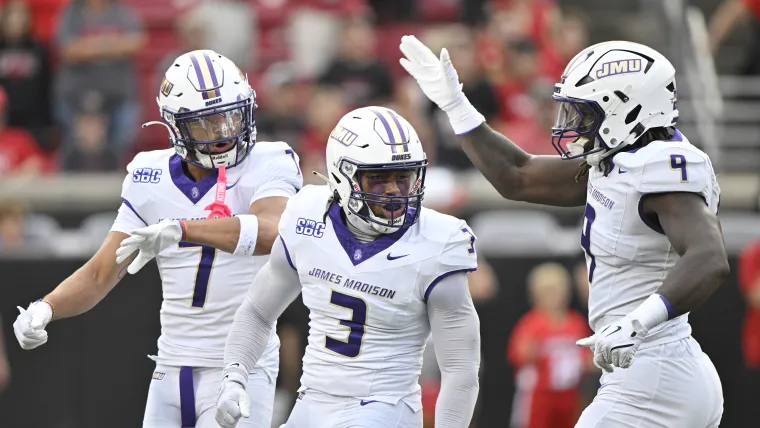
Making the College Football Playoff (CFP) is often seen as a transformative achievement for a university’s football program. For James Madison University (JMU), however, this milestone has led to unexpected challenges. Following their historic CFP appearance, JMU now confronts the reality of significant roster changes, primarily due to player departures through graduation and the increasingly influential transfer portal.
The Dukes face a daunting rebuild as nearly the entire starting offense from their playoff run will not return for the upcoming season. Notably, quarterback Alonza Barnett III has announced his entry into the NCAA transfer portal. Barnett was instrumental in leading JMU to the Sun Belt Championship and the CFP, making his departure particularly impactful. Alongside him, starting running back Wayne Knight is also leaving, resulting in the loss of the team’s top two offensive leaders.
Departures Impacting the Offense
The changes do not end there. JMU’s wide receiving corps has also been significantly affected. Both Jaylan Sanchez and Nick DeGennaro graduated, further stripping the offense of experience and reliability, crucial for a team that will need to integrate a new quarterback.
The offensive line has also suffered substantial losses. Two starters, Joseph Simmons and Trent Wilson, have entered the transfer portal, adding to the challenge of replacing a majority of the protection unit. The Dukes will have to navigate these transitions while ensuring effective offensive strategies.
At the tight end position, JMU’s depth has been compromised as well. Key player Lacota Dippre is also transferring, along with another tight end, Josh Phifer. The loss of both players diminishes the team’s size and versatility on offense, complicating their rebuilding efforts.
In total, eight of the eleven offensive starters from JMU’s CFP game will not return next season. While some departures stemmed from graduation, the transfer portal has played a crucial role in this turnover. The success of JMU’s football program has made its top talent vulnerable to recruitment from larger schools offering more lucrative opportunities through name, image, and likeness (NIL) arrangements.
The Challenge of Sustaining Success
This situation underscores a significant challenge facing Group of Five (G5) programs in contemporary college football. When these teams achieve success, they often become targets for larger programs looking to reload their rosters. Whereas power conference teams can easily replenish talent, G5 teams like JMU frequently find themselves needing to rebuild.
JMU has demonstrated its ability to compete on the national stage, but the real test now is whether the Dukes can maintain their momentum amid such substantial losses. In modern college football, winning is only one part of the equation; holding onto a cohesive and competitive roster may prove to be the hardest challenge of all.
As JMU prepares for its next chapter, the focus will be on how effectively the program can navigate this transition and emerge resilient from the aftermath of a successful yet costly season.