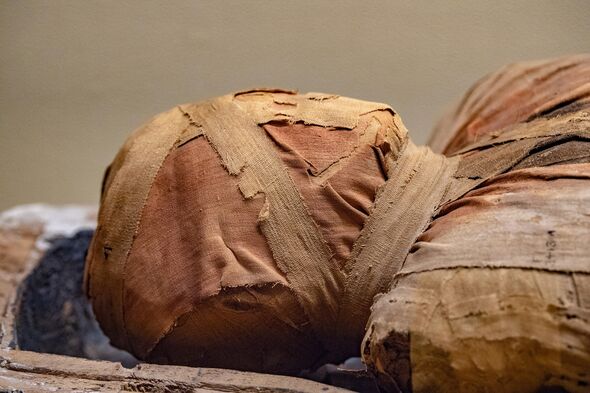
Scientists have made an extraordinary discovery in southwestern Libya, unearthing two mummified corpses estimated to be nearly 7,000 years old that exhibit no traces of modern human DNA. This groundbreaking find was led by archaeogeneticist Nada Salem and her team, who explored the Takarkori rock formation, a site previously known for its archaeological significance.
During their research, the scientists identified unique DNA markers from a genetic lineage that has no known relation to contemporary humans. The two mummies, believed to be female herders, date back to a period when the Saharan Desert was considerably greener and more hospitable, known as the African Humid Period, which lasted from approximately 14,800 to 5,500 years ago.
Insights from Genetic Analysis
The study, published in the journal Nature, reveals that the ancestry of the Takarkori individuals diverged from sub-Saharan lineages around the same time as modern humans began to emerge outside Africa. According to the findings, the Takarkori mummies are genetically closer to ancient foragers from Taforalt Cave in Morocco, who lived about 15,000 years ago, than to current human populations.
Notably, the analysis also uncovered traces of Neanderthal DNA in the Takarkori mummies, a genetic marker not present in other known groups from the same era. This suggests that while the Takarkori interacted less with Neanderthals compared to their counterparts in Taforalt, they still retained some genetic legacy from these ancient hominins.
“Our findings suggest that pastoralism spread through cultural diffusion into a deeply divergent, isolated North African lineage that had probably been widespread in Northern Africa during the late Pleistocene epoch,”
the research team noted in their study.
Implications for Understanding Human History
The study suggests that the Takarkori people likely descended from an earlier hunter-gatherer group that existed before the advent of agriculture and domestication of animals. While primarily identified as hunter-gatherers, the Takarkori individuals exhibited advancements in pottery, basket-making, and tool manufacturing using wood and bone.
Despite their innovative capabilities, the group is believed to have remained largely localized due to the diverse environments within the Sahara, which included lakes, wetlands, woodlands, grasslands, savannas, and mountains. These varied habitats may have created barriers that limited interaction with other human populations.
This remarkable discovery adds to the growing body of evidence surrounding ancient human history. Recently, archaeologists have also identified mummies across Southeast Asia that date back approximately 14,000 years, making them some of the oldest ever found. These mummies, excavated in regions such as southern China, Vietnam, and Indonesia, predate their Egyptian counterparts by about 10,000 years.
The implications of these findings are profound, as they challenge existing narratives about human migration and cultural development. As the understanding of ancient populations continues to evolve, experts like Professor Peter Bellwood, a co-author of the Southeast Asian study, emphasize the importance of these archaeological discoveries.
As research progresses, the study of ancient populations like the Takarkori will undoubtedly reshape our comprehension of human history and the intricate tapestry of our ancestral connections.