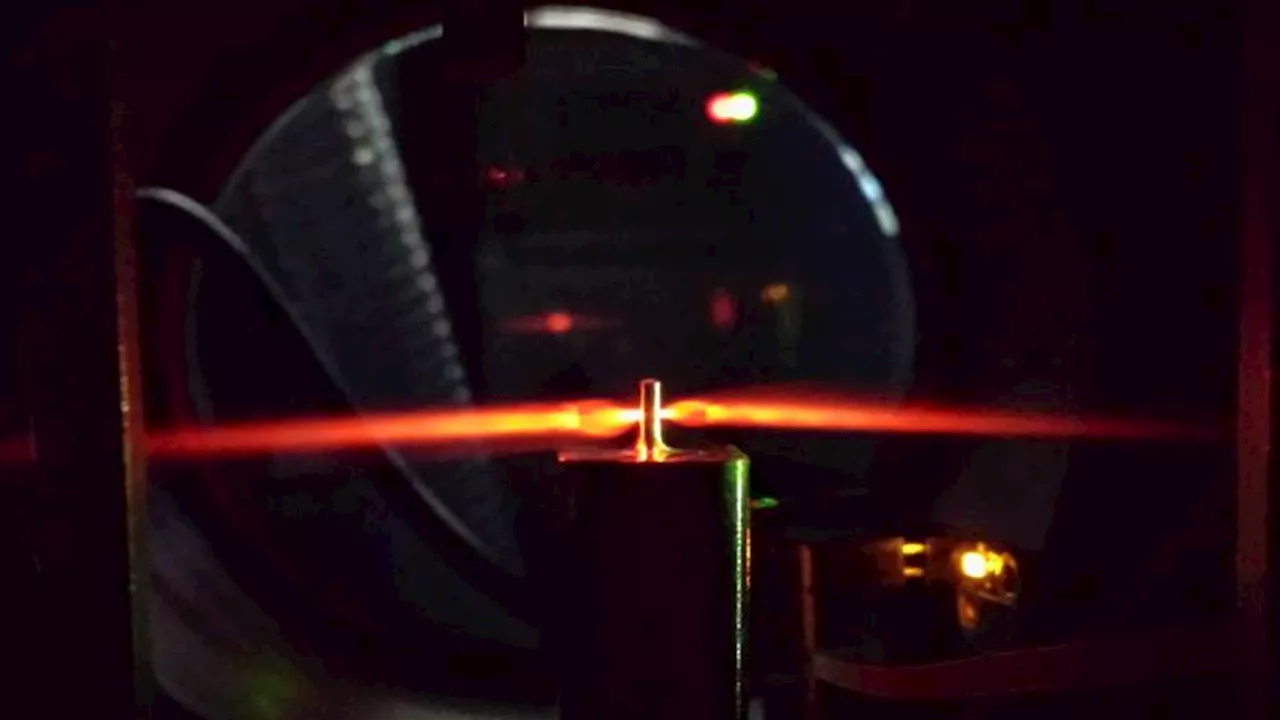
Researchers have achieved a groundbreaking milestone by generating a 19.2-attosecond soft X-ray pulse, enabling the real-time observation of electron motion for the first time. This development represents a significant advancement in ultrafast imaging techniques, allowing scientists to capture the swift movements of electrons during various processes, such as chemical reactions and energy transfers.
The innovative work was carried out by a team at ICFO (Institut de Ciències Fotòniques) in Spain. The newly created pulse is the shortest and brightest soft X-ray flash ever produced, effectively functioning as the fastest camera to date. This technology opens a direct window into processes that have eluded observation until now.
Electrons play a fundamental role in a wide range of phenomena, from the conductivity of materials to the dynamics of biological molecules. Traditional imaging techniques have struggled to keep pace with the rapid movements of electrons, which occur on attosecond timescales. The breakthrough achieved by the ICFO team shatters this barrier, allowing for unprecedented clarity in observing electron dynamics.
A Journey of Innovation
The creation of this isolated pulse was not a straightforward task. It required significant advancements in high-harmonic generation, sophisticated laser engineering, and new methodologies in attosecond metrology. These innovations collectively pushed the measurement of pulse duration beyond previous limitations, enabling scientists to confirm durations that were once speculative.
The initial journey began in 2015 when Prof. Jens Biegert and his team first succeeded in isolating attosecond pulses in the soft X-ray regime. Over the past decade, their research has yielded significant insights, such as elucidating how electrons interact with crystal lattices and how molecular structures change during reactions.
Despite these achievements, accurately measuring pulse duration remained a challenge for nearly ten years. Existing techniques lacked the precision necessary to determine the exact duration of the pulses. The breakthrough came when Dr. Fernando Ardana-Lamas introduced a new pulse retrieval method, allowing the team to confirm their achievement. “Finally, we can say that, to the best of our knowledge, we have confirmed the shortest pulse of light in the world!” Ardana-Lamas stated.
The confirmation of this pulse marks a new record in attosecond science, pushing the limits of what is known as the atomic unit of time, a fundamental threshold in ultrafast physics.
Implications for Multiple Disciplines
The ability to observe electron motion directly has profound implications across several scientific disciplines, including physics, chemistry, and biology. This new capability could transform how researchers study areas such as photovoltaics, catalysis, and quantum technologies. Prof. Biegert emphasized the significance of this advancement, stating, “This new capability paves the way for breakthroughs in physics, chemistry, biology, and quantum science,” highlighting the potential to observe processes that govern matter at its most fundamental level.
The pulse not only surpasses previous records in speed but also in brightness and precision. This enhanced capability provides researchers with a powerful tool that aligns closely with the natural timescale of electron movement. With this foundational work in place, the field is poised to transition from indirect observations to real-time analysis.
As Prof. Biegert succinctly put it, “the sky is the limit.” The research team’s success opens up exciting avenues for future exploration and discovery in the realm of electron dynamics.