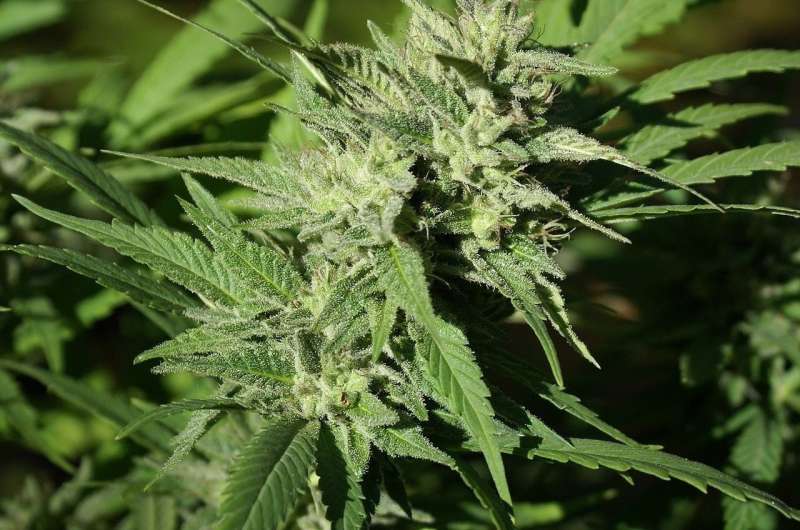
A team of researchers at Wageningen University & Research has made a groundbreaking discovery regarding the origins of key cannabis compounds: THC, CBD, and CBC. Their study, published online on December 26, 2025, in the Plant Biotechnology Journal, reveals how cannabis plants acquired the ability to produce these cannabinoids, which are known for their medicinal potential.
This research marks the first experimental demonstration of the evolutionary process that allowed cannabis to synthesize these important compounds. By reconstructing ancient enzymes from cannabis ancestors that existed millions of years ago, the researchers shed light on how modern cannabis has evolved its unique biochemical capabilities.
The Evolution of Cannabinoid Production
The study highlights a significant shift in the production of cannabinoids. Modern cannabis plants generate distinct bioactive compounds through specialized enzymes. However, the researchers found that their common ancestor possessed the ability to produce multiple cannabinoids simultaneously. Over time, through gene duplications, enzymes evolved to specialize in the synthesis of specific cannabinoids, such as THC and CBD.
Utilizing a technique known as ancestral sequence reconstruction, the team inferred the structure of ancient enzymes based on the DNA of contemporary cannabis plants. These ancestral enzymes were then recreated in the laboratory for experimental testing, providing concrete evidence of their role in cannabinoid biosynthesis.
Implications for Biotechnology and Medicine
This research not only enhances our understanding of cannabis evolution but also opens up innovative avenues for biotechnological applications. The reconstructed enzymes have proven to be easier to produce in microorganisms like yeast cells compared to their modern equivalents. According to Robin van Velzen, one of the lead researchers, the ancestral enzymes exhibit greater robustness and flexibility, making them promising candidates for future applications in biotechnology and pharmaceuticals.
Van Velzen also noted the potential of one particular enzyme that produces CBC, a cannabinoid recognized for its anti-inflammatory and analgesic properties. Currently, no cannabis strain naturally contains high levels of CBC, but introducing this enzyme could lead to the development of new medicinal cannabis varieties tailored for specific therapeutic uses.
As cannabinoid production increasingly shifts towards biotechnological methods, this research paves the way for enhanced production techniques that could benefit the medical field significantly. The findings underscore the importance of fundamental research into plant DNA, illustrating how such studies can yield insights that are not only academically valuable but also practically applicable in real-world scenarios.
The work of Cloé Villard and her colleagues at Wageningen University illustrates a remarkable intersection of evolutionary biology and biotechnology, offering a glimpse into the future of cannabis-based medicines. This study sets the stage for ongoing exploration into the genetic and biochemical pathways that shape the cannabis plant, potentially transforming how cannabinoids are produced and utilized in health care.
For further details, refer to the study by Villard et al. titled “Resurrected Ancestral Cannabis Enzymes Unveil the Origin and Functional Evolution of Cannabinoid Synthases” published in the Plant Biotechnology Journal.