A recent study has unveiled significant insights into familial connections among African Americans, suggesting a higher likelihood of shared ancestry across generations. Conducted by researchers at Stanford University, this groundbreaking work utilizes a mathematical model to explore genealogical ties that have often remained obscured due to historical injustices, particularly slavery.
Understanding Shared Heritage
The study, published in the journal The American Statistician, indicates that for two African Americans born between 1960 and 1965, there is a probability ranging from 19% to 31% that they share at least one ancestor forcibly transported from Africa. For those born in the subsequent generation, specifically between 1985 and 1990, this figure surpasses 50%, indicating that it is quite common for individuals in this demographic to have a shared ancestor from the Transatlantic Slave Trade.
Senior author Noah Rosenberg, a professor of biology at Stanford, emphasized the relevance of this research by stating, “We found that there is a surprisingly high probability that two people share an ancestor who arrived as an enslaved person during the Transatlantic Slave Trade. That’s interesting both in terms of the relatedness of the population and the shape of American demographic history.”
Mathematical Insights into Genealogy
To derive these findings, the researchers adapted a well-known statistical concept known as the “birthday problem,” which illustrates how likely it is for two individuals in a group to share the same birthday. This principle can be extended to ancestral connections, where the limited number of historical records makes it challenging to ascertain precise genealogies.
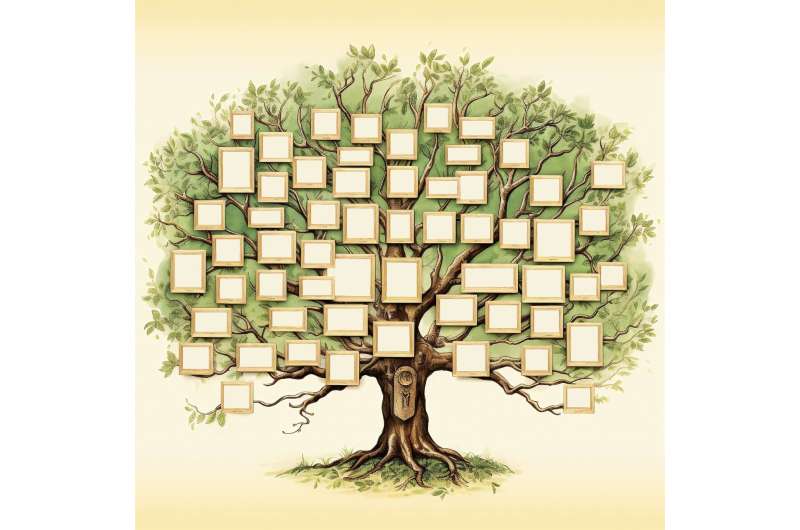
The team estimated that African Americans born in the early 1960s have approximately 300 ancestors among the estimated 400,000 to 500,000 Africans brought to North America from the early 1600s to 1860. This foundational number aids in calculating the likelihood of overlapping ancestral lines, especially as the number of potential ancestors increases with each generation.
Previous research has aimed to bridge the gaps in knowledge surrounding African American ancestry through genetic analysis. Rosenberg’s earlier studies have contributed to understanding the number of African and European ancestors typically found in family trees. While the current model does not directly link specific descendants to their ancestors, it offers valuable insights into shared heritage.
Rosenberg noted, “In most cases, the question of whether two specific people have a shared transported ancestor cannot be directly answered because many aspects of the history of slavery led to profound loss of genealogical information. A mathematical model therefore has potential to make a meaningful contribution.”
This study marks a significant step towards understanding the complex interplay of history and ancestry within the African American community, shedding light on connections that have long been obscured. By employing mathematical modeling, researchers are opening new pathways for individuals to explore their roots and heritage, fostering a deeper appreciation for the shared histories that unite many African Americans today.