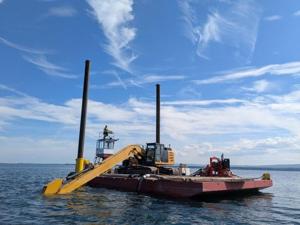
Recent efforts to enhance fish habitats in Lake Erie have taken a significant step forward with the introduction of a high-tech jetting technique. The New York State Department of Environmental Conservation collaborated with the Seaway Marine Group to carry out this innovative project at Brocton Shoal, located in Chautauqua County. This method aims to improve the living conditions for lake trout, a species vital to the region’s aquatic ecosystem.
The jetting process involves the use of powerful water jets to clean the lake bed, which can accumulate debris and other materials that hinder the growth of essential aquatic vegetation. According to fish biologist Pascal Wilkins from the Lake Erie Fisheries Research Unit, this technique is designed to remove unwanted sediment and enhance the habitat for trout.
During the project, underwater assessments were conducted using drones to monitor the progress before and after the jetting. Visual evidence suggests that the operation has been successful in transforming the lake environment. Observations collected from these assessments indicate a marked improvement in the habitat, promoting healthy growth conditions for aquatic life.
The collaboration between environmental agencies and marine contractors marks a proactive approach to addressing ecological challenges faced by Lake Erie. Aleksandr Davis, a fish technician with Region 9 fisheries, noted the importance of ongoing monitoring to ensure the effectiveness of the jetting. He emphasized that continuous evaluation will help determine the long-term benefits of this restoration method.
The initiative reflects a growing commitment to maintaining and revitalizing aquatic habitats across the region. This project not only supports the biodiversity of Lake Erie but also aims to enhance recreational fishing opportunities for local communities. As lake trout populations recover, the economic benefits associated with fishing and tourism are expected to follow.
Local stakeholders and environmentalists have expressed optimism regarding the project’s potential impact. The successful application of advanced techniques like jetting could pave the way for similar initiatives in other areas facing habitat degradation.
Moving forward, the New York State Department of Environmental Conservation plans to continue monitoring the results of this project, gathering data that will inform future restoration efforts. By investing in innovative solutions, authorities hope to ensure the sustainability of Lake Erie’s ecosystems for generations to come.