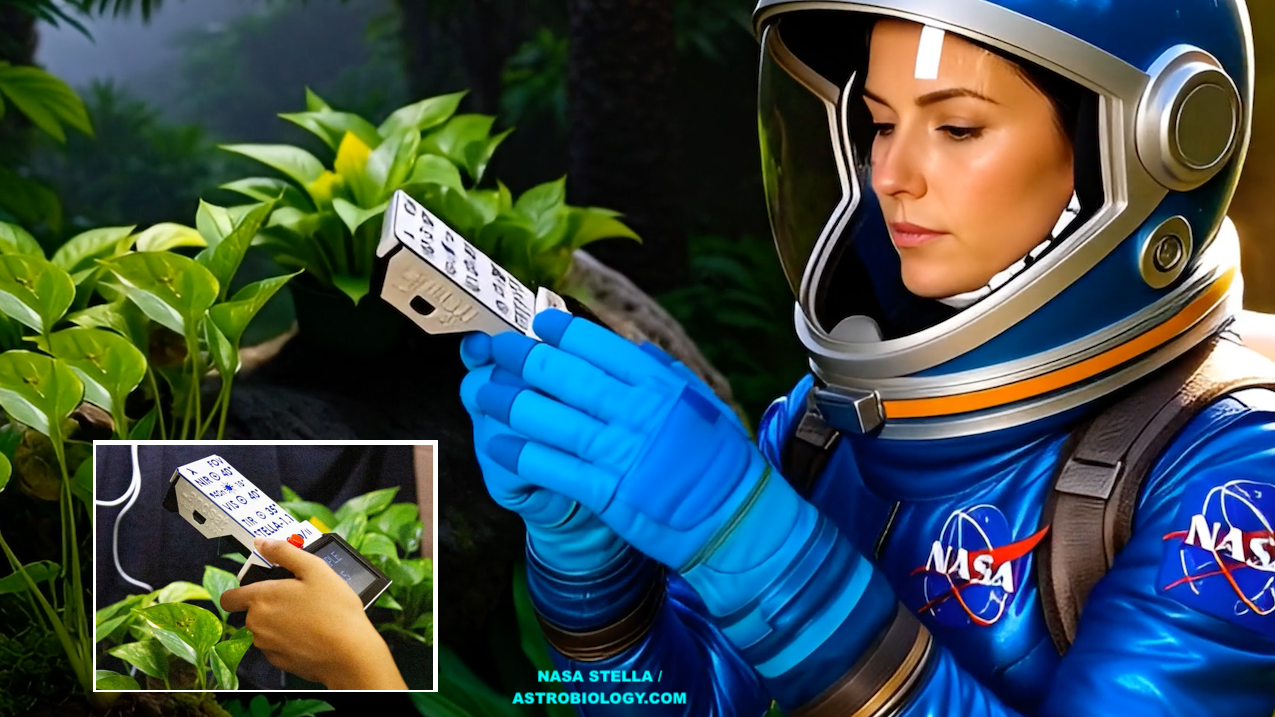
NASA has announced the release of a new paper detailing the development of low-cost, open-source sensor technology designed to democratize remote sensing science. The project, known as STELLA (Science and Technology Education for Land/Life Assessment), aims to enable individuals with diverse interests to build and utilize these tools for environmental analysis. This initiative could play a crucial role in future astrobiology expeditions to other planets.
The STELLA instruments are designed to capture and analyze environmental data, making remote sensing science accessible beyond traditional scientific communities. According to NASA, these instruments can measure light spectra over 18 channels in the visible and near-infrared range, allowing for detailed observations of both natural and constructed surfaces. The simplest model, the STELLA-Q, can be assembled for approximately $200 using commercially available components.
Empowering Education Through Citizen Science
Located at the NASA Goddard Space Flight Center, STELLA is part of a broader effort to engage the so-called Artemis Generation—young individuals who will lead future space exploration. The project encourages hands-on learning experiences that foster analytical thinking and understanding of satellite data.
The instruments allow users, including students and community members, to monitor various environmental factors, such as plant health, through practical experiments. For example, during testing at the Goddard facility in Greenbelt, Maryland, researchers used the STELLA-Q to assess plants receiving different amounts of water, tracking their health over time.
Open-source software developed for the STELLA instruments is designed in a version of the Python programming language, making it accessible for users with basic coding skills. Data collected can be easily recorded and analyzed, promoting a collaborative approach to scientific inquiry.
Advancing Remote Sensing Capabilities
This innovative approach aligns with the growing trend of citizen science, which encourages public participation in scientific research. By providing the tools and resources necessary for individuals to engage in remote sensing, NASA is not only enhancing educational opportunities but also expanding the potential for new scientific discoveries.
The STELLA project is funded by the NASA Science Mission Directorate and has received support from various experts, including those affiliated with the University of Virginia. The initiative reflects NASA’s commitment to fostering a culture of open science and collaboration, allowing anyone with an interest in the environment to contribute to our understanding of Earth and beyond.
The findings from this initiative are available in an open-access paper titled “Democratizing Remote Sensing Science With Low-Cost Open-Source Instruments for Research and Education.” The paper provides detailed insights into the STELLA project and its implications for future research.
As NASA continues its mission to explore other worlds, initiatives like STELLA will be vital in preparing future generations of researchers. By enabling the development and use of affordable remote sensing technologies, NASA is laying the groundwork for more efficient exploration and understanding of extraterrestrial ecosystems.