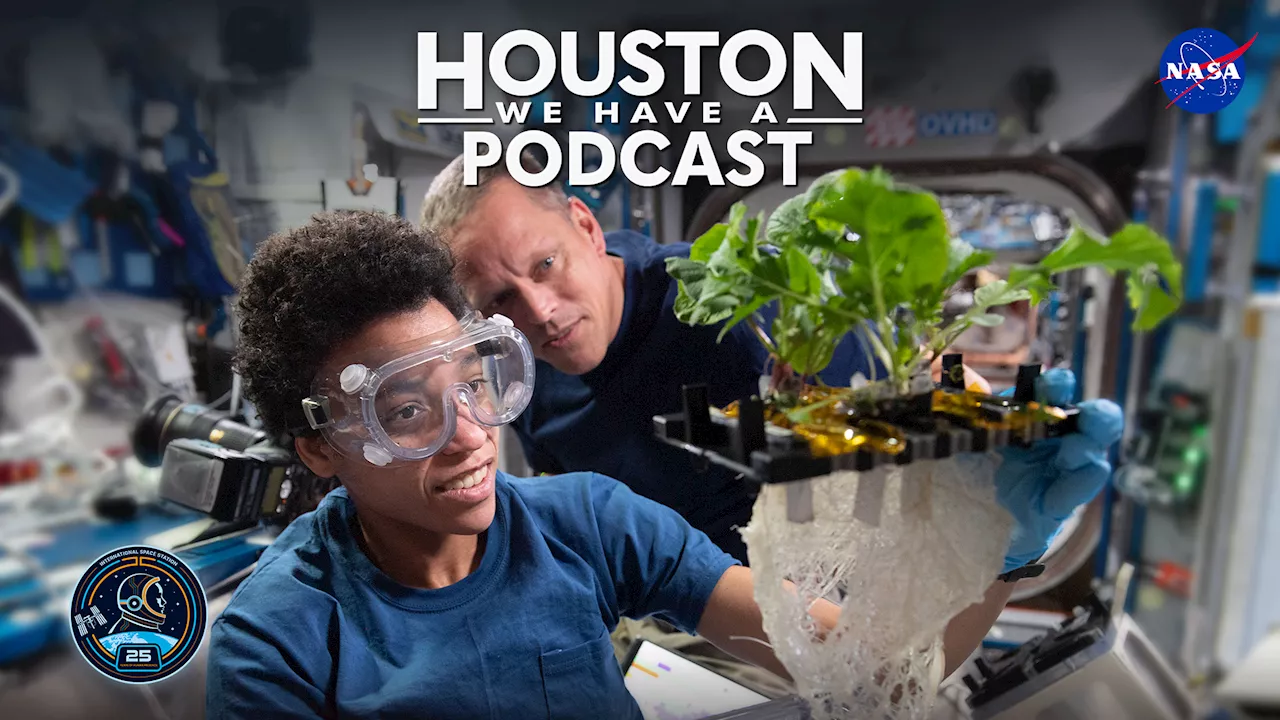
The International Space Station (ISS) has become a cornerstone of human spaceflight, marking nearly 25 years of continuous operation since Expedition 1 began on November 2, 2000. In a recent episode of the podcast “Houston, We Have a Podcast,” leaders from NASA, including deputy manager of the ISS vehicle office, Laura Shaw, and ISS Program chief scientist, Jennifer Buchli, discussed the significant scientific advancements and innovations that have emerged from this orbiting laboratory.
During the podcast, hosted by Dane Turner, Shaw and Buchli highlighted the transformative role the ISS has played in fostering international collaboration and scientific discovery. They emphasized how microgravity has facilitated unique experiments that are not possible on Earth, allowing researchers to explore the complexities of biological and physical sciences in ways previously unimaginable.
The ISS was designated as a national laboratory in 2005, broadening access to its facilities for American companies and the public. As Buchli explained, this designation means that 50% of NASA’s allocation for the ISS is available for non-NASA users, creating opportunities for universities and private enterprises to conduct their own research in space.
Shaw recounted her journey to NASA, revealing that her fascination with space began at a young age. “I was born a space nerd,” she said, noting her deep-rooted interest in human spaceflight. After completing engineering studies, she joined NASA as a co-op student and has worked her way up over 26 years. Similarly, Buchli, who grew up in a space-oriented family, pursued a career in research and eventually returned to NASA to lead the ISS scientific efforts.
Expounding on the evolution of scientific research aboard the ISS, Shaw and Buchli discussed how the addition of new modules and technologies has enhanced capabilities over the years. Early experiments were limited by the size and scope of the station, but advancements such as the introduction of EXPRESS racks in 2002 have allowed for a broader range of experiments. These racks provide essential utilities, including power and cooling, enabling scientists to conduct a variety of research projects.
The ISS has facilitated groundbreaking work in several fields, including pharmaceuticals and materials science. For instance, protein crystal growth experiments have been instrumental in drug development, allowing for the creation of high-purity crystals necessary for effective pharmaceuticals. One notable success story has been the work with Merck on the cancer drug Keytruda, which has recently advanced to phase three clinical trials, demonstrating the ISS’s impact on human health.
As the ISS celebrates its 25-year milestone, it continues to serve as a platform for novel scientific inquiries. The facility has become an invaluable asset for understanding not only the effects of microgravity on biological systems but also for advancing technology that supports future missions to the Moon and Mars. The ongoing research into life support systems, nutrition for long-duration space missions, and medical technologies underscores the ISS’s critical role in preparing for extended human exploration beyond low Earth orbit.
Looking ahead, both Shaw and Buchli expressed optimism about the future of research in low Earth orbit. With plans to transition towards commercial platforms after 2030, NASA aims to remain an active participant in space research while also enabling other entities to utilize the unique environment of the ISS for their scientific endeavors.
In conclusion, the discussions surrounding the ISS not only celebrate its rich history but also highlight the collaborative spirit that has defined nearly a quarter-century of human presence in space. As both leaders pointed out, the ISS is a testament to what can be achieved through international cooperation and innovative thinking in the pursuit of knowledge.