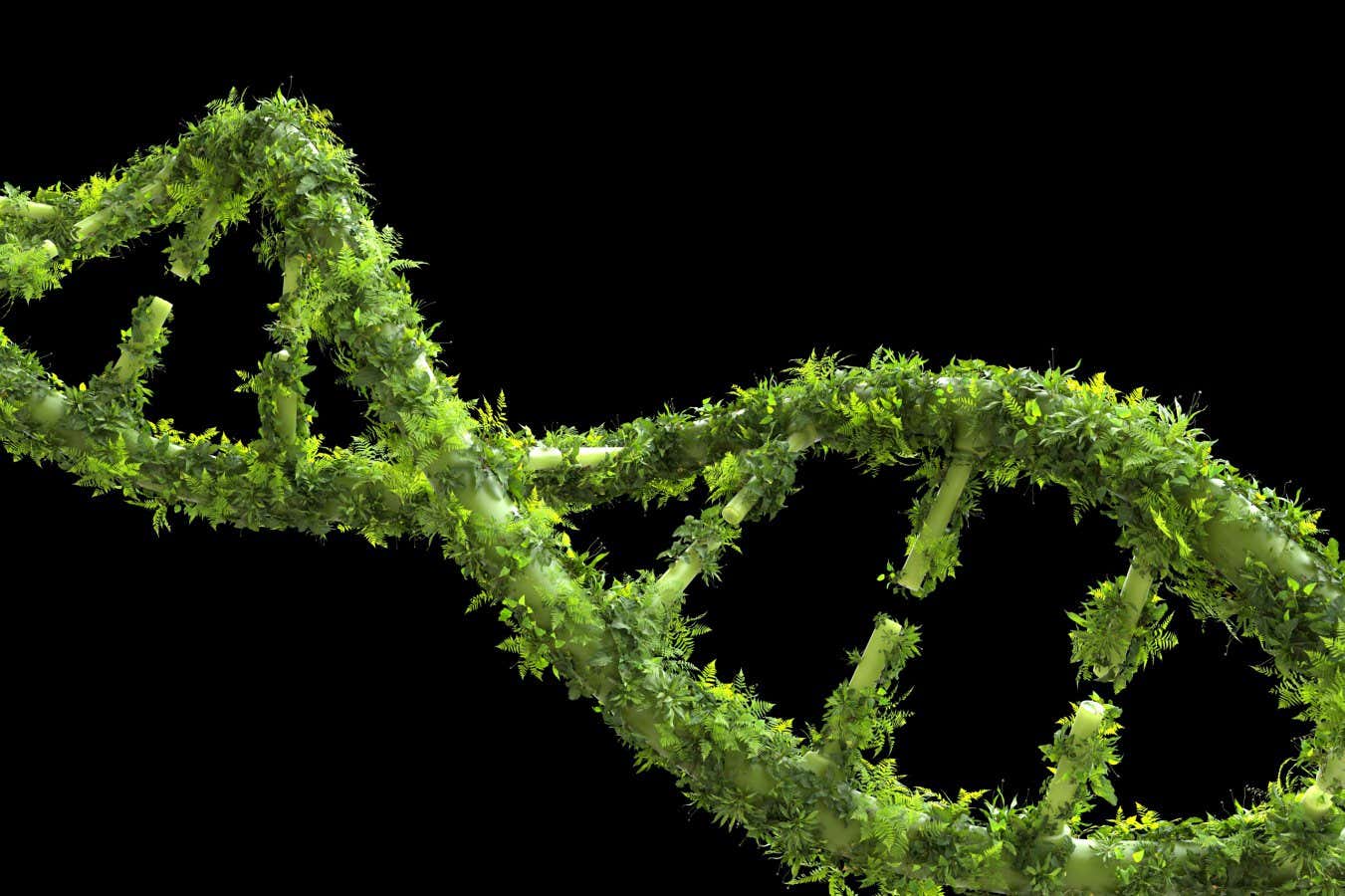
A groundbreaking study involving human cells infused with plant DNA has shed light on the complexities of our genome. Researchers at the University of Auckland investigated cells containing substantial segments of DNA from the thale cress, also known as Arabidopsis thaliana. Their findings suggest that a significant portion of genomic activity may not serve any functional purpose, reinforcing the theory that much of the human genome could be classified as “junk.”
The research challenges the long-standing debate about the role of non-coding DNA in our genomes. While some scientists argue that most of our DNA is active and thus essential, the study reveals that the activity observed in the plant DNA closely resembles that in human DNA. According to Brett Adey, a researcher at the University of Auckland, “A large amount can simply be explained by background noise.” This suggests that much of the genetic activity may not contribute to meaningful biological functions.
Examining DNA Functionality
The primary purpose of DNA is to encode the instructions for producing proteins, which are crucial for cellular functions. Historically, it was believed that nearly all DNA sequences coded for proteins, but current estimates indicate that only about 1.2 percent of the human genome contains protein-coding regions. This raises questions about the purpose of the remaining DNA, leading many biologists to classify it as non-essential or “junk.”
For decades, researchers have noted that the size of genomes varies significantly across species, prompting further inquiry into the purpose of non-coding DNA. For instance, why does an onion possess five times more DNA than a human, and why does the lungfish have thirty times as much? While some studies, including a notable 2011 report, indicated that only around 5 percent of the genome is conserved through evolutionary time, suggesting that the rest may not play a critical role.
In contrast, the ENCODE project, launched in 2012, claimed that over 80 percent of the human genome is active, implying that it cannot be dismissed as junk. This concept has led to the term “dark DNA,” which refers to non-coding regions that scientists believe may hold unknown significance.
Groundbreaking Research Methodology
In response to these debates, Sean Eddy from Harvard University proposed the “random genome project” in 2013. He suggested inserting synthetic DNA into human cells to determine whether similar activity levels would be observed. The recent study from Auckland took a significant step by utilizing hybrid cells containing 35 million base pairs of plant DNA, marking it as the largest random genome project to date.
After confirming the randomness of the plant DNA, Adey and his team measured the activation of RNA synthesis within the non-coding regions of the plant DNA. Contrary to expectations, they found that the plant DNA exhibited approximately 80 percent of the RNA synthesis activity seen in human non-coding DNA. This finding strongly indicates that much of the activity attributed to the ENCODE project may simply reflect background noise rather than functional processes.
As Chris Ponting from the University of Edinburgh noted, “The biochemical activities happening within this [plant] sequence clearly confer no function on the human cell.” The research received praise for its clarity and potential to advance our understanding of genomic noise, with Dan Graur from the University of Houston stating, “This very elegant study was needed.”
Despite these revelations, the researchers have yet to determine why human DNA showed 25 percent more activity than the plant DNA. While some of this activity may indeed be functional, the overall conclusion points toward the notion that a significant portion of our genome could be classified as junk.
Moving forward, the team plans to employ machine learning techniques to differentiate between potentially meaningful genetic activity and background noise. Although their findings are set to be published, they have not yet completed a formal paper detailing their study.
This research represents a significant advancement in genomics, contributing to the ongoing conversation about the complexities and functions of our DNA. As scientists continue to unravel the mysteries of the genome, the insights gained from this study may pave the way for further discoveries in the field.