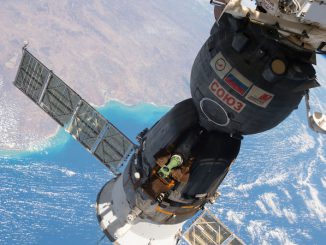
The arrival of the Crew 12 team at the International Space Station (ISS) on February 14, 2024, restores the station’s crew to a full complement of seven members. This follows the early return of four astronauts last month due to a medical issue. The SpaceX Crew Dragon capsule docked at the station’s Harmony module at 20:15 UTC, approximately 34 hours after its launch from the Kennedy Space Center aboard a Falcon 9 rocket.
Crew 12 commander Jessica Meir, making her second long-duration stay at the ISS, expressed her enthusiasm over the radio, stating, “Grateful to be on board, and we’re ready to get to work.” She is joined by veteran Russian cosmonaut Andrey Fedyaev and two first-time space travelers, Jack Hathaway and Sophie Adenot from the European Space Agency.
Following a successful docking, the crew opened the hatch and floated into the station two hours later, greeted warmly by ISS commander Sergey Kud-Sverchkov, cosmonaut Sergey Mikaev, and NASA astronaut Chris Williams. Kud-Sverchkov welcomed the new arrivals during a brief ceremony, saying, “We are happy they all arrived safe and sound. We’ve been waiting for this moment for a very long time.”
As they settled in, Meir remarked, “It is so wonderful to be back up here … so many countries represented, so many backgrounds.” This sentiment underscores the collaborative spirit of the ISS, a platform for international cooperation in science and research.
The Crew Dragon journey was described by Adenot, a seasoned French air force helicopter test pilot, as exhilarating. “SpaceX gave the crew quite a ride, very fun!” she said, reflecting on the breathtaking views of Earth. “The first time we looked at the Earth was, wow, mind-blowing.”
Crew 12 is taking over from the previous Crew 11, which included Zena Cardman, Mike Fincke, Japanese astronaut Kimiya Yui, and cosmonaut Oleg Platonov. Their early departure left the station with just three crew members, which, while manageable, limited the full range of research activities and spacewalk opportunities due to the requirement for a buddy system during extravehicular activities.
NASA had initially aimed to expedite Crew 12’s launch by a few days to mitigate the period in which Williams operated the U.S. segment alone. However, scheduling conflicts related to the Artemis II moon mission launch and adverse weather conditions delayed the launch to February 13. With Crew 12 now aboard, research in the U.S. segment can resume its regular pace, and spacewalks can be organized as required.
In preparation for their work, Hathaway indicated the importance of teamwork. “Crew 12 is honored to join our Expedition 74 friends and colleagues … to add our chapter to the story of the International Space Station,” he stated.
After docking, the crew conducted a private medical conference. NASA maintains strict privacy guidelines concerning astronaut health, and the specifics of any health issues are not disclosed. Nevertheless, it is known that many astronauts experience nausea and other symptoms during their initial adaptation to microgravity, which typically resolves within a few days.
With the successful arrival of Crew 12, the ISS is poised for continued scientific exploration and collaboration, fostering advancements that benefit humanity as a whole.