1910, a biotechnology firm focused on advancing drug discovery, has unveiled its PEGASUS AI model, aiming to enhance the development of macrocyclic peptide drugs. The company’s founder and CEO, Jen Asher, PhD, stated that the goal is to eliminate “undruggable targets” and transform all pharmaceutical companies into AI-driven enterprises. This announcement follows the company’s rebranding from 1910 Genetics to simply 1910 in early 2025, reflecting its commitment to innovative, multi-modal drug discovery.
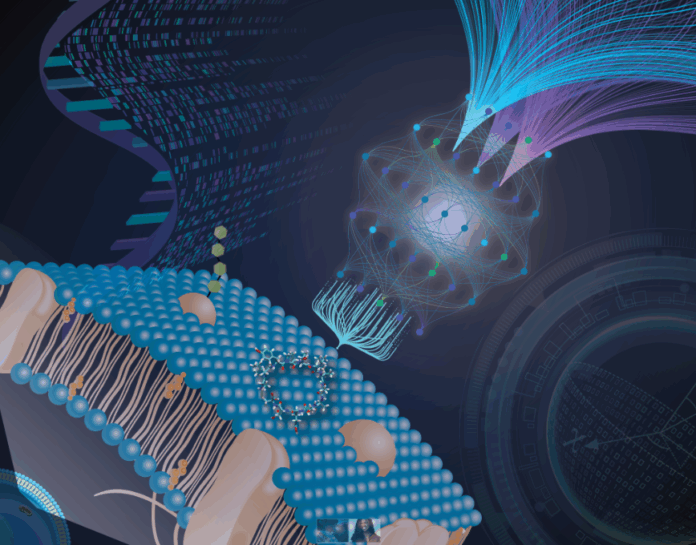
In a recent publication in the *Journal of Medicinal Chemistry*, 1910 detailed the capabilities of PEGASUS, which learns how to design cell-permeable macrocyclic peptides. These peptides can access intracellular targets that have traditionally been difficult to reach. Asher described PEGASUS as a “versatile tool” that can accelerate the drug development cycle by operating in both predictive and generative modes, enabling the selection of compounds for synthesis and optimizing lead candidates.
The study also highlighted PEGASUS’s achievement in producing cyclic peptides with more than two polar or ionizable fragments, a significant advancement in achieving in vitro cell membrane permeability. This innovation positions macrocyclic peptides as a promising option that combines the convenience of oral administration with the specificity typically associated with larger biologics.
Innovative Approaches to Drug Development
PEGASUS is one of two flagship models that emerged from the company’s robust platform. Last November, 1910 introduced CANDID-CNS, an AI model designed to enhance the potential for oral neurological therapeutics by predicting the ability of small molecules to penetrate the blood-brain barrier (BBB). Notably, CANDID-CNS achieved an impressive 83% success rate in predicting the brain penetration of small molecules that violate Lipinski’s Rule of 5, significantly outperforming the industry standard at 64%.
Both PEGASUS and CANDID-CNS illustrate 1910’s capacity to leverage its unique wet lab biological data generation capabilities. These innovations drive the company’s internal pipeline and will support future pharmaceutical partnerships.
Founded in 2018 and emerging from Y Combinator with a seed funding of $4 million led by Sam Altman, 1910 has secured a five-year commercial agreement with Microsoft. This partnership allows biotechnology, government, and research institutions to access 1910’s platform through various collaboration models, including co-discovery and Platform-as-a-Service (PaaS).
Charting New Paths in Drug Discovery
The name 1910 refers to the year the first patient was diagnosed with sickle cell disease in the United States, marking a pivotal moment in the understanding of molecular diseases. Asher emphasized the company’s focus on targeting highly causative biological roles rather than accessory roles, positioning 1910 as a leader in innovative drug development.
Recent developments in macrocyclic peptides highlight the potential for these compounds to make significant impacts in clinical settings. For instance, Merck reported that its macrocyclic peptide candidate, enlicitide, demonstrated statistically significant reductions in LDL cholesterol during Phase III trials. If approved, this drug could become the first oral PCSK9 inhibitor, challenging existing injectable therapies.
Despite this progress, Asher cautioned that the uptake of enlicitide relies on the use of a permeability enhancer that may lead to undesirable effects, such as increased absorption of non-drug molecules. This underscores the complexities involved in achieving oral bioavailability for macrocyclic peptides.
To tackle these challenges, PEGASUS utilizes a unique multi-modal dataset derived from 1910’s proprietary Permeability Proxy Assay (1910 PPA). This assay generates billions of cyclic peptides characterized by their permeability-related properties, alongside solvent-dependent computational simulations based on quantum and molecular mechanics. These innovative data sources complement traditional in vitro permeability data, allowing for more effective AI model training.
Asher noted that integrating wet lab and dry lab approaches is crucial in overcoming significant data barriers in AI-driven drug discovery. She stated that omitting any of the three data streams would weaken PEGASUS’s predictive and generative capabilities, calling the surrogate assays a significant breakthrough in the field.
The advancements in macrocyclic peptide drugs signal a promising shift in drug discovery, moving closer to impactful clinical applications. As the industry watches these developments unfold, 1910 is poised to play a critical role in shaping the future of targeted therapies.