A recent military operation conducted by the United States and Israel resulted in the assassination of Iran’s Supreme Leader, Ayatollah Ali Khamenei, on February 28, 2026. This event has raised significant concerns regarding Washington’s understanding of Iran’s strategic position in West Asia. Analysts argue that the American perception of Iran as a peripheral state, rather than recognizing its central role in regional dynamics, will likely lead to further miscalculations.
The United States has long viewed Iran as an isolated entity on the edge of the Middle East, a perspective that obscures its actual significance as a pivotal player in Southwest Asia. This distorted mental map contributes to strategic blind spots and fragmented policies that affect not only the Gulf region but also extend to conflicts in Iraq and Afghanistan. American policymakers often treat Iran as a mere transactional oil state, neglecting its complex relationships with neighboring countries and its influence in broader continental affairs.
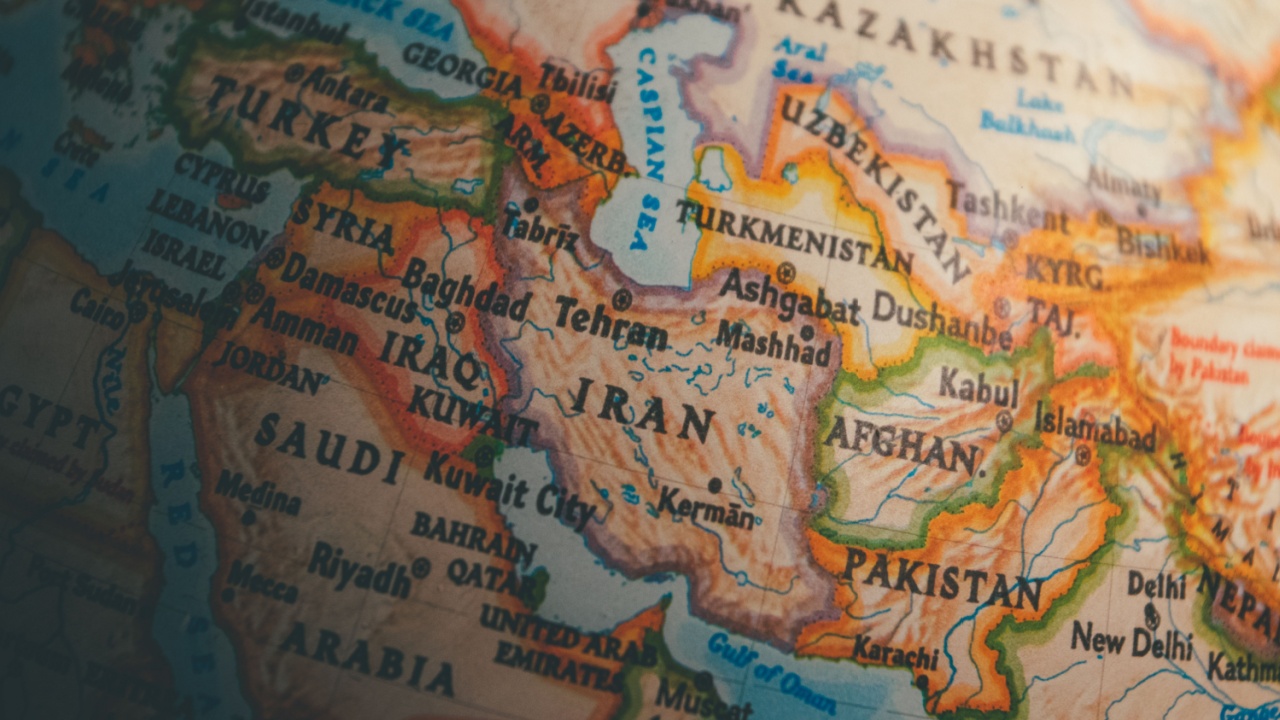
Iran’s geographic location is crucial. It serves as a continental hub linking South Asia, the Caucasus, and Central Asia. According to a 1996 CIA map, which remains relevant, Iran’s position is not just about oil reserves but also underscores its role as a regional fulcrum. The map illustrates how the Caucasus connects closely to the Gulf, emphasizing Iran’s strategic importance. This positioning highlights how instability in Iran can have far-reaching implications for trade, security, and influence across multiple regions.
Misunderstanding Iran’s centrality can lead to grave consequences. Historical examples, such as the Durand Line drawn in 1893, illustrate how arbitrary borders can have lasting effects on regional stability. The division of Pashtun tribal communities between Afghanistan and Pakistan serves as a reminder of how artificial boundaries ignore socio-cultural realities. Washington’s previous attempts to exclude Iran from stabilizing Afghanistan have proven misguided, as any destabilization within Iran could reverberate through Iraq and Afghanistan.
This flawed perception is compounded by bureaucratic compartmentalization within U.S. foreign policy institutions. The State Department often categorizes regions into isolated silos, such as “Middle East” or “South Asia,” reflecting outdated colonial thinking. This approach not only limits integrated regional planning but also reinforces the misconception that Iran is merely an oil-rich state rather than a key player in a larger, interconnected geopolitical landscape.
As the influence of special interests grows, the United States finds itself in a reactive cycle of short-term policies rather than coherent strategies. The traditional concept of the “Middle East” may be becoming obsolete, with a new West Asian system emerging that reflects the economic and technological shifts in Asia and the Gulf.
In his recent book, *West Asia: A New American Grand Strategy in the Middle East*, Mohammed Soliman argues that the U.S. must transition beyond narrow Middle Eastern constructs. By integrating historical and geographic realities, Washington could build a more stable regional order that acknowledges Iran’s role as a hub of connectivity rather than simply a target for political manipulation.
Relying on a simplistic view of Iran as a source of revenue or a geopolitical pawn not only misrepresents the complexity of the region but risks escalating tensions. The U.S. strategy, which parallels its approach to Venezuela, fails to grasp the scale and interconnectedness of Iranian influence across South, Central, and East Asia.
Alfred Thayer Mahan, a notable American naval strategist, coined the term “Middle East” in 1902, reflecting an imperial mindset that reduced geography to a means of control. This legacy still affects U.S. strategic thinking today. Until Washington learns to view geography as a web of political, economic, and cultural ties, it will continue to misinterpret Iran’s role and the broader context of West Asia, leading to potential crises that could destabilize the entire region.
The recent actions taken against Iran could have lasting implications, not just for the Islamic Republic but for the entire geopolitical landscape of Southwest Asia. As the situation unfolds, it becomes increasingly clear that a re-evaluation of American perceptions and strategies regarding Iran is urgently needed.