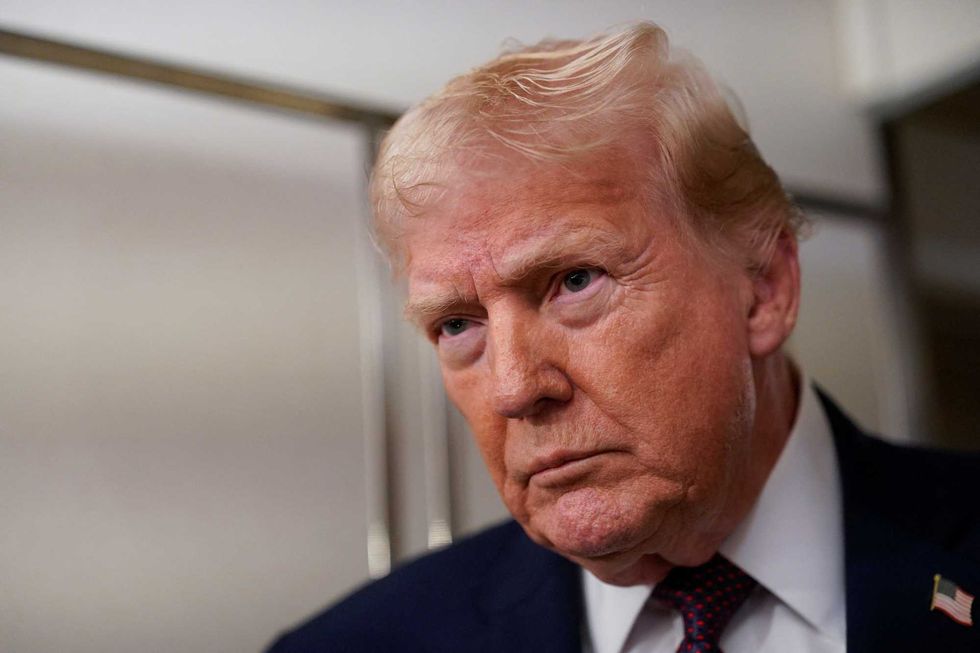
The ongoing conflict between the United States and Iran has escalated significantly following a series of military strikes. In the early hours of January 5, 2024, former President Donald Trump issued a stark warning to Iran via his social media platform, Truth Social. His comments came shortly after he claimed that Iran’s Supreme Leader, Ayatollah Ali Khamenei, had died as a result of US attacks. This development has prompted a fierce response from Iranian leadership.
In a post made just after midnight, Trump stated, “Iran just stated that they are going to hit very hard today, harder than they have ever hit before.” He further threatened, “THEY BETTER NOT DO THAT, HOWEVER, BECAUSE IF THEY DO, WE WILL HIT THEM WITH A FORCE THAT HAS NEVER BEEN SEEN BEFORE!” His message concluded with a formal signature, “Thank you for your attention to this matter! President DONALD J. TRUMP.”
The situation escalated after Iran announced intentions to retaliate against the United States for its military actions. Following the reports of Khamenei’s death, the Iranian government signaled that it would respond decisively to any further assaults, heightening tensions in an already volatile region.
Iranian officials have not publicly confirmed Khamenei’s death but have expressed their commitment to defending the nation against external threats. The rhetoric from both sides indicates a potential for further military engagement, raising concerns among international observers.
As the conflict unfolds, the response from the US government remains critical. Trump’s statements suggest a willingness to increase military involvement, which could have significant implications for US foreign policy and regional stability.
The developments come during a period marked by longstanding tensions between the US and Iran, stemming from various issues including nuclear capabilities and regional influence. Both nations’ leaders are under immense pressure to respond to their respective constituents, which complicates the potential for diplomatic resolutions.
The international community watches closely as these events develop, with many calling for restraint. The potential for escalation is ever-present, as Trump’s bellicose remarks could provoke further hostilities.
With military assets already positioned in the region, any new attacks could lead to a more significant confrontation. The implications of such actions would likely extend beyond the immediate conflict, affecting alliances and geopolitical dynamics globally.
In summary, Trump’s threat against Iran underscores the precarious nature of US-Iran relations. As both nations brace for possible escalation, the hope for a diplomatic solution appears increasingly distant.