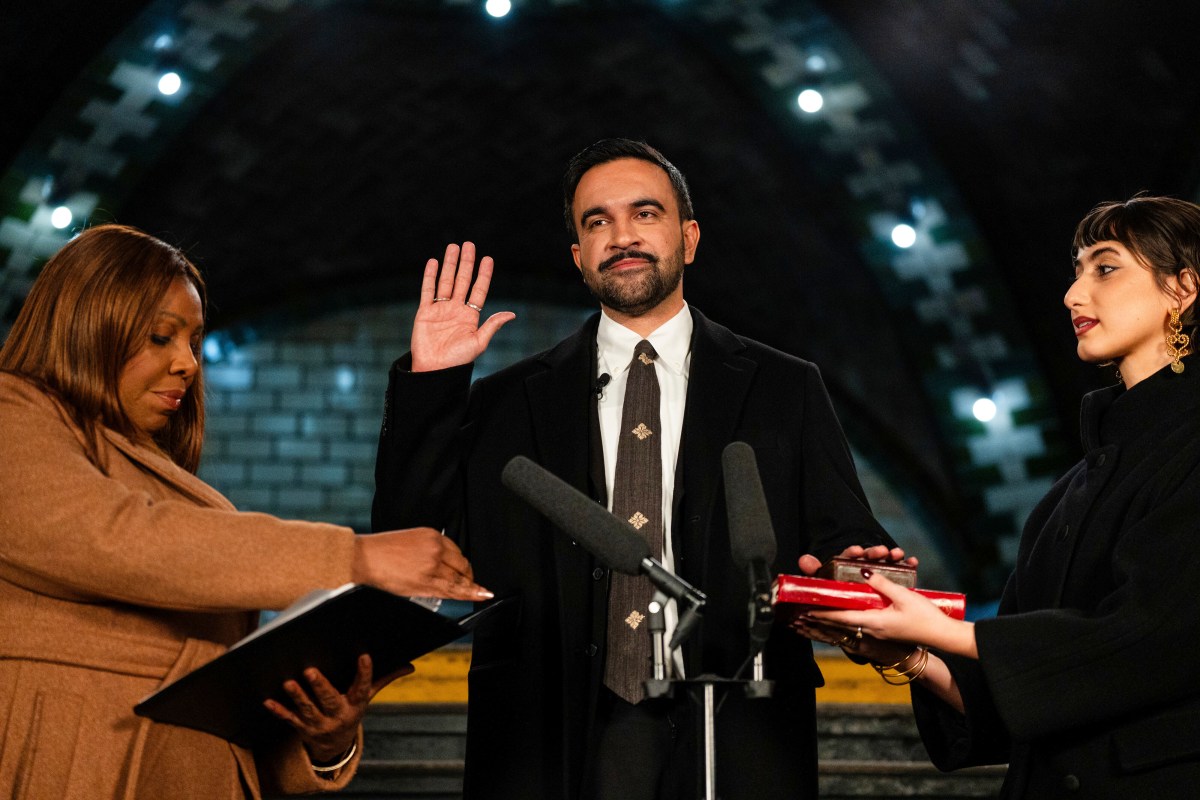
Zohran Mamdani was inaugurated as the mayor of New York City on January 1, 2024, marking a historic moment as he became the first Muslim and Asian American to lead the city. At 34, he is also the youngest person to assume the role since 1892. Mamdani, a Democratic socialist, promised to usher in a “new era” for the city, pledging to govern “audaciously” and uphold key campaign promises, including freezing rent, making public transit free, and implementing universal child care.
Mamdani’s election is seen as a potential resurgence for the Democratic Party, which seeks to regain ground from the Republican Party in the upcoming midterm elections. His rise from a relatively unknown assemblymember to a prominent figure within his party has resonated with many Democrats nationwide. The mayor’s actions will be under close scrutiny, with both parties eager to see how he will challenge established political norms and reshape New York City.
On his first day in office, Mamdani took immediate action to differentiate his administration from that of his predecessor, Eric Adams. He revoked all executive orders issued after September 26, 2024, a period during which Adams faced charges of bribery and fraud, although those charges were later dismissed by a federal judge. Mamdani stated that the orders from that time “were against the interests of working-class people.”
In addition to revoking previous orders, Mamdani issued a second executive order establishing a structure for his administration. This includes five deputy mayors, each assigned specific responsibilities: the First Deputy Mayor, Deputy Mayor for Housing and Planning, Deputy Mayor for Economic Justice, Deputy Mayor for Operations, and Deputy Mayor for Health and Human Services. All deputy mayors will report directly to Mamdani, ensuring streamlined communication and decision-making within the administration.
Housing remains a critical focus for Mamdani, as evidenced by three housing-related executive orders he announced on his first day. These orders reflect his commitment to addressing the city’s ongoing housing affordability crisis. He emphasized the urgency of the situation, stating, “Today, on the day when so many rent payments are due, we will not wait to deliver action.”
The first order reinstated the Office to Protect Tenants, appointing Cea Weaver, a well-known tenant organizer and housing advocate, as its new director. The second order established the LIFT Task Force, aimed at leveraging city-owned land to accelerate development. The third order created the SPEED Task Force, designed to streamline procedures for equitable development. Mamdani characterized these initiatives as “sweeping measures” that represent the beginning of a comprehensive effort to support tenants and make housing more affordable.
Mamdani expressed his determination to govern with boldness and transparency. He stated, “The only expectation I seek to reset is that of small expectations. Beginning today, we will govern expansively and audaciously. We may not always succeed, but never will we be accused of lacking the courage to try.” His commitment to his principles as a democratic socialist was clear, as he asserted he would not compromise his values out of fear of being labeled radical.
In response to her new role, Cea Weaver remarked, “I am humbled and honored to join Mayor Mamdani’s administration — and to stand with him on his very first day in office as he makes clear where his priorities lie: with the millions of tenants in New York City who have been mistreated for too long by negligent landlords.” She emphasized that their work would focus on ensuring safe, stable, and affordable housing for all.
Looking ahead, Mamdani’s administration faces the challenge of delivering on ambitious promises, including the controversial proposal to freeze rent. Questions remain about the extent of his powers to implement such measures. Nonetheless, Mamdani has made it clear that he is prepared to confront these challenges head-on, stating, “We may not always succeed, but never will we be accused of lacking the courage to try.”
As Mamdani embarks on his term, his actions will be closely monitored, not only by New Yorkers but by political observers nationwide, eager to see how his progressive agenda unfolds in the months and years to come.