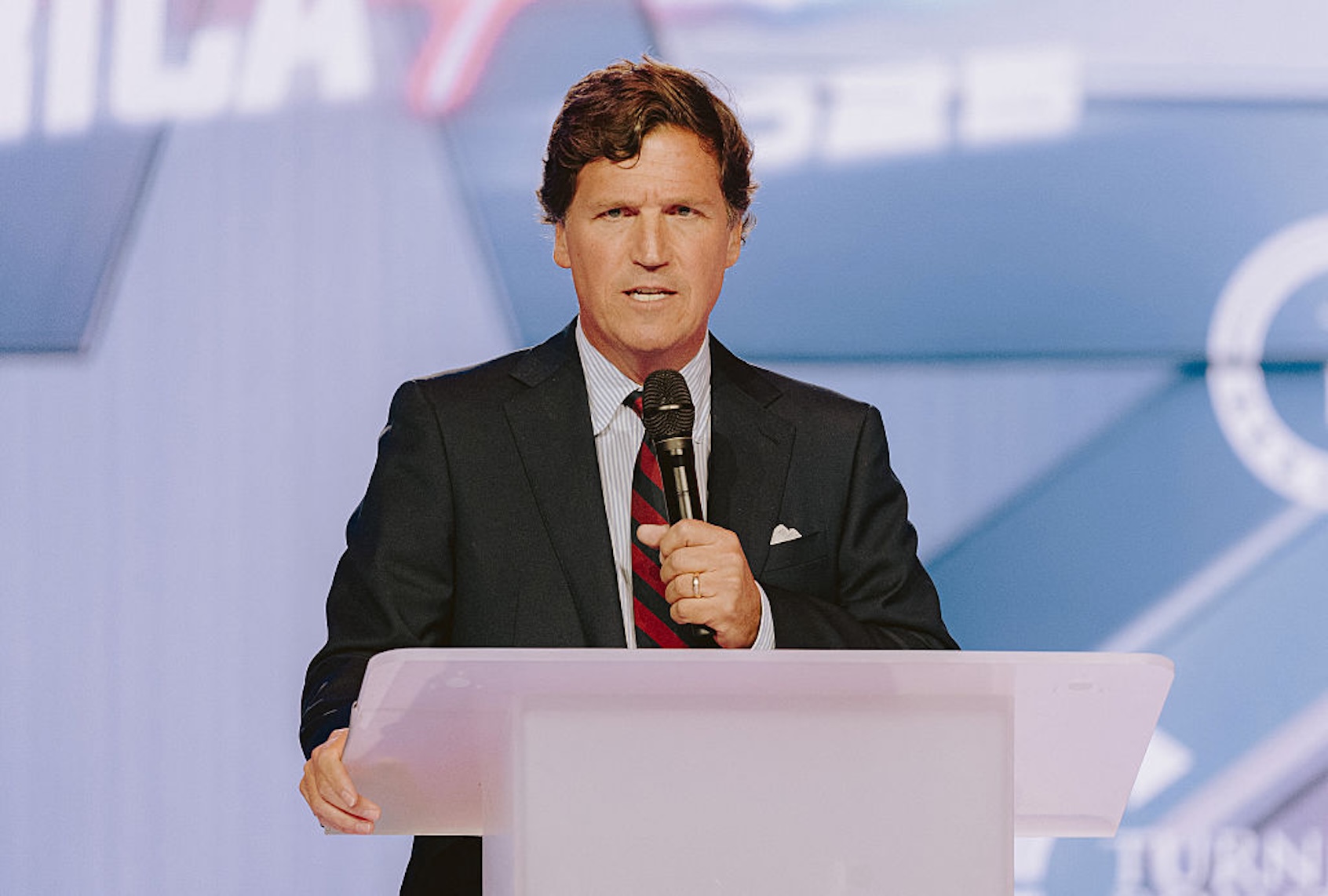
In a pivotal moment in television history, comedian Jon Stewart confronted conservative pundit Tucker Carlson on CNN’s debate program “Crossfire” in 2004. Stewart, then the acclaimed host of “The Daily Show” on Comedy Central, criticized the show for its superficial treatment of serious political issues, calling the hosts “hacks” who were “hurting America.” This confrontation not only led to “Crossfire” being canceled but also marked the beginning of Carlson’s evolution into a prominent figure in right-wing media.
The context of Stewart’s appearance was significant. At the time, the United States was engaged in the second Iraq War, and Stewart felt compelled to address what he viewed as a damaging trend in political discourse. He described “Crossfire” as more akin to a scripted wrestling match than a genuine discussion, a sentiment that resonated with many viewers. In a blunt exchange, he labeled Carlson as a “d**k,” highlighting the personal nature of his critique. The immediate aftermath saw “Crossfire” cease operations shortly after this televised clash.
Despite Stewart’s moral clarity during that time, the political landscape shifted dramatically in the years that followed. Carlson, rather than retreating from the controversial persona Stewart had critiqued, embraced it, ultimately becoming a leading voice in conservative media. His ability to connect with an audience eager for validation of their beliefs has allowed him to thrive, even as he has faced numerous controversies.
Carlson’s career trajectory is captured in Jason Zengerle’s recently published biography, “Hated by All the Right People.” This work explores Carlson’s transformation from a traditional journalist to a polarizing figure in conservative circles. The biography suggests that Carlson initially took Stewart’s criticisms to heart, grappling with his own doubts about the Iraq War while working in media. His early career included stints at MSNBC and the founding of the Daily Caller, which he aimed to establish as a legitimate news outlet.
However, Carlson’s perspective shifted over time. He began to view Stewart’s critique as a mischaracterization of reality, one that failed to account for the demands of the conservative audience. In the years following that infamous clash, he recognized an appetite for a different kind of messaging—one that absolved audiences of moral responsibility while fueling a narrative of victimhood against perceived liberal elites.
Carlson’s success stems from his adeptness at crafting stories that resonate with his audience’s fears and frustrations. He has become known for framing progressives not merely as political opponents but as embodiments of a conspiratorial evil intent on undermining American values. His rhetoric often includes phrases such as “they want you to believe,” which implies a shadowy cabal of liberals manipulating public opinion and social norms.
This approach has allowed Carlson to maintain a loyal following, even amidst controversies, such as his recent association with Holocaust deniers. His commentary has consistently pushed boundaries, challenging established norms and facts. By questioning historical truths and mainstream narratives, he has further entrenched his audience in a worldview that aligns with their existing beliefs, regardless of evidence.
The legacy of Stewart’s intervention in 2004 is complex. While it aimed to advocate for a more honest and rational political discourse, it inadvertently contributed to the rise of a media figure who has repeatedly defied conventional wisdom. Carlson’s evolution highlights a significant shift in the conservative media landscape, where partisan loyalty often overrides factual accuracy.
Looking back over the past two decades, it is evident that Carlson’s resilience is not merely a rejection of Stewart’s call for journalistic integrity. Instead, he tapped into a profound demand within his audience for narratives that absolve them of complicity in societal issues. The ongoing dynamics of right-wing media suggest that this demand will continue to shape political discourse in the years to come, leaving a lasting impact on both the Republican Party and American society at large.