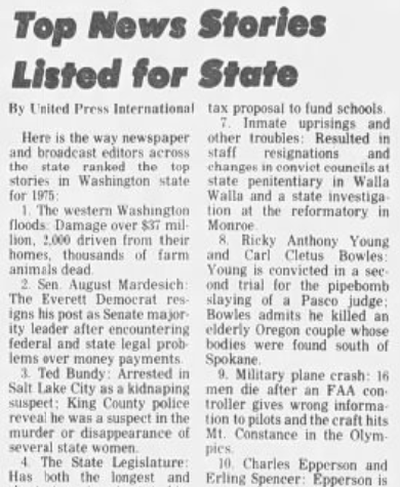
The past often reverberates through the present, as evidenced by the significant flooding that struck Western Washington. On December 27, 2025, it was revealed that this natural disaster has been a prominent issue for the region spanning decades. The Associated Press reported that the top news story in Washington for 1975 was the catastrophic flooding, a situation that has resurfaced in discussions due to similar events in recent years.
In 1975, severe flooding forced approximately 2,000 residents from their homes. The aftermath was devastating, leading to the loss of thousands of farm animals and resulting in an estimated $37 million in damages. This flooding event not only shaped the immediate landscape but also left a lasting mark on the community and its infrastructure.
The implications of such disasters extend beyond the immediate physical damage. The second most significant story of 1975 involved a political scandal that led to the resignation of State Senator August Mardesich as majority leader. The third notable event was the arrest of Ted Bundy in Salt Lake City, amidst growing suspicions of his involvement in a series of murders and disappearances across Washington. Additionally, the conviction of Ricky Anthony Young for the murder of a Pasco judge using a pipe bomb garnered significant local attention, ranking eighth on that year’s list of critical stories.
Historical Context of Spokane’s Governance
The historical narratives of Washington also include political turmoil. On this day in 1925, the Spokane city commissioners faced a crisis involving Charles Hedger, the city’s commissioner of public safety. Hedger was under scrutiny due to a recall petition addressing his failure to manage issues such as liquor, prostitution, and gambling within the city. Four of the five commissioners indicated their unwillingness to support him, citing prior warnings about his department’s lack of effectiveness. This internal conflict reflected the challenges of governance during that era.
Significant historical events have also unfolded on December 27 in other parts of the world. In 1934, Shah Mohammad Reza Pahlavi officially declared that Persia would now be known as Iran, marking a pivotal moment in the nation’s identity. Similarly, in 1978, Spain transitioned to democracy after four decades of dictatorship, as King Juan Carlos ratified the country’s first democratic constitution. These events underscore the broader themes of political change and social upheaval that resonate through time.
The parallels between past and present serve as a reminder of the enduring impact of natural disasters and political shifts. As communities in Washington reflect on the flooding that shaped their history, they also face the ongoing challenges of climate change and governance. The stories from 1975, 1925, and other significant events highlight the complex tapestry of history that continues to influence the present.