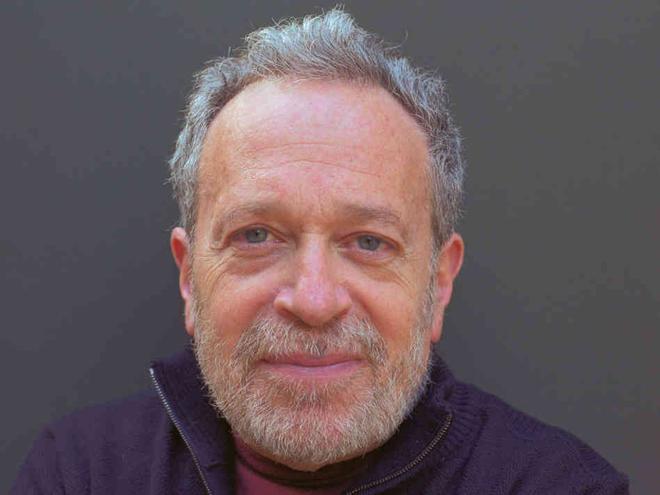
The actions of the billionaire class have come under scrutiny as their wealth accumulation strategies become increasingly visible. In 2025, former U.S. Secretary of Labor, Robert Reich, outlined five methods through which this elite group reportedly secures billions. His observations highlight a system where political influence often supersedes market dynamics, raising concerns about fairness and economic integrity.
Monopolization and Market Control
Reich argues that the concept of a “free market” is misleading, as it is shaped by political decisions that favor monopolies. For instance, he points to Jeff Bezos and his company Amazon, which commands nearly 40% of all e-commerce retail sales in the United States. In 2023, the Federal Trade Commission and 17 states initiated legal action against Amazon, accusing it of maintaining its monopoly through anti-competitive practices. Reich contends that if anti-monopoly laws were strictly enforced, Bezos and other tech giants like Elon Musk and Mark Zuckerberg would see their fortunes significantly diminished.
The Role of Insider Information
Another method highlighted by Reich is the use of insider information. He cites billionaire Steven A. Cohen, whose hedge fund faced accusations of extensive insider trading, resulting in charges against multiple employees. Although Cohen evaded severe penalties, the practice remains widespread among corporate executives. Research from the SEC indicates that executives are more likely to sell shares after announcing stock buybacks, profiting from inflated prices. Strengthening regulations on insider trading could potentially reduce the earnings of hedge fund managers and corporate leaders.
Influencing Political Decisions
Reich also discusses how billionaires exert influence over political decisions to benefit their financial interests. He notes that Charles Koch and Koch Industries have saved an estimated $1 to $1.4 billion annually due to tax cuts promoted by the Trump administration. Similarly, Elon Musk has reportedly invested significant sums in political campaigns to secure favorable regulations and contracts, enhancing his wealth. Reich emphasizes that without strict anti-corruption laws, the cycle of political payoffs will continue to benefit the ultra-rich.
Exploiting Investments and Fraud
The article highlights the manipulation of investor trust as a pathway to wealth accumulation. Adam Neumann, founder of WeWork, exemplified this by convincing major investors like J.P. Morgan to finance his venture, despite its failure to generate profits. Following revelations about his conflicts of interest, Neumann received over $1 billion to leave the company, while many employees faced layoffs. The lack of robust anti-fraud legislation allows such figures to thrive, undermining the interests of average investors.
Inheritance and Wealth Transfer
Finally, Reich points to inheritance as a significant factor in the rise of billionaires. According to a recent UBS report, a record number of individuals—91—became billionaires through inherited wealth in 2025, collectively amassing nearly $300 billion. As the largest inter-generational wealth transfer unfolds, heirs are expected to receive at least $5.9 trillion over the next 15 years. The current U.S. tax laws, which favor inherited wealth, further entrench this disparity.
Public sentiment reflects growing concern about the impact of billionaire wealth on democracy. A recent poll found that 53% of Americans feel that billionaires threaten democratic processes, while 71% support the introduction of a wealth tax. Reich argues that addressing these systemic issues is critical for restoring public trust in capitalism.
As discussions about wealth inequality and its implications continue, the need for regulatory reforms becomes increasingly evident. Establishing fair practices could help mitigate the influence of a small number of individuals wielding disproportionate power in the economy.