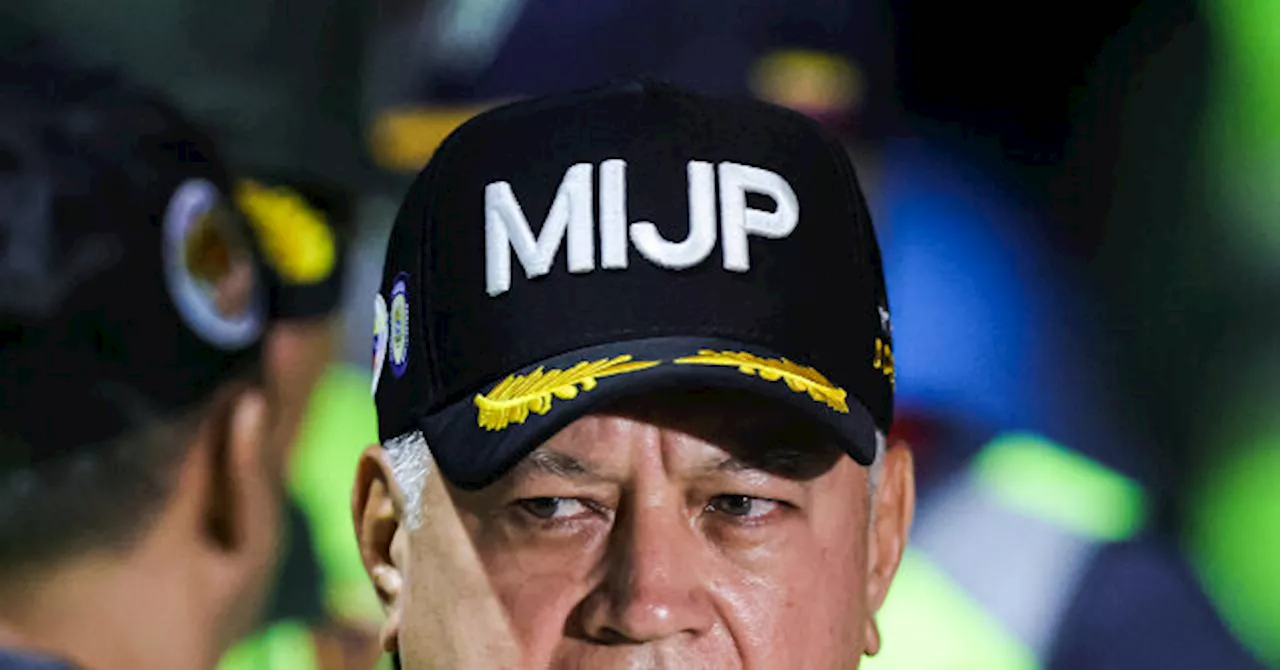
Diosdado Cabello, a prominent figure within Venezuela’s socialist government, has publicly denied allegations of engaging in secret discussions with the United States regarding the potential removal of President Nicolás Maduro. This declaration comes in light of reports suggesting that Cabello had communicated with officials during the Trump administration prior to a planned operation to apprehend Maduro.
Cabello, who is facing multiple charges of narco-terrorism from the U.S. government, dismissed the claims as unfounded and part of a broader media disinformation campaign. He proclaimed himself to be “priceless” and challenged anyone to provide evidence of such meetings, calling the allegations attempts to undermine unity within the ruling party.
Recent Developments Escalate Tensions
The situation escalated further following a meeting between Delcy Rodríguez, the acting president of Venezuela, and CIA Director John Ratcliffe shortly before these allegations surfaced. This visit, reportedly sanctioned by President Donald Trump, was aimed at fostering improved relations between the U.S. and Venezuela. Trump has publicly acknowledged ongoing communications with Rodríguez, describing their conversations as “very good” and “cordial.”
Despite these diplomatic overtures, Cabello asserted that the Venezuelan government remains steadfast and unified. He emphasized that claims of division or betrayal within the regime are false and that the Bolivarian revolution continues to govern the country. Cabello’s statements during his weekly propaganda show further reinforced this narrative, insisting that his administration is transparent and free from the scandals that he attributes to the opposition.
According to recent reports from Reuters, Cabello allegedly participated in discussions with U.S. officials months before a January 3, 2026 operation in which U.S. Delta Force members are said to have captured Maduro and his wife, Cilia Flores, in Caracas. The U.S. government has offered a reward of up to $25 million for information leading to Cabello’s capture, highlighting the gravity of the charges against him.
A Web of Allegations and Counterclaims
In his response to the media scrutiny, Cabello has not only challenged the validity of the allegations but has also criticized the motivations behind them. He has accused exiled Venezuelan journalist Leopoldo Castillo and others of spreading misinformation, reiterating his demand for proof. “I challenge anyone, Reuters, Leopoldo Castillo, to show even a shred of evidence that I met with anyone,” he stated, emphasizing his commitment to the government’s integrity.
The ongoing saga of accusations and denials reflects a broader context of political instability and mistrust within Venezuela. The involvement of key figures from both the U.S. and Venezuelan governments adds complexity to the situation, as both sides navigate a landscape filled with shifting alliances and potential power struggles.
As the political climate in Venezuela remains fraught with tension, the claims surrounding Cabello and Maduro’s interactions with U.S. officials continue to attract international attention. With investigations into narco-terrorism and drug trafficking charges ongoing, Cabello’s influence within the regime and the implications of his alleged communications with the U.S. could significantly impact the future of Venezuelan politics.
The interplay of denial, propaganda, and international diplomacy serves to heighten the stakes, leaving observers questioning the true nature of the relationships at play and the possibilities for Venezuela’s political future.