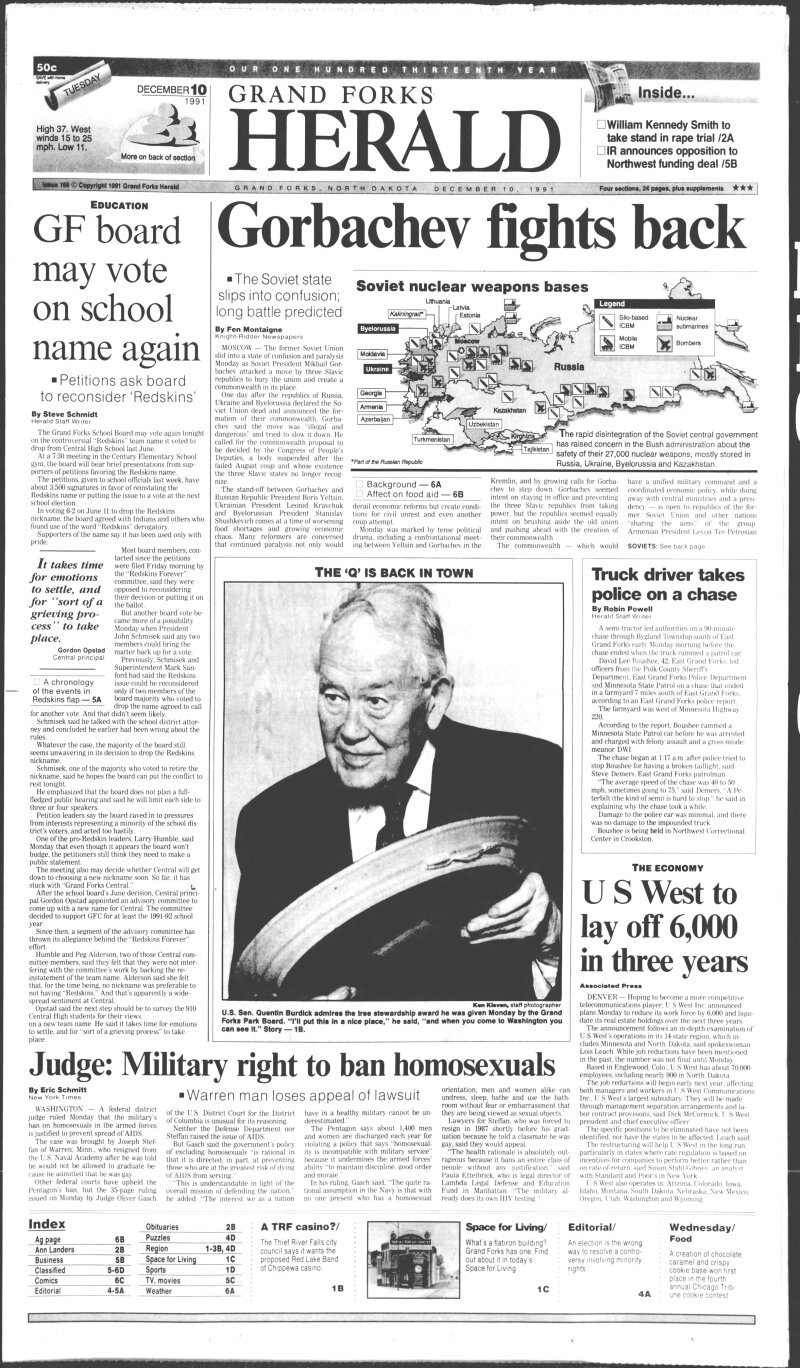
On December 10, 1991, John White, the leader of the Illinois Farm Bureau, called on President George H.W. Bush to provide increased assistance to the financially struggling Soviet Union. White’s appeal emphasized the significance of the Soviet market, which had previously accounted for approximately $17 billion in U.S. corn exports during the 1970s and 1980s. The request came as the International Wheat Council warned that denying $19.4 billion in credit assistance could jeopardize a vital export outlet for American farmers.
White, who had recently returned from a visit to Moscow and surrounding rural areas, planned to address the issue at Bush’s annual meeting with approximately 3,000 attendees. He underscored the necessity of supporting Soviet farmers to stabilize both their economy and U.S. agricultural exports. “The Soviets were a cash-and-carry customer for $17 billion worth of corn in the 1970s and ’80s,” White stated. “In some years, nearly 30 percent of corn exports went into this market.”
In a related statement, the International Wheat Council indicated that the Soviet Union had been offered credit and barter arrangements totaling $19.4 billion to secure essential food imports. The Council cautioned that failing to extend further aid could lead to the loss of a critical export market. They noted, “The prospect of total economic collapse foreshadows even graver financial problems.”
White articulated a vision for the long-term aid strategy, suggesting that it should aim to provide the necessary space for the Soviet Union to transition to market systems, unsubsidized credit, and commercial sales.
Critics of the administration’s approach voiced strong opposition. David Senter, director of the American Agriculture Movement, expressed discontent with Bush’s prioritization of foreign aid over domestic agricultural issues. Senter criticized the President for offering substantial economic credits to the Soviet Union while simultaneously threatening to veto even a minimal increase in domestic dairy support. “He has not put one plan forward to deal with domestic problems in America,” Senter remarked. “He is disengaged. He doesn’t care about domestic programs, particularly in rural America.”
As the economic situation in the Soviet Union deteriorated, the debate over prioritizing foreign assistance versus addressing domestic agricultural needs intensified. The outcome of these discussions would have lasting implications not only for U.S. farmers but also for the future of U.S.-Soviet relations in a rapidly changing global landscape.