A team of researchers from multiple institutions, including Washington State University (WSU) and Oregon State University, is working on a groundbreaking project aimed at enhancing the quality and resilience of Christmas trees. Known as “A GIFT SEED,” which stands for Accelerated Genetic Improvement of Fir Through Sequencing, Economics, Extension and Diagnostics, this initiative is backed by nearly $7.5 million in funding from the USDA National Institute of Food and Agriculture.
Leading this effort is Gary Chastagner, a renowned professor emeritus at WSU, who has dedicated nearly five decades to studying the ideal characteristics of holiday trees. Chastagner, affectionately dubbed “Dr. Christmas Tree,” has significantly influenced the Christmas tree industry, earning a lifetime achievement award from the National Christmas Tree Association in 2018 for his extensive contributions.
Chastagner remains actively involved in research, emphasizing its positive impact on tree growers. “To hear the growers talk about how it has had such a positive effect on their ability to produce high-quality trees, reduce pesticide applications and think of alternative approaches… you can’t ask for anything more,” he stated, reflecting on his rewarding career.
The multiyear project involves researchers from nine institutions across various countries, focusing on improving fir trees’ resilience to pests, diseases, and climate change. The goal is to enhance the appeal of Christmas trees to consumers while exploring new market opportunities for tree growers.
In the United States, Christmas tree farming is a substantial industry. According to the most recent USDA data, more than 14.5 million trees were harvested in 2022, bringing in over $553 million in revenue from approximately 16,000 farms. Oregon and North Carolina are the leading producers, accounting for more than half of the total production, while Washington ranks fourth with around 1 million trees.
The project’s lead, Justin Whitehill, an associate professor and director of the Christmas Tree Genetics Program at North Carolina State University, noted that around 75% of the trees cut and sold each year are firs. Including Douglas firs, the number rises to 93%. “True firs are really the most popular species,” Whitehill explained, adding that the project aims to identify tree varieties that could thrive in different regions of the country.
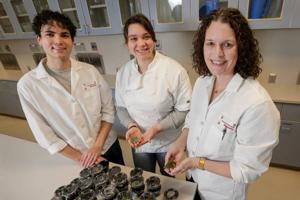
Research conducted within the project includes examining consumer preferences regarding tree aroma and appearance. Earlier this year, volunteers in Pullman participated in a study led by Carolyn Ross, a professor of food sciences at WSU, assessing the influence of scent on tree selection. The study compared five popular fir varieties: Fraser, noble, Nordmann’s, Trojan, and concolor.
Whitehill noted that the initial findings suggested that the Fraser fir was the most favored in terms of aroma. “Typically, folks tended to prefer the aroma of the Fraser fir, which is great news for North Carolina,” he said, acknowledging that this might not resonate as well with consumers in Washington, where noble firs are favored.
Ross emphasized the importance of understanding that scent preference is subjective. “There’s not one perfect something for everybody,” she explained. “Some people really want a piney tree, while others prefer more citrus aromas.” This insight is vital as researchers aim to explore the chemistry behind tree aromas and how they can enhance or modify them through breeding.
The ongoing project seeks to integrate findings on aroma with research into the genetic defenses of trees against pests and diseases. Whitehill expressed excitement about the collaborative nature of the work, stating, “It’s exciting to incorporate my background in genetics and pathology, along with aroma chemistry, to tackle major industry issues.”
Chastagner and Whitehill foresee the project benefiting not only consumers but also the broader understanding of natural ecosystems. “These little trees, we ask them to do a lot,” Ross pointed out, highlighting the expectations placed on Christmas trees to remain aesthetically pleasing and aromatic throughout the holiday season.
The collaborative effort aims to ensure that Christmas tree growers can adapt to changing market demands while delivering the quality that consumers desire, making it a promising venture for the industry as a whole.