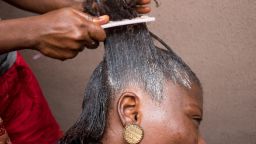
The US Food and Drug Administration (FDA) has failed to meet its latest deadline for proposing a ban on formaldehyde and certain formaldehyde-releasing chemicals in hair-straightening products. This decision affects many consumers, particularly Black women, who frequently use these products. The agency had set an action date for December 31, 2025, but a spokesperson confirmed that the proposed rule remains under development.
In an email, the FDA stated, “FDA’s proposed rule, ‘Use of Formaldehyde and Formaldehyde-Releasing Chemicals as an Ingredient in Hair Smoothing Products or Hair Straightening Products’ continues to remain a priority for the Agency.” The agency also mentioned that it may revise the anticipated publication date for this rule and others, providing periodic updates through its Unified Agenda, typically released twice a year.
This delay is not the first for the FDA; the timeline has shifted multiple times since the initial deadline was set for October 2023. David Andrews, acting chief science officer at the Environmental Working Group, highlighted the repeated postponements, noting, “That timeline was later moved to April 2024, then November 2024, March 2025, July 2025, and now December 31, 2025.”
Concerns surrounding formaldehyde are significant, as it is classified as a known carcinogen. It is associated with respiratory irritation and skin sensitization, as well as increased risks of conditions like asthma. Andrews emphasized the danger of continued delays, stating, “Every delay directly puts at risk the health of salon workers and consumers, particularly Black women, who are disproportionately exposed to harmful chemicals in personal care products.”
In 2021, a coalition of salon workers, the Environmental Working Group, and the nonprofit Women’s Voices for the Earth formally requested the FDA to take action against formaldehyde and similar chemicals in hair-straightening products. This push came amid growing evidence of potential cancer risks linked to these ingredients. The FDA had indicated under the Biden administration that it was considering a ban, yet the agency has not made any formal moves to implement this.
A report by Dr. Lauren Wise, a professor at the Boston University School of Public Health, underscores the health impacts of these products. She stated, “Several epidemiologic studies have raised concerns about associations between frequent use of chemical hair straighteners and increased risks of uterine fibroids, infertility, and hormone-related cancers, including uterine, ovarian, and breast cancers.”
Fibroids, which are noncancerous growths of tissue in the uterus, can lead to severe health issues, including heavy bleeding and complications during pregnancy. Dr. Wise noted that Black women are disproportionately affected by fibroids, being up to three times more likely to be diagnosed than their White counterparts.
Recent research led by Dr. Wise found that temporary hair relaxers, suspected to contain higher levels of harmful chemicals, correlate more strongly with fibroid incidence and growth compared to permanent relaxers. She indicated, “To our knowledge, this is the first study to look at these two types of hair relaxers separately in relation to fibroid development.”
The regulatory process for the proposed ban requires the FDA to publish the rule in the Federal Register, followed by a public comment period. After reviewing comments, the agency will decide whether to finalize or withdraw the rule. Despite the FDA’s repeated delays, there are no formal penalties for missing these deadlines, leaving many concerned about the agency’s commitment to public health.
Lawmakers have expressed frustration over the FDA’s inaction. Representatives Shontel Brown, Nydia Velázquez, and Ayanna Pressley have consistently urged the agency to act decisively. Brown articulated the urgency of the situation: “This is really simple to me. Do we care about Black women getting cancer or do we not? Every action, or inaction, on this issue flows from that question – and we can see how people are answering.”
Andrews calls for immediate action from the FDA, stating, “The risk to public health is simply too great to wait any longer.” As the deadline looms, the ongoing uncertainty raises critical questions about the safety of hair-straightening products and the FDA’s role in regulating consumer health risks.