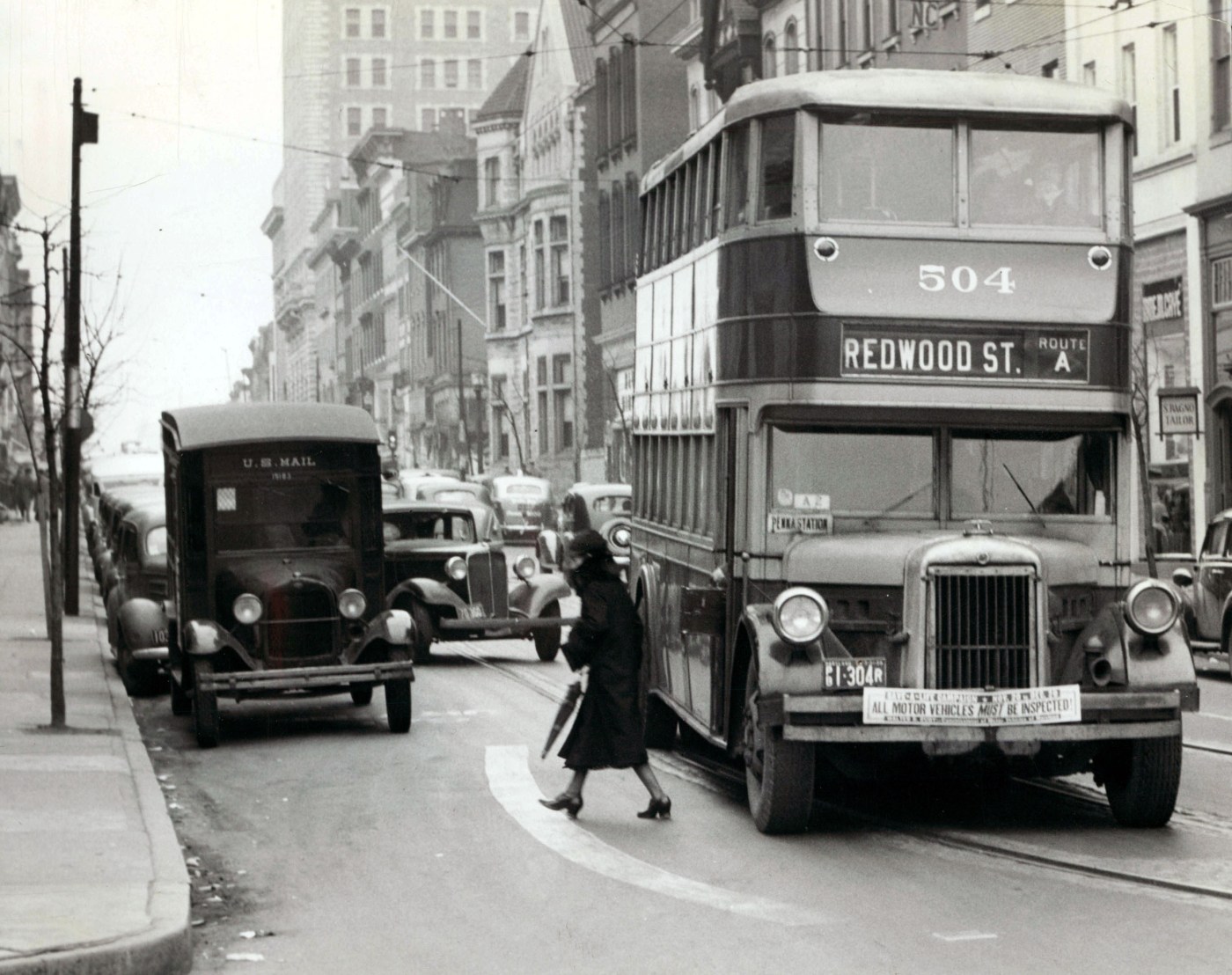
Baltimore’s streets once echoed with the charm of double-decker buses, which operated from 1921 to 1942. These buses, reminiscent of London’s iconic vehicles, provided a unique transport option along Charles Street, connecting commuters to their destinations for a mere dime. With a route stretching approximately 3.5 miles from Redwood Street to University Parkway, the buses quickly became a popular choice for both work and leisure.
The top deck of the buses offered an open-air experience, allowing passengers to soak in the sun while traveling. This setting was particularly appealing to young couples, who found the upper level to be an ideal spot for romantic outings. A headline from the Evening Sun in July 1922 captured this sentiment: “Spooners Desert Front Parlor For Top Seats On New Buses.” The article noted that couples flocked to the upper deck, enjoying the starlit sky as they traveled.
The double-decker buses not only provided transport but also inspired creativity. In 1926, the Vagabond Theater Co. staged a musical set atop one of the buses, which was broadcast on WCAO radio. The show featured the hit song “Love Is A Wonderful Thing,” reflecting the cultural impact these buses had on the city.
Despite their novelty, the buses faced challenges. They were restricted to Charles Street to avoid tree-lined avenues that could pose hazards to passengers on the upper deck. Notably, author F. Scott Fitzgerald, who resided on Charles Street at the time, described the experience in a 1936 essay for Esquire Magazine. He recounted serene rides with branches brushing against the bus, enhancing the scenic journey.
The upper deck attracted various demographics, including smokers who sought the freedom to enjoy a cigar without restrictions inside the bus. The Evening Sun expressed support for this change, emphasizing the need for fresh air during travel.
Tragically, safety concerns arose, highlighted by a gas explosion in 1922 at the intersection of Charles and Mulberry streets. The explosion hurled a manhole cover, weighing around 100 pounds, onto the upper deck of a bus, narrowly missing five students from Goucher College. This incident underscored the potential dangers of open-air transport.
World War II marked the end of the double-decker service in Baltimore, despite their popularity. By October 1942, these buses had carried an impressive 607,396 passengers. However, their fuel consumption—averaging just 1.5 miles per gallon—prompted a shift in priorities towards the war effort, leading to their eventual retirement.
As Baltimoreans reminisce about the days of double-decker buses, these vehicles symbolize not only a mode of transportation but also a cherished part of the city’s history. They served as a gathering place for social interactions and a canvas for artistic expression, leaving an indelible mark on the city’s cultural landscape.