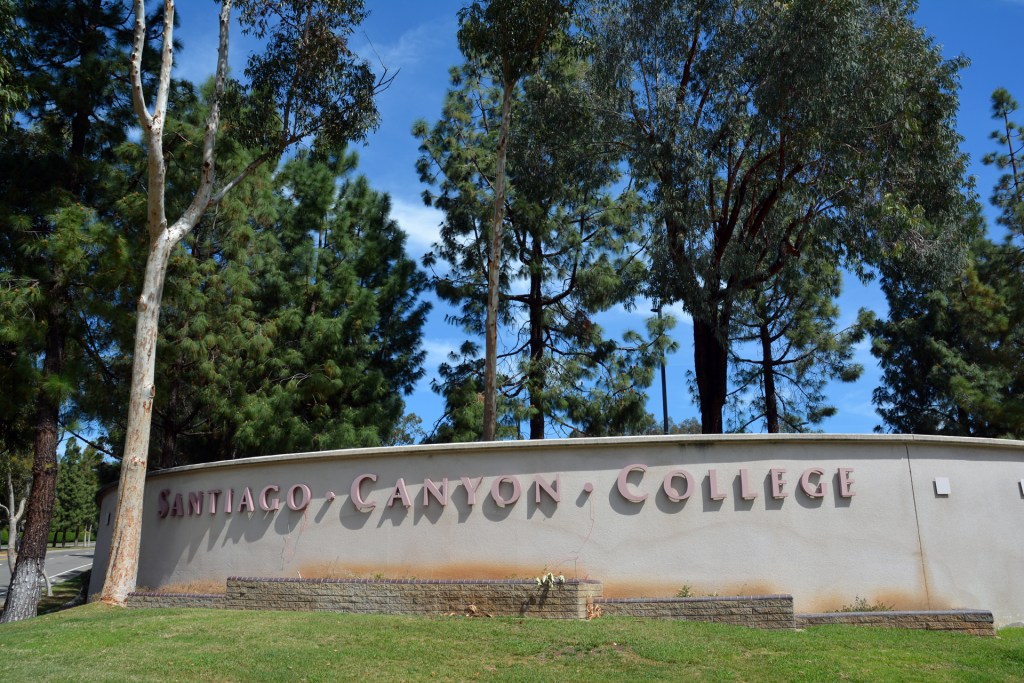
Santiago Canyon College (SCC) has introduced a new Associate of Arts degree for transfer in music, expanding academic opportunities for students interested in pursuing higher education in the field. This initiative addresses a previously unmet need within the college’s curriculum and aims to facilitate transfer options for aspiring music students at four-year institutions.
Eleanor Nuñez, co-chair of SCC’s Performing Arts department, spearheaded the development of this program after she began her role in 2024. “This was a vision I had,” Nuñez stated. She identified a gap in local community college offerings for music programs, noting that high school students in the region lacked access to a nearby college with a dedicated music curriculum.
With support from Alex Taber, co-chair of the department and professor of economics, Nuñez successfully developed the curriculum for 16 new music courses. Additionally, she secured transferability for another 16 courses with the California State University (CSU) and University of California (UC) systems. This comprehensive framework allows students to fulfill lower-division music major requirements, facilitating a smoother transition to four-year colleges.
“They will have already completed essentially half of their requirements,” Nuñez explained regarding the degree’s structure.
The program consists of a four-tier course sequence. The initial tier focuses on foundational theory and musicianship, referred to by Nuñez as “the grammar of music.” Courses such as Music Theory 1 introduce students to essential concepts, including diatonic and secondary dominants, four-part writing, and multiple-voice exercises, including singing and dictation.
As students progress to Levels 2, 3, and 4, the coursework becomes increasingly complex, incorporating advanced topics like four-part voice writing and chromatic harmony. Notably, the Level 3 and 4 theory courses correspond to upper-division classes at four-year universities, offering students an advanced education at a community college price.
The second tier of the program fulfills all piano requirements, while the third tier emphasizes applied lessons. Traditionally, college music students receive 30-minute lessons during their first two years of study, but SCC music majors will benefit from hour-long sessions. “It is the most intensive and best education for the student,” Nuñez remarked, highlighting the program’s commitment to providing comprehensive music education.
The final tier involves participation in large performance ensembles. While SCC has historically offered choir, the new program will expand to include concert band, jazz band, orchestra, and guitar ensembles.
The program was developed and approved within a year, and it began accepting students for the full two-year track in the fall of 2023. Admission requires an audition to demonstrate proficiency on the student’s chosen instrument, ensuring that participants are prepared for a professional-level curriculum.
“We prep them to transfer, and we are working on getting them job-ready,” Nuñez emphasized. Graduates will be equipped for various career paths, including public or private school teaching, military musician roles, professional performance, and entrepreneurial opportunities in the music industry.
Nuñez, who has experienced a multifaceted career in music, believes it is crucial for students to recognize the diverse opportunities available in the field. She noted, “The reality is that most musicians do a little bit of everything.”
Small class sizes at SCC enhance the learning experience, allowing for greater access to instructors and personalized attention. Alex Taber pointed out that compared to the higher costs associated with attending a four-year university for the first two years, SCC offers a valuable opportunity for students seeking quality education in music.
Some courses within the degree program are also accessible through the SCC Early College Program, which enables middle and high school students to enroll in foundational classes such as music fundamentals and vocal training.
Looking ahead, Nuñez intends to expand the Performing Arts department by developing similar degree plans for theater and dance. She envisions a collaborative environment that brings music, theater, dance, and visual arts programs together on a single campus, contributing to a comprehensive arts education in eastern north Orange County.
“That’s the long-term vision,” Nuñez affirmed, underscoring her commitment to fostering a vibrant arts community at SCC.