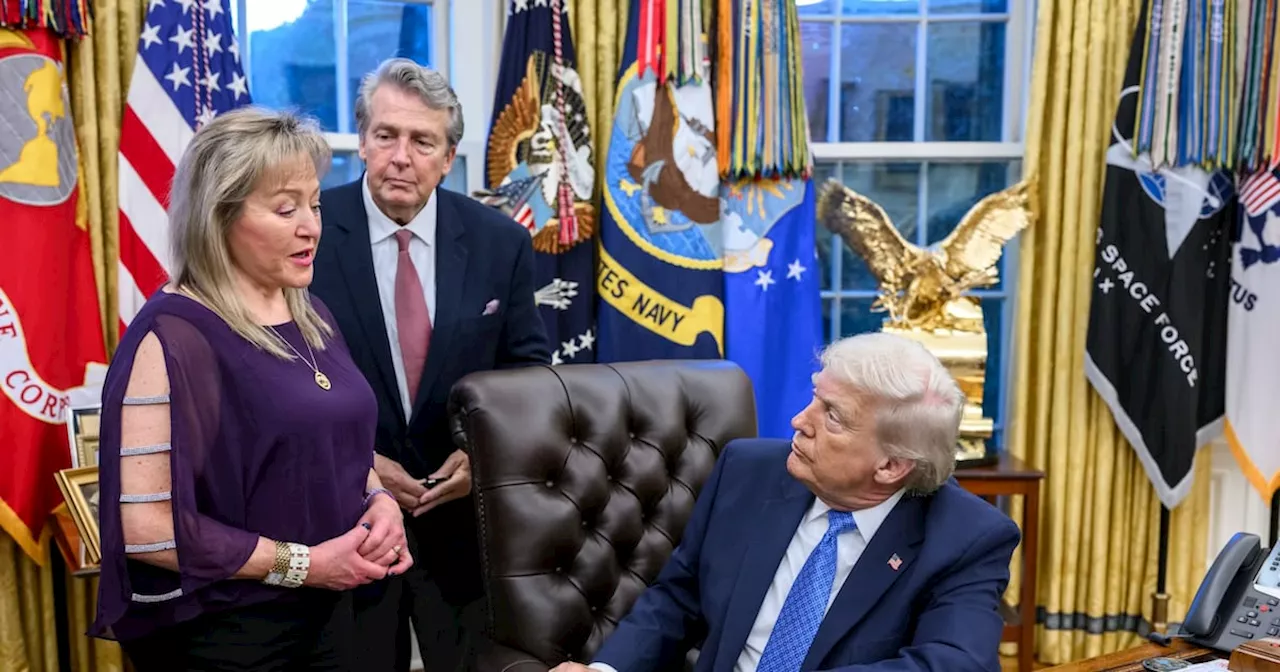
Sandy Snodgrass, an activist from Anchorage, recently had a significant exchange with President Donald Trump regarding the classification of fentanyl as a weapon of mass destruction. This conversation took place during the signing of new fentanyl education legislation named after her son, Bruce Snodgrass, who tragically died from the drug in an Anchorage parking lot at the age of 22.
On December 1, 2025, in the Oval Office, Snodgrass celebrated the passage of the legislation, known as Bruce’s Law. During this event, she presented the president with a photo of her son, capturing a moment of joy by an Alaskan glacial lake. In a brief conversation, Snodgrass expressed her desire to see fentanyl classified alongside nuclear, chemical, and biological weapons.
Fentanyl Designated as a Weapon of Mass Destruction
Following their interaction, President Trump declared fentanyl a weapon of mass destruction, officially placing it among substances that can cause extensive human devastation. This designation raises questions about the practical implications of such a classification, as experts assess its potential impact on policy and law enforcement.
Since the death of her son in 2022, Snodgrass has dedicated herself to raising awareness about the dangers of fentanyl, advocating for tougher penalties against drug dealers and traffickers. She acknowledged that while she does not believe she single-handedly inspired the president’s decision, her conversation may have brought the issue to the forefront of his mind.
During the Oval Office signing, Snodgrass recalled telling Trump, “I said, ‘President Trump, the next thing in the fight against fentanyl is to declare fentanyl a weapon of mass destruction.’ He looked up at me and he said, ‘That’s a good idea. Why haven’t we done that?’” This exchange seemed to resonate with the president, leading to further discussions.
The day after the signing, Snodgrass received an email from White House staff requesting a copy of a policy memo her niece had helped prepare on the subject. Snodgrass noted, “I was told that ‘the President asked for it directly!’” This indicated a keen interest in the topic from the administration.
White House Response and Public Impact
Following her initial conversation with Trump, Snodgrass participated in a meeting at the White House with high-level officials, including the administration’s drug czar and a representative from the office of Vice President J.D. Vance. During this meeting, officials sought her insights on why fentanyl should be classified as a weapon of mass destruction.
When approached for comments about Snodgrass’s influence, Abigail Jackson, Deputy Press Secretary, initially sent an internal email questioning how to respond to the inquiry. The White House later issued a statement emphasizing that President Trump’s decision was driven by a longstanding concern for the American public affected by fentanyl. The statement claimed, “President Trump will not rest until no more innocent lives are lost to fentanyl.”
While the specifics of how this classification will affect law enforcement and drug policy remain uncertain, it marks a significant moment in the ongoing battle against the opioid crisis. The new designation aims to provide the Drug Enforcement Administration with more tools to combat the growing fentanyl epidemic.
Snodgrass’s advocacy illustrates the personal impact of the opioid crisis on families and communities. Her journey from a grieving mother to an influential activist highlights the urgent need for comprehensive approaches to tackle the fentanyl issue in the United States.
As the implications of fentanyl’s new classification unfold, the focus will likely remain on how federal and state policies adapt to address this escalating crisis. The conversation initiated by Snodgrass could signal a shift toward more aggressive measures in the fight against this potent and deadly substance.