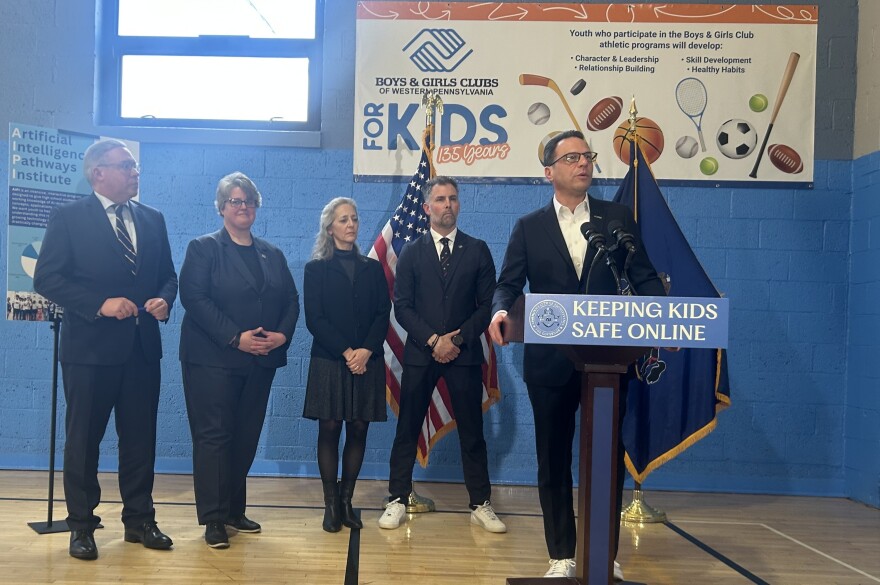
Pennsylvania Governor Josh Shapiro has initiated an investigation into artificial intelligence chatbots that falsely present themselves as licensed mental health professionals. This announcement was made during a roundtable discussion on AI and student mental health at the Boys and Girls Club in Carnegie on March 15, 2024. Shapiro emphasized the potential dangers these chatbots pose, stating, “Let’s be clear, they’re not licensed in Pennsylvania. They’re not qualified to tell you what you should or shouldn’t do as it relates to your mental health, and I think that it poses a real risk to students and to others across Pennsylvania.”
The Pennsylvania Department of State is taking action to address this issue. Secretary of State Al Schmidt revealed that a task force has been formed to investigate complaints about these chatbots. The department’s enforcement and prosecution units will review grievances submitted through a newly established online portal. Companies found violating state regulations could face penalties, including fines or being barred from operating in the state.
In addition to tackling the chatbot issue, the state’s Department of Education launched an AI and Digital Media Literacy toolkit, which offers resources for students, educators, and families. This toolkit aims to guide safe AI technology use, support classroom integration, and raise awareness about scams exploiting deepfake technology.
During the event in Carnegie, local educators, psychologists, and members of the Boys and Girls Clubs of Western Pennsylvania joined Shapiro. Among them was Josiah Pritchett-Murray, a student at McKeesport Area High School, who voiced concerns about the reliance on AI tools for counseling. He noted that many students turn to chatbots on platforms like Snapchat because they lack safe spaces for discussion. “That’s not a real human; they don’t have real feelings, but it’s the only thing that [students] have,” Pritchett-Murray explained.
Another participant, Laila King, a senior at Pittsburgh CAPA, highlighted the underlying issues of loneliness, isolation, and stress that many teenagers face today. King has been advocating for greater recognition of youth mental health issues through the Pennsylvania Youth Advocacy Network. Earlier this month, the state House Education Committee passed legislation that would allow mental health days for students to be counted as excused absences and would mandate mental health training for school athletic coaches.
Debra Bogen, Secretary of the Pennsylvania Department of Health, expressed the importance of fostering real human relationships to counteract the potential harms of AI chatbots. She stated that healthcare providers should help families understand the significance of building healthy relationships from a young age. “We need to get back to relationship building from the very young child through high school, and teach both parents,” Bogen remarked. She acknowledged the duality of chatbots, saying, “We have to figure out not just chatbots, which are really dangerous but can also be useful. I think the core is really at that personal human relationship.”
As the investigation continues, the emphasis remains on ensuring that mental health support is accessible, effective, and grounded in genuine human interaction. The state’s actions reflect a proactive approach to safeguarding the mental well-being of its residents, particularly students navigating the complexities of modern technology.