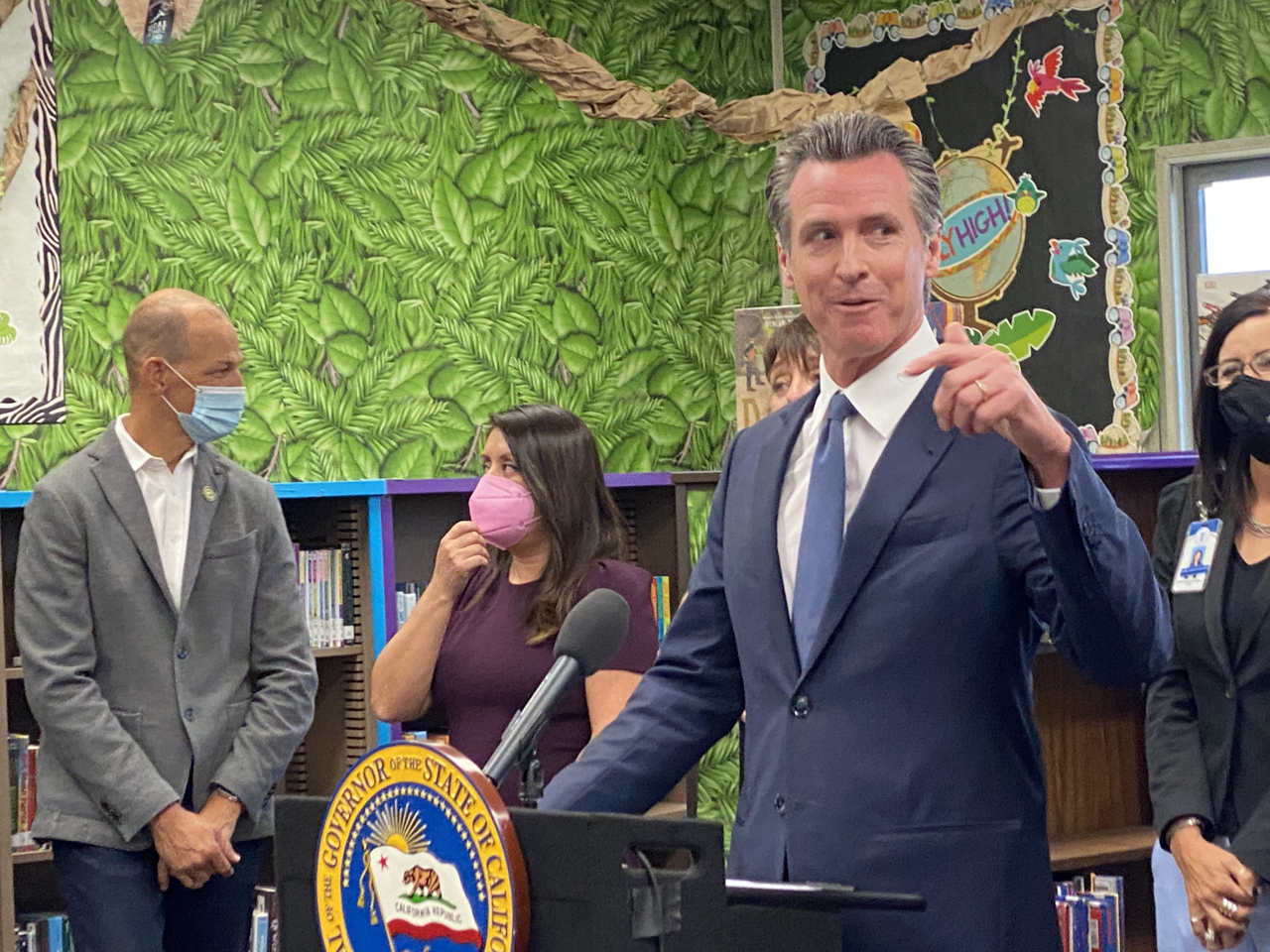
California Governor Gavin Newsom has unveiled a proposal aimed at reforming the state’s K-12 education system by redistributing power from the elected State Superintendent of Public Instruction to the appointed State Board of Education. This initiative, announced on March 14, 2024, seeks to address the longstanding inefficiencies in California’s education governance, which have been criticized as convoluted and at times counterproductive.
Newsom emphasized the urgency of reform, stating, “California can no longer postpone reforms that have been recommended regularly for a century.” He referenced numerous reports advocating for a streamlined governance structure that would enhance accountability and coherence in serving students and schools.
Details of the Proposal
Under this new plan, the State Board of Education, consisting of 11 members appointed by the governor, would assume control of the California Department of Education. The role of the State Superintendent would evolve to focus on “fostering coordination and alignment of state education policies from early childhood through post-secondary education.” Specific details regarding the implementation of this proposal have yet to be disclosed.
For over a century, California’s K-12 education system has been governed by a complex network of authorities at both local and state levels. In Sacramento, the governor, state superintendent, State Board of Education, and the Legislature each contribute to policymaking, often resulting in shifting priorities. Additionally, local school boards and county offices of education hold significant authority, particularly since the state adopted a more flexible funding system about a decade ago.
California is one of only nine states in the United States that elect a schools chief. In contrast, most states appoint their top education officials either through the governor’s office or the state board of education, according to research from the Education Commission of the States.
Supporting Research and Previous Initiatives
Newsom’s proposal aligns with a December report from Policy Analysis for California Education (PACE), which called for a comprehensive overhaul of the state’s educational governance. The report highlighted the pressing need for coherent governance as schools face fiscal challenges, widening inequities, and the ongoing effects of the COVID-19 pandemic on student learning and well-being.
The PACE authors noted, “The need for stronger, more coherent governance has never been greater,” particularly as federal involvement in K-12 education diminishes. The federal government has begun to reduce its role, with President Donald Trump moving to dissolve the federal Department of Education and reassign its responsibilities to state and other federal agencies.
PACE suggested that the Department of Education should be led by an administrator appointed by the State Board of Education, with the superintendent serving as an independent accountability advocate. The majority of authority would rest with the governor.
This is not the first time the role of the state superintendent has been scrutinized. Previous attempts to alter this position have not succeeded, including ACA 9, a 2023 proposal by former Assemblyman Kevin McCarty that sought to make the position appointed by the governor. This measure faced opposition from various educational organizations, including the California Teachers Association and the California School Boards Association.
Current State Superintendent Tony Thurmond, who is completing his second term, has focused on expanding literacy initiatives and student wellness programs, but has also faced criticism regarding workplace culture. Thurmond, who is term-limited and cannot run again in 2026, has announced his candidacy for governor.
Support for Newsom’s proposal is widespread among various education stakeholders. Organizations such as the Association of California School Administrators, California Association of School Business Officials, Californians Together, and EdTrust-West have expressed their endorsement. Christopher Nellum, executive director of EdTrust-West, remarked, “For far too long, California’s fractured education governance system has contributed to persistent inequities disproportionately impacting low-income students, students of color and multilingual learners.”
As California navigates these proposed reforms, the focus remains on enhancing the educational landscape to better serve all students across the state.