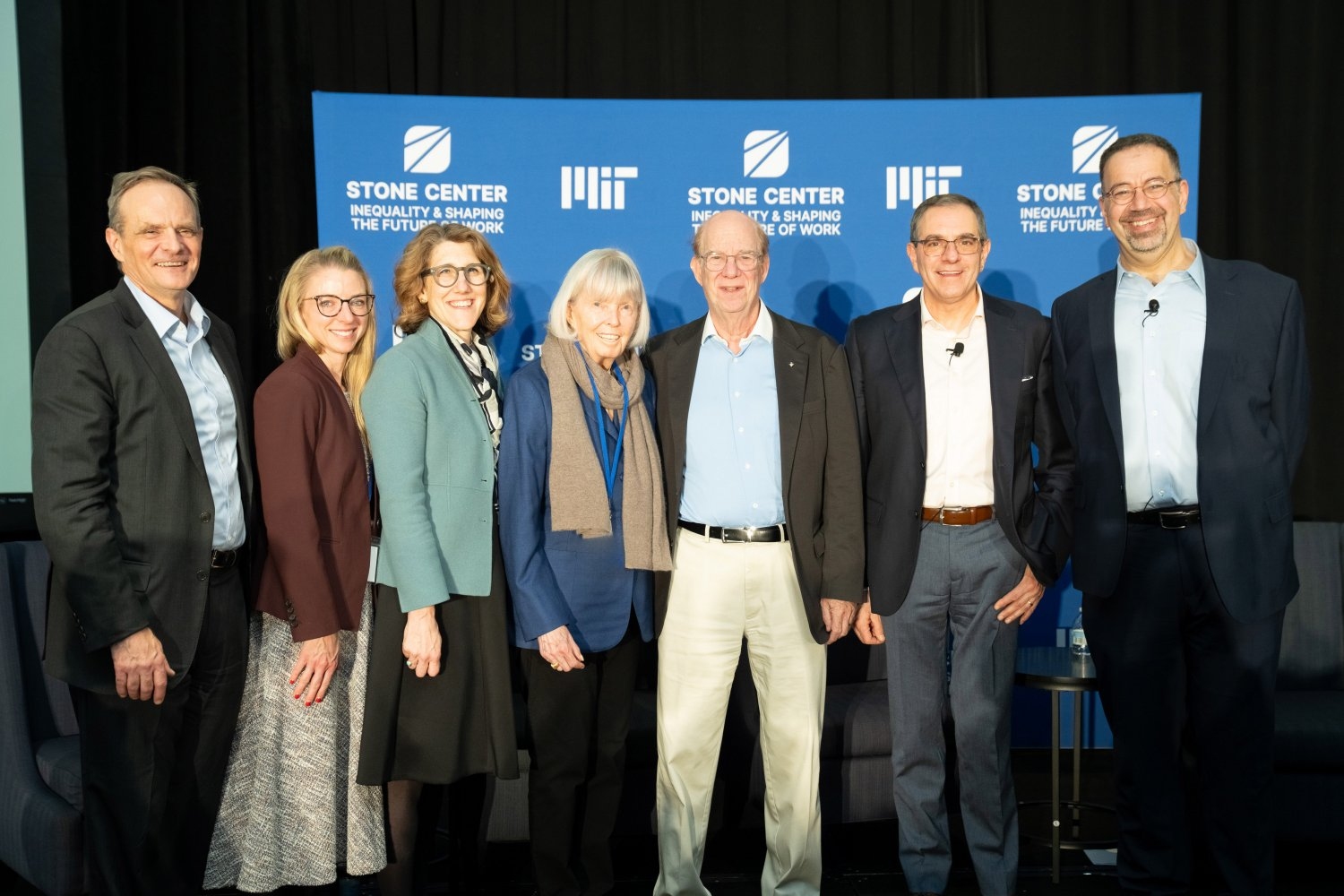
The James M. and Cathleen D. Stone Center on Inequality and Shaping the Future of Work was officially launched on November 3, 2025, at the Massachusetts Institute of Technology (MIT). This new center aims to unite scholars, policymakers, and practitioners to address pressing issues surrounding economic opportunity, technology, and democracy. Co-directed by MIT professors Daron Acemoglu, David Autor, and Simon Johnson, the Stone Center will investigate the factors contributing to rising income and wealth inequality, particularly as they affect workers without a college degree.
During the launch event, MIT Provost Anantha Chandrakasan highlighted the significance of the center’s mission. He stated, “As artificial intelligence tools become more powerful, and as they are deployed more broadly, we will need to strive to ensure that people from all kinds of backgrounds can find opportunity in the economy.”
Key Discussions on Wealth Inequality
Among the discussions, notable insights emerged regarding the drivers of wealth inequality. Owen Zidar from Princeton University pointed out that owners of private businesses, such as car dealerships and construction firms, constitute a substantial part of the top 1 percent. He remarked, “For every public company CEO that gets a lot of attention, there are a thousand private business owners who have at least $25 million in wealth.” This concentration of wealth leads to significant political influence through lobbying and donations.
Furthermore, Atif Mian, also from Princeton, linked high levels of inequality to the U.S. debt crisis. He argued that the immense savings at the top are not being invested productively. Instead, he noted, falling interest rates force the government into larger fiscal deficits. Proposed solutions to combat wealth inequality included suggestions to roll back the 20 percent tax deduction for private business owners and to increase wealth taxation. However, Antoinette Schoar of the MIT Sloan School of Management cautioned that policy designs must be carefully considered to avoid unintended consequences, citing mortgage subsidy policies post-2008 that worsened inequality.
Challenges and Opportunities in Liberal Democracy
Discussions also addressed the role of government in providing essential public goods and economic security. Marc Dunkelman of the Watson School at Brown University highlighted excessive bureaucracy as a critical challenge for modern liberal democracy. He stated, “We can’t build high-speed rail. You can’t build enough housing. That spurs ordinary people who want government to work into the populist camp. We did this to ourselves.”
In a related vein, Josh Cohen from Apple University and the University of California at Berkeley emphasized that liberalism must deliver shared prosperity. He warned that when individuals lack economic security, they may turn to leaders who abandon foundational liberal principles.
The speakers also discussed the need for liberal democracy to adapt without compromising its core values. Helena Rosenblatt Dhar from the City University of New York Graduate Center pointed out the historical tension between civil and political equality. She noted that the current challenge for liberalism lies in balancing individual rights with the collective will, thereby mitigating the rise of populism.
U.S. Representative Jake Auchincloss addressed the influence of technology on government effectiveness and public trust during his keynote speech. He underscored the necessity of regulating social media platforms, asserting, “In my opinion, media is upstream of culture, which is upstream of politics.” Auchincloss proposed regulatory measures that would hold social media companies accountable for content while banning targeted advertising to minors.
Pro-Worker AI and Future Implications
The topic of artificial intelligence was a focal point of the discussions, particularly regarding its impact on labor. Co-director Daron Acemoglu emphasized the importance of developing AI that augments human capabilities rather than automating tasks. He warned that the current focus of tech companies on artificial general intelligence may not align with a pro-worker vision.
Acemoglu highlighted the necessity for public investment in alternative AI architectures that prioritize “domain-specific, reliable knowledge.” Ethan Mollick of the Wharton School of the University of Pennsylvania described the prevailing mindset in AI labs as one that seeks to replace human labor, leading to confusion about effective AI adoption.
In a forward-looking perspective, Zana Buçinca of Microsoft shared findings indicating that considering workers’ values and cognitive processes in AI design can foster better collaboration between machines and humans. “The impact of AI on human work is not destiny,” Buçinca stated. “It’s design.”
The Stone Center aims to foster a thorough understanding of these issues as it embarks on its mission to reshape the economic landscape toward greater equity and opportunity for all.