The European Union has announced sanctions against 15 Iranian officials, including senior commanders of the paramilitary Revolutionary Guard, in response to the violent crackdown on ongoing protests in Iran. This decision, made on January 18, 2024, reflects the bloc’s condemnation of actions that have reportedly resulted in over 6,300 fatalities among protesters, according to various activist groups.
Alongside the sanctions on individuals, six Iranian organizations involved in regulating online content have also been targeted. This move adds to the mounting international pressure on the Iranian government, which faces potential threats from the United States amid escalating tensions in the region. The U.S. has positioned the USS Abraham Lincoln and several guided-missile destroyers in the Middle East, capable of launching strikes if necessary.
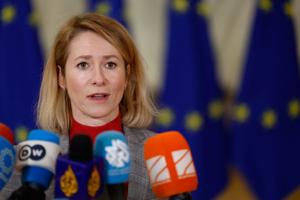
In a statement earlier, Europe’s top diplomat, Kaja Kallas, indicated that the Revolutionary Guard, instrumental in suppressing the demonstrations, would be classified as a terrorist organization. Kallas emphasized, “If you act as a terrorist, you should also be treated as a terrorist,” drawing parallels between the Guard and groups like al-Qaida and Daesh.
Despite earlier reservations from France regarding the potential risks to its citizens detained in Iran, the French government has since expressed support for the sanctions. French Foreign Minister Jean-Noël Barrot stated that ongoing repression of peaceful protests must not go unanswered, reinforcing the EU’s commitment to holding the Iranian authorities accountable.
The Revolutionary Guard, established following Iran’s 1979 Islamic Revolution, has evolved into a powerful institution within the country, operating alongside the regular armed forces. The Guard’s Basij force has been pivotal in quelling protests, particularly since the unrest intensified on January 8. The Iranian government has restricted internet access, complicating efforts to document the extent of the violence.
In conjunction with the sanctions, Iran has announced a military drill in the Strait of Hormuz, warning that live-fire exercises will occur over the coming weekend. This strategic waterway is crucial for global oil transit, accounting for approximately 20% of the world’s oil supply. The hard-line Keyhan newspaper has suggested that Tehran might take drastic measures to secure its interests in the region, raising concerns about potential conflict.
According to the Human Rights Activists News Agency, the recent violence has resulted in at least 6,373 deaths, including a significant number of protesters and bystanders. The agency has reported over 42,450 arrests amid the crackdown, employing a network of activists to verify casualties and detentions, although the Iranian government has provided a much lower death toll of 3,117 as of January 21, 2024.
The ongoing situation in Iran mirrors historical instances of unrest, drawing parallels with the upheaval seen during the Islamic Revolution. As the Iranian government grapples with both internal dissent and external pressures, the implications of these sanctions and military maneuvers remain uncertain, with the potential for further escalation in the region.