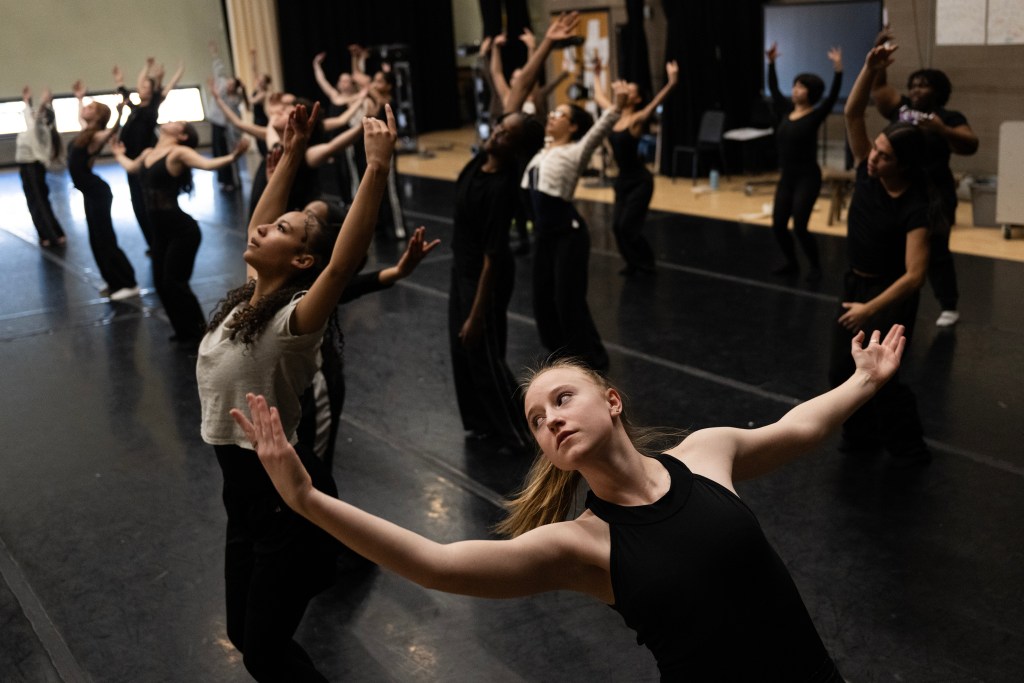
The Denver School of the Arts (DSA) has encountered significant hurdles in its efforts to expand and diversify its student body, originally envisioned through a bold property acquisition in 2021. The $30 million purchase of a neighboring campus aimed to increase enrollment from 1,100 to 1,700 students, particularly focusing on low-income students and those from diverse backgrounds. As of now, these aspirations remain largely unfulfilled.
Recently, tenth graders showcased their talents by performing Molière’s classic play, creating an atmosphere of laughter and applause among parents and peers. Despite the school’s prestigious reputation and impressive test scores, DSA has struggled with diversity since its establishment 35 years ago. Currently, 38% of its students are students of color, an increase from 31% in 2020. However, this growth has not translated into an overall increase in enrollment, which has been on the decline.
District leaders have reiterated their commitment to the original vision of a more diverse DSA. Plans include partnering with renowned rapper and record producer Dr. Dre and executive Jimmy Iovine to launch a new program on the acquired property. Yet, challenges such as rising renovation costs and administrative turnover have stymied progress.
Historical Context and Diversity Challenges
DSA was opened in 1991 as a magnet program within Cole Middle School, modeled after New York City’s performing arts school. Early concerns about its demographic representation have persisted, prompting various initiatives over the years. In 2002, a task force was established to address the overwhelming whiteness of the student body in contrast to the broader demographics of Denver Public Schools (DPS).
In 2003, after a $30 million investment, DSA moved to a new campus designed to attract a more diverse student body. Despite some initial successes, sustained diversity has been elusive, prompting skepticism from the school board in recent years.
In 2021, DSA Executive Principal Anthony McWright identified the opportunity to purchase the property across the street from the school. This acquisition was intended to enhance facilities and expand student access, especially for those lacking formal training. The board’s approval, however, mandated detailed progress reports and tangible diversity targets.
Current Status and Future Prospects
Almost five years after the purchase, the ambitious plans have been scaled back. Enrollment has not met expectations, and the emphasis on auditions continues, which many believe disproportionately affects students from lower-income backgrounds who may not have access to private lessons. As a result, the school board has expressed concern about the gap between DSA’s demographics and those of the wider district.
The district broke ground on renovations in March 2023, but unforeseen issues have driven costs beyond initial estimates. A request for an additional $18.2 million to complete the project was met with resistance from a community advisory board, which questioned the equity of funding allocation.
“Without additional budget and a clear commitment, the goals of the original expansion plan remain unmet,” remarked Kara Penn and Lisa Davis, co-chairs of a parent-teacher committee at DSA. Their frustration reflects a broader concern among parents regarding the school’s future.
As DSA adapts to these challenges, the introduction of the Iovine and Young Center for Innovation presents a new opportunity. Set to launch in the upcoming academic year, it aims to integrate design, technology, business, and the arts into the curriculum. Despite the uncertainty surrounding funding, this initiative has been met with enthusiasm from the school community.
Newly appointed principal Brian Cochran is focused on fostering this vision, emphasizing that while the path forward may differ from the original plan, the goal of increasing diversity remains steadfast. DSA’s future hinges on its ability to navigate these complexities while maintaining its commitment to inclusivity.
The journey of DSA reflects broader discussions on equity and access within the arts education landscape. As the school strives to align its objectives with the needs of its community, the outcomes of these initiatives will be closely watched by stakeholders across Denver.