The potential for American energy companies to tap into Venezuela’s vast oil reserves has sparked cautious optimism following President Donald Trump’s efforts to oust Nicolás Maduro. These reserves are believed to be the largest in the world, yet experts warn that restoring Venezuela’s oil industry will take significant time and investment, potentially over a decade.
Current conditions in the global oil market present a challenging backdrop. The world is experiencing an oversupply of crude oil, with production exceeding demand by approximately 2 million barrels per day. This surplus far surpasses Venezuela’s current output of 900,000 barrels per day. Even if production were to return to its previous peak of 3 million barrels per day, Venezuela would still be a minor player in the global arena.
Short-Term Gains vs. Long-Term Reality
If negotiations result in the shipment of 50 million barrels of Venezuelan oil to U.S. Gulf Coast refineries, fuel prices could see a slight decrease. Approximately 70% of U.S. refining capacity operates most efficiently with the heavy crude produced by Venezuela. However, this arrangement would only provide a maximum supply lasting 12 days, underscoring the need for a long-term supply agreement to achieve sustainable lower prices.
Increased oil imports from Venezuela could also shift trade dynamics. Purchasing more oil from Venezuela may mean reducing imports from Canada, affecting small Chinese refiners who rely on access to Venezuelan oil.
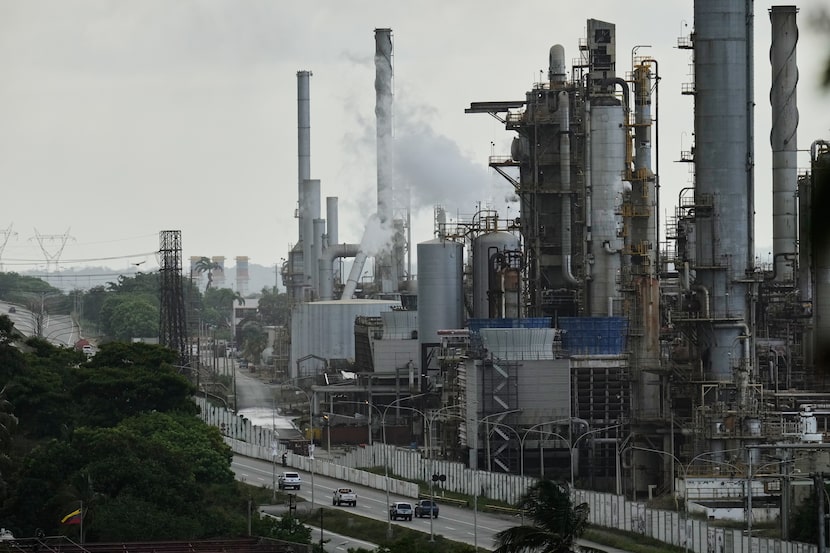
Restoring Venezuela’s oil industry, largely overseen by the state-owned PDVSA, presents formidable challenges. Years of corruption and neglect have left the country’s energy infrastructure in disrepair. According to Rystad Energy, $183 billion and more than a decade will be necessary to bring production back to levels seen in the 1990s.
Drilling in the Orinoco Basin, where most reserves are located, is particularly costly due to the extra-heavy and sulfur-rich nature of the crude. This requires substantial investment in specialized technology for extraction and refining. Rystad estimates the break-even price for oil production in the Orinoco Basin to be around $80 per barrel, significantly higher than the current prices of $60 for Brent and $56 for West Texas Intermediate.
Political Stability: A Key Factor
Political factors will play a critical role in the future of Venezuela’s oil sector. Major companies such as Exxon Mobil and ConocoPhillips withdrew from the country following nationalization efforts in the mid-2000s and have struggled to recover losses exceeding $10 billion.
The American Petroleum Institute has emphasized that energy companies make investment decisions based on factors such as stability and the rule of law. Currently, Chevron is the only American company permitted to operate in Venezuela, employing around 3,000 people there. However, the company is adopting a cautious approach, awaiting clearer indications of the political landscape.
While President Trump’s strategy aims to bolster America’s position as a dominant player in the global oil market, it faces numerous hurdles. Uncertainties in Venezuela’s political climate, combined with the complexities of international energy markets, suggest that significant challenges lie ahead for the country’s oil revival.