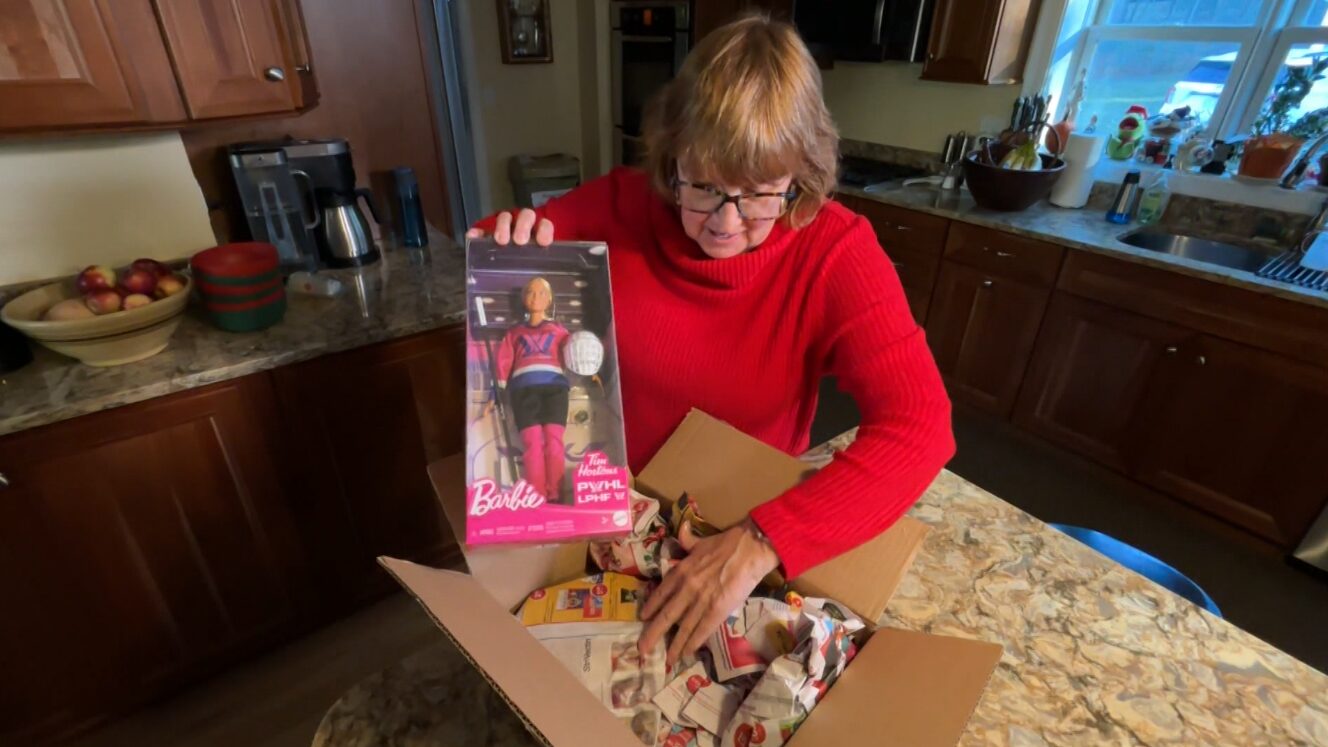
Bonnie O’Connell, a grandmother from the United States, faced an unexpected financial shock when she received an invoice for $802 related to a package containing a Barbie doll worth just $30. The confusion stemmed from a clerical error during the shipping process, highlighting the complexities of cross-border gifting in today’s economic climate.
O’Connell, a seasoned bargain shopper, had asked her cousin in Nova Scotia to purchase a Barbie doll adorned with a Professional Women’s Hockey League jersey and a Tim Horton’s logo as a holiday gift for her 4-year-old granddaughter. Excited about the gift, she did not anticipate the complications that would arise from shipping it to the U.S.
The situation escalated due to the United States imposing a 35% tariff on goods imported from Canada. This new regulation significantly changed the landscape of international shipping, especially for small gifts. A clerk at FedEx mistakenly recorded the value of the Barbie as nearly $3,000 Canadian dollars instead of the correct price of $30. O’Connell recounted, “They just did it for him… what he didn’t notice… is when they handed him the thing to sign, instead of putting $29.97, they had messed up the decimal point somehow.”
This error resulted in an inflated tax bill when the package arrived in the U.S. The exchange rate further complicated matters, calculating the total due to approximately $2,100 USD, leading to an unwelcome tariff charge of $742, plus additional fees. O’Connell expressed her disbelief, stating, “How many Barbies do you know that cost close to $3,000?”
The unexpected invoice arrived weeks after the delivery of the package, leaving O’Connell frustrated. “First of all, what are you doing giving me a package where I owe that kind of money to you?” she questioned. The cost was far beyond her budget for holiday gifts, emphasizing the financial strain this situation placed on her.
O’Connell’s experience reflects a broader trend affecting families exchanging gifts across borders during the holiday season. The Trump Administration’s tariffs, combined with the elimination of the de minimis exemption, which previously allowed items valued under $800 to enter the country duty-free, have complicated the process. This change means that even modest gifts now require extensive paperwork and can incur significant charges.
After reaching out to FedEx for clarification, O’Connell was informed that correcting the error could take months. Seeking a quicker resolution, she contacted NewsCenter 5 for assistance. Following their intervention, FedEx reversed its decision and removed the $802 charge from her account, alleviating O’Connell’s concerns.
In light of this incident, it is essential for consumers to be vigilant regarding shipping paperwork. The Canada Post Office has stated that all packages sent to the U.S., even those valued under $100, must undergo a tariff assessment. This new reality poses challenges for families looking to share gifts across international borders, requiring them to navigate a complicated web of regulations and potential costs.
As the holiday season approaches, O’Connell’s story serves as a reminder to carefully review shipping documents and understand the implications of international tariffs on gift-giving.