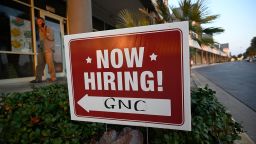
On December 29, 2025, the Bureau of Labor Statistics will unveil the final jobs report for the year, and predictions are diverse. Economists anticipate the addition of approximately 55,000 jobs in December, which aligns with the overall job growth trend for the year but falls short of November’s preliminary increase of 64,000 jobs. Some analysts suggest that seasonal hiring due to the holiday season could push this figure beyond 105,000. The unemployment rate is projected to decline to 4.5%, down from a four-year high of 4.6% recorded in November.
Despite these figures suggesting a potentially positive labor market, skepticism persists. Gregory Daco, chief economist at EY-Parthenon, cautioned that the apparent gains might be misleading. “The true, underlying momentum for job growth is likely much softer and has been much softer for some time now,” he stated. Regardless of whether December’s employment figures meet or exceed expectations, the broader narrative for 2025 remains unchanged: the labor market has experienced its weakest growth in decades, with total job gains for the year expected to hover around 710,000, marking the worst hiring performance outside of a recession since 2003.
Sector Disparities Highlight Economic Challenges
The past year has presented a challenging landscape for job creation, influenced by various factors, including shifting immigration policies and the effects of high tariffs. As a result, many industries have faced stagnant hiring or even job losses, with notable exceptions being the health care sector and leisure and hospitality industries. These sectors have flourished, driven by an aging population and increased consumer spending among higher-income groups.
According to Heather Long, chief economist at Navy Federal Credit Union, “Total job gains for 2025 are on track to be a meager 710,000.” This grim assessment underscores the uneven nature of job growth, where health services and leisure and hospitality accounted for 84% of the total employment gain from January through November. The remaining sectors, representing 78% of employment, have faced significant challenges, particularly following the major tariff announcement by former President Donald Trump in April 2025, which heightened uncertainty and dampened hiring intentions.
Recent data from the Job Openings and Labor Turnover Survey revealed that U.S. businesses reduced their hiring efforts in November, reaching the lowest hiring rate in over a decade. Despite this, the rate of layoffs remained low, indicating a hesitance among employers to let go of current staff even as they curtail new hiring.
Potential Signals of Stabilization
As December approached, some economists observed signs that the labor market may be stabilizing. Data released by Challenger, Gray & Christmas indicated that job cut announcements fell to a 17-month low, with employers planning 35,553 layoffs—the fewest for the year. Concurrently, hiring announcements in December were the highest for that month since 2022.
Andy Challenger, the firm’s chief revenue officer, noted that this combination of low layoffs and higher hiring plans could suggest a positive trend. Additionally, data from Bank of America indicated no increase in unemployment payments among its customers during December, and year-over-year payroll growth improved to 0.6% from 0.2% the previous month.
While the labor market remains in a state of “low-hire or low-fire,” according to David Michael Tinsley, senior economist at Bank of America Institute, there are indications that the worst of the slowdown may be behind us. December’s jobs report will provide crucial insights into the ongoing impact of the prolonged government shutdown on employment data from October and November.
As stated by Oren Klachkin, a financial market economist at Nationwide, “It’s not super-certain that we’ll be absolutely past all of the shutdown impacts, so we’ll have to wait and see what the numbers look like.” The forthcoming report is anticipated to offer a clearer picture of the U.S. labor market as 2025 draws to a close.