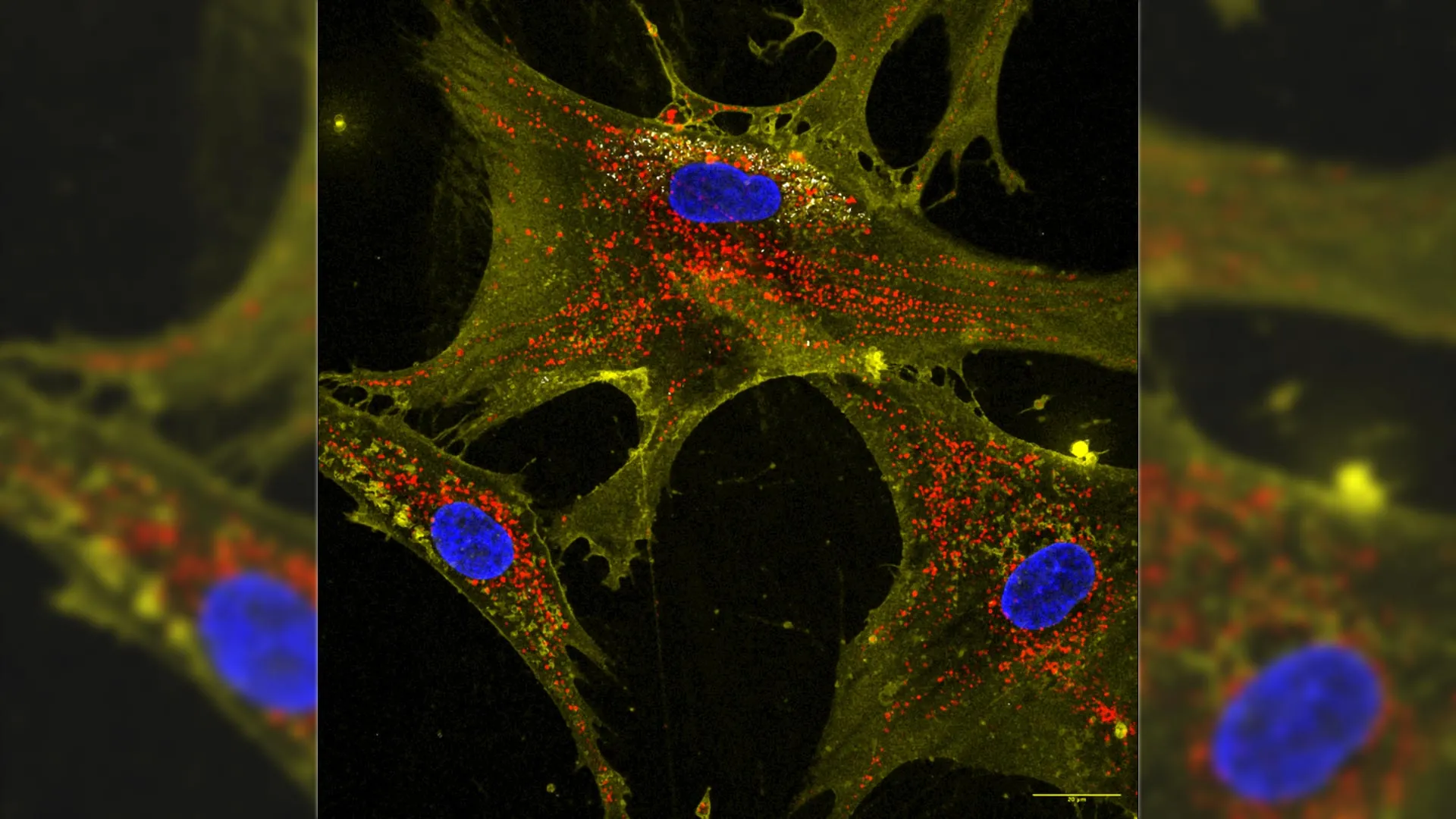
Biomedical researchers at Texas A&M University have developed a novel technique that enhances stem cells, enabling them to produce double the normal amount of mitochondria. This breakthrough could significantly improve treatments for aging cells and various degenerative diseases. The findings, published on November 27, 2025, in the Proceedings of the National Academy of Sciences, may change the future of medical therapies by addressing the decline in cellular energy associated with aging and damage.
Dr. Akhilesh K. Gaharwar and Ph.D. student John Soukar, along with their colleagues in the Department of Biomedical Engineering, discovered that microscopic, flower-shaped particles known as nanoflowers can effectively supercharge stem cells. When these stem cells are treated with nanoflowers, they begin to generate approximately twice as many mitochondria as they typically would. This technique allows the energized stem cells to transfer excess mitochondria to neighboring weakened cells, restoring their energy production and overall health.
The decline of mitochondria has been linked to various health issues, including aging, heart disease, and neurodegenerative conditions such as Alzheimer’s disease. Mitochondria are essential for cellular energy, and their reduction leads to compromised cell function. The innovative technique developed by the Texas A&M team aims to bolster the body’s natural ability to replenish worn-out mitochondria, potentially addressing multiple health problems simultaneously.
Nanoflowers: A New Source of Cellular Energy
The research team’s approach involves using nanoflowers made from molybdenum disulfide, a compound capable of forming diverse two-dimensional structures at nanoscale. By integrating nanoflowers with stem cells, the researchers effectively transformed these cells into “mitochondrial bio factories.” The enhanced stem cells significantly outperformed untreated stem cells, transferring two to four times more mitochondria to damaged cells.
According to Gaharwar, “We have trained healthy cells to share their spare batteries with weaker ones.” This method allows aging or damaged cells to regain vitality without the need for genetic modifications or pharmaceuticals. The revitalized cells not only exhibit enhanced energy production but also demonstrate increased resistance to cell death, even under stress from chemotherapy treatments.
Previous methods to increase mitochondrial numbers have typically been less effective and required frequent administration. In contrast, the nanoflowers remain inside the cells, consistently stimulating mitochondrial production. Gaharwar noted that therapies based on this technology might only need to be administered once a month, making it a more sustainable option for patients.
Potential Applications and Future Research
The implications of this research are substantial, as it could pave the way for therapies targeting various tissues throughout the body. The flexibility of the technique suggests it could be utilized for conditions like cardiomyopathy or muscular dystrophy, with stem cells being injected directly into affected areas. Soukar expressed optimism about the potential applications, stating, “We could work on this forever and find new things and new disease treatments every day.”
The project received funding from several esteemed organizations, including the National Institutes of Health, the Welch Foundation, the Department of Defense, and the Cancer Prevention and Research Institute of Texas. Additional support came from the President’s Excellence Fund at Texas A&M University and the Texas A&M Health Science Center Seedling Grant, with key contributions from researchers Dr. Irtisha Singh, Dr. Vishal Gohil, and Dr. Feng Zhao.
As this research progresses, it holds the promise of transforming how aging and degenerative diseases are treated, potentially offering long-lasting solutions by harnessing the body’s own biological mechanisms.