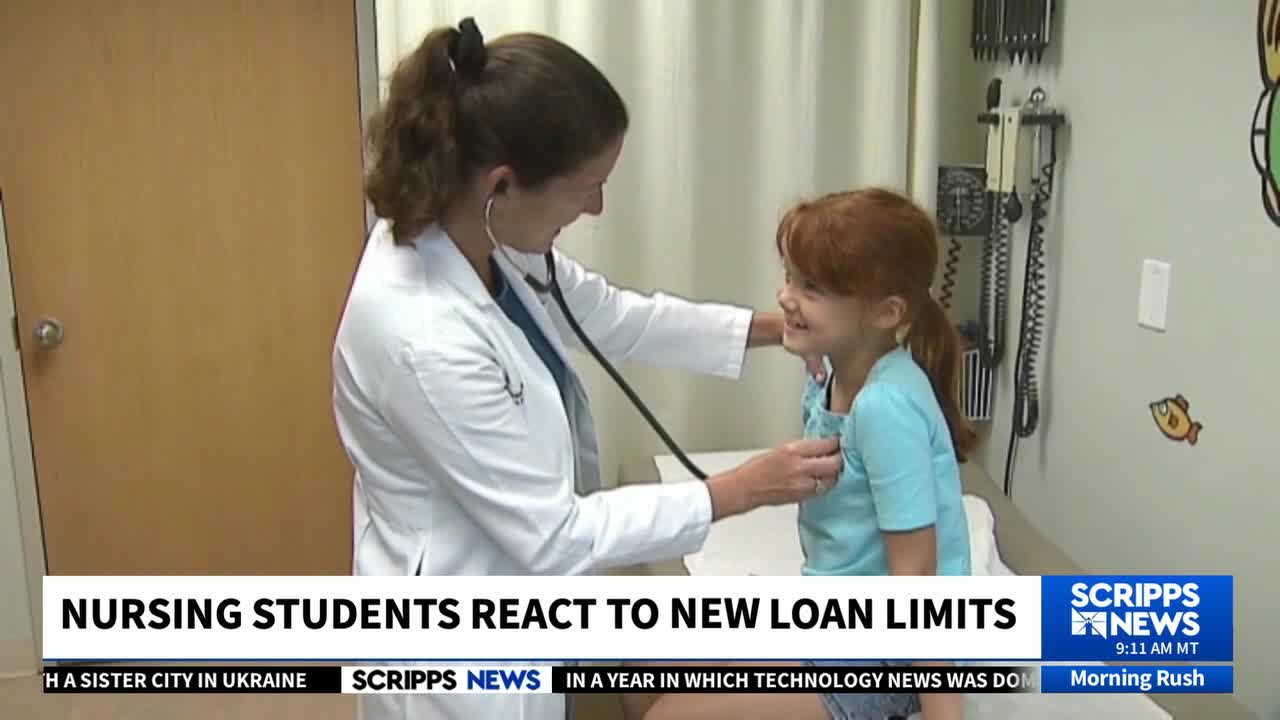
The Trump administration’s recent decision to reclassify nursing as a non-professional degree has prompted anxiety among nursing students and professionals. Many fear this change will have significant implications for student loans and the future of the nursing workforce.
Laura Linton, a graduate student in the Doctor of Nursing Practice program at the University of Utah, expressed her deep disappointment upon learning the news. “I feel like for someone who loves the field,” Linton said, reflecting on her two-decade career in nursing, “this is a stab in the heart.” With family members in the medical profession, she believes nursing embodies a commitment to care and compassion.
This shift in classification will impact federal student loan options, particularly for graduate programs, starting in July 2026. According to the Department of Education, the new policy will eliminate the Grad Plus Loan program, limiting federal loans for graduate students to $20,500 per year, with a lifetime cap of $100,000. The department argues that these changes aim to lower the costs associated with graduate education and noted that most students typically borrow less than the annual limit. They also emphasized that the new regulations would not affect undergraduate programs.
Despite these claims, many in the nursing community worry about the long-term effects on the profession. Dr. Melissa Hinton, a representative of the Association of Utah Nurse Practitioners, highlighted that the current costs of becoming a nurse practitioner can approach $100,000, while traditional nursing programs often exceed $50,000. “Those numbers being so concrete just completely say that nurses aren’t important,” she stated.
In terms of affordability, Rieneke Holman, Associate Dean of Nursing at Weber State University, noted that their nursing program costs fall within the newly proposed limits. “We need people to go on and become nurse practitioners or nurse educators,” Holman said. She emphasized the importance of various roles beyond bedside nursing that contribute to the healthcare system.
Current nursing students like Linton remain steadfast in their commitment to the profession, despite growing concerns. “Nursing has worked hard to get the respect that it has,” Linton remarked. “I think that that’s kind of pulling away from that. That’s kind of a challenge for a lot of people.”
As the nursing community grapples with these changes, the future of nursing education and the profession itself hangs in the balance.