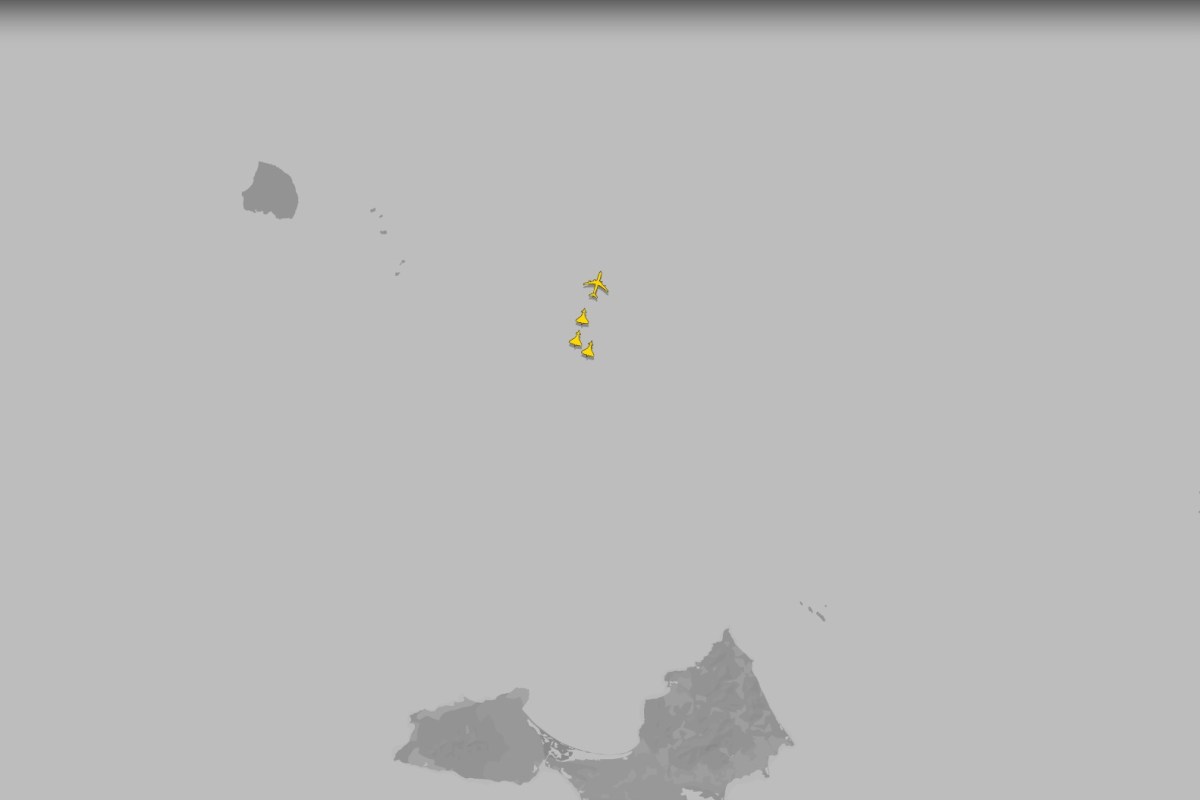
UPDATE: A U.S. B-52 bomber flew over the Caribbean Sea near Venezuela on July 17, 2023, as tensions escalate between the U.S. and the Venezuelan government led by President Nicolas Maduro. This flight marks a significant increase in U.S. military activity in the region, aimed at exerting pressure on Maduro’s regime amid ongoing concerns over drug trafficking.
The B-52, accompanied by F/A-18 Super Hornets, conducted its second mission in just five days, likely monitoring drug trafficking routes as part of Operation Southern Spear. These operations represent a strategic pivot for the U.S. military, which is deploying advanced aircraft and warships to assert control in the southern Caribbean.
Why does this matter? The U.S. has intensified its military presence, moving beyond a mere drug crackdown to a broader strategy against Venezuela’s government. Following a formal designation of the Cartel de los Soles as a terrorist organization, the U.S. has signaled that “all options” are on the table. This designation, effective as of Monday, is viewed by Venezuela as an attempt to justify foreign intervention.
According to flight tracking data from Flightradar24, two B-52H Stratofortress bombers and a Lockheed Martin C-130J-30 Super Hercules were among the most tracked flights in the region on Monday night. U.S. military sources confirm these operations are part of a broader initiative under the auspices of the U.S. Southern Command (SOUTHCOM), established to disrupt illicit drug activities.
In a recent interview, Secretary of Defense Pete Hegseth stated, “Our unmatched ability to strike on land and at sea will target narco-terrorist vessels.” He warned traffickers directly: “Don’t get in a boat because it’s going to end poorly for you.” The terror designation of the Cartel de los Soles grants the U.S. military additional tools and options to address the situation.
Venezuelan officials have responded harshly. Foreign Minister Yan Gil condemned the U.S. actions as an “erratic policy of aggression,” arguing that such maneuvers harm Caribbean nations and fail to contribute to a genuine fight against drug trafficking.
Looking ahead, Hegseth indicated that the U.S. is prepared to apply the same military pressure used against extremist groups abroad to Venezuela if necessary. He did not confirm whether military strikes against land targets in Venezuela are in the plans, but the situation remains fluid and developing.
As tensions rise, both nations are locked in a high-stakes game, with the potential for significant implications for regional stability. The international community is closely monitoring these developments, and further military actions by the U.S. could lead to escalated conflicts in the region.
Stay tuned for updates as this situation continues to evolve.